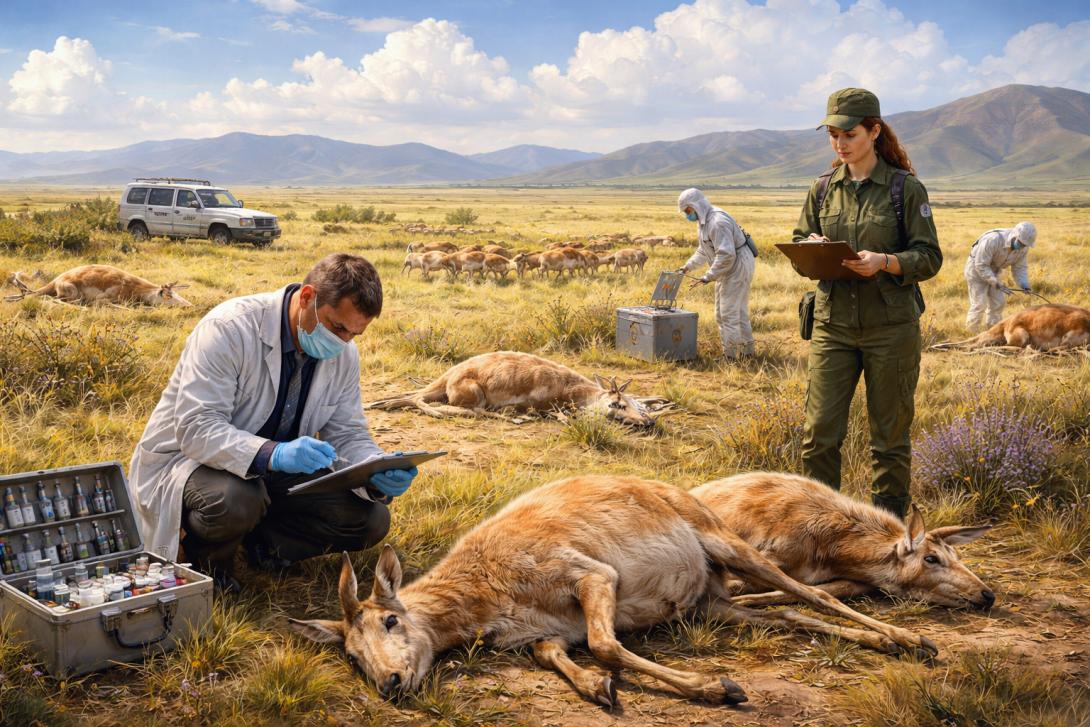
From the beginning of 2026, FBRK has been monitoring the epizootic situation in Kazakhstan: reports of livestock diseases, the death of saiga antelopes and other wild animals. Our editorial team has sent official requests to the Ministry of Agriculture and the Ministry of Ecology and Natural Resources. It is time to analyse the official responses from the relevant departments.
WHAT THE MINISTRY OF AGRICULTURE SAID
FBRK's request contained four main questions: about cases of illness with symptoms of foot-and-mouth disease, about laboratory studies, about measures to prevent cross-species transmission of infection, and about interdepartmental cooperation. 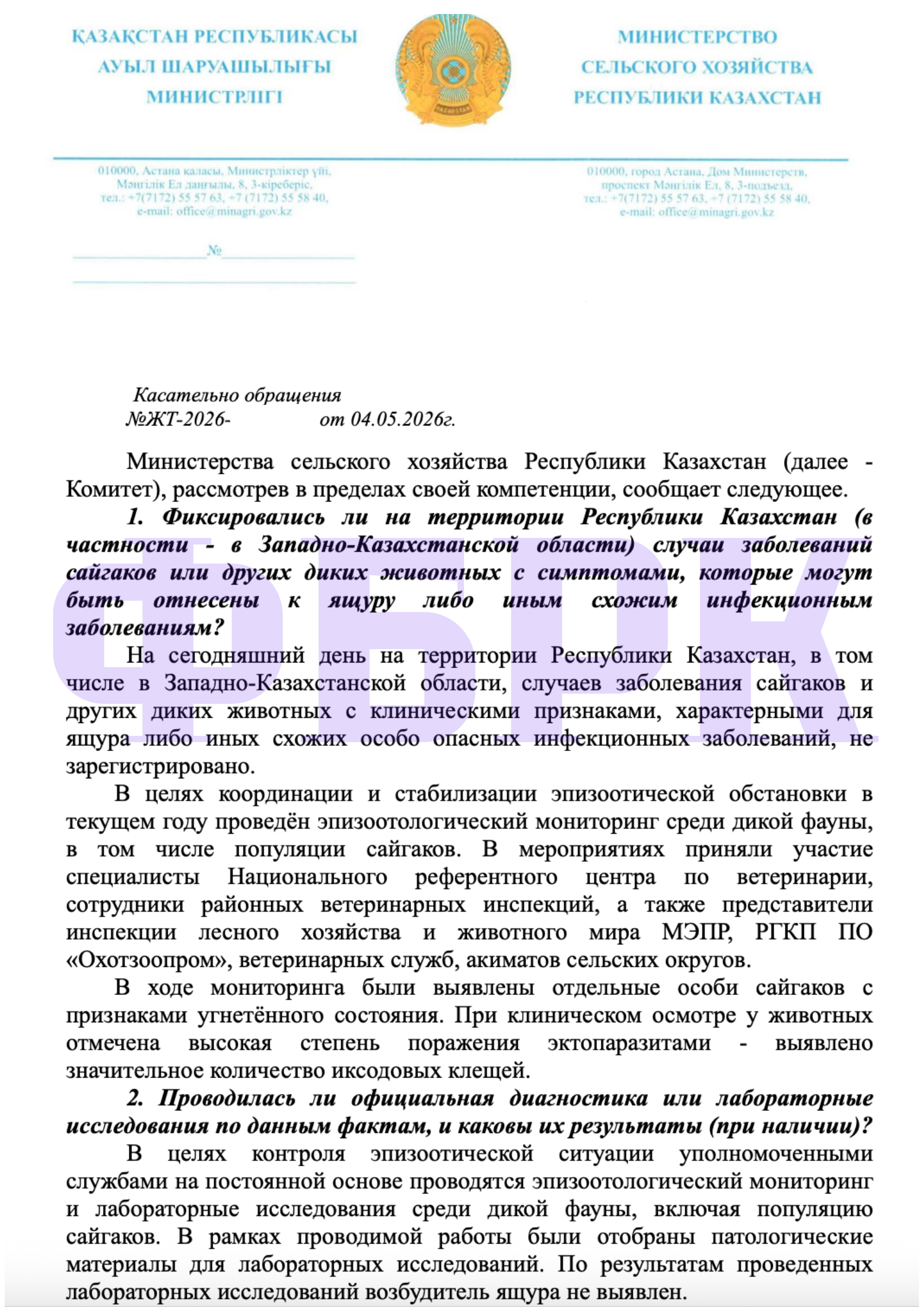
According to the department, cases of foot-and-mouth disease or similar infections in saiga antelopes have not been registered, and during monitoring, a "depressed state" and a "significant number of ixodid ticks" were identified in individual animals. The causative agent of foot-and-mouth disease was not detected, and cross-species transmission was not established.
"Currently, there is no confirmed data on cross-species transmission of the disease from saiga antelopes to domestic animals. The risk of disease transmission from saiga antelopes to livestock exists during shared grazing. In the West Kazakhstan Region, cases of illness in saiga antelopes have no epizootic link to diseases in farm animals," the department notes.
In turn, interdepartmental cooperation is organised through approved notification plans. 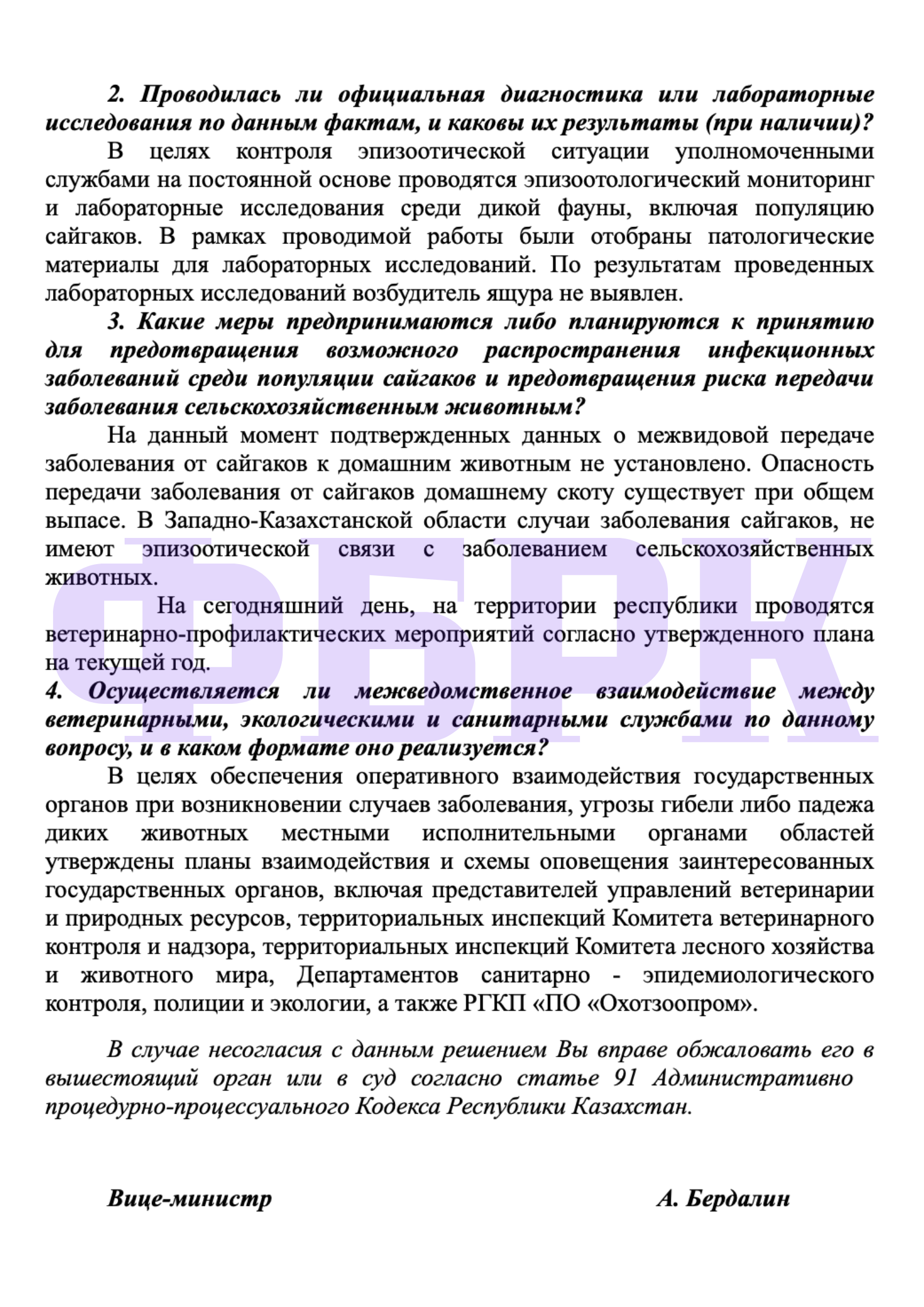
WHAT THE MINISTRY OF ECOLOGY SAID
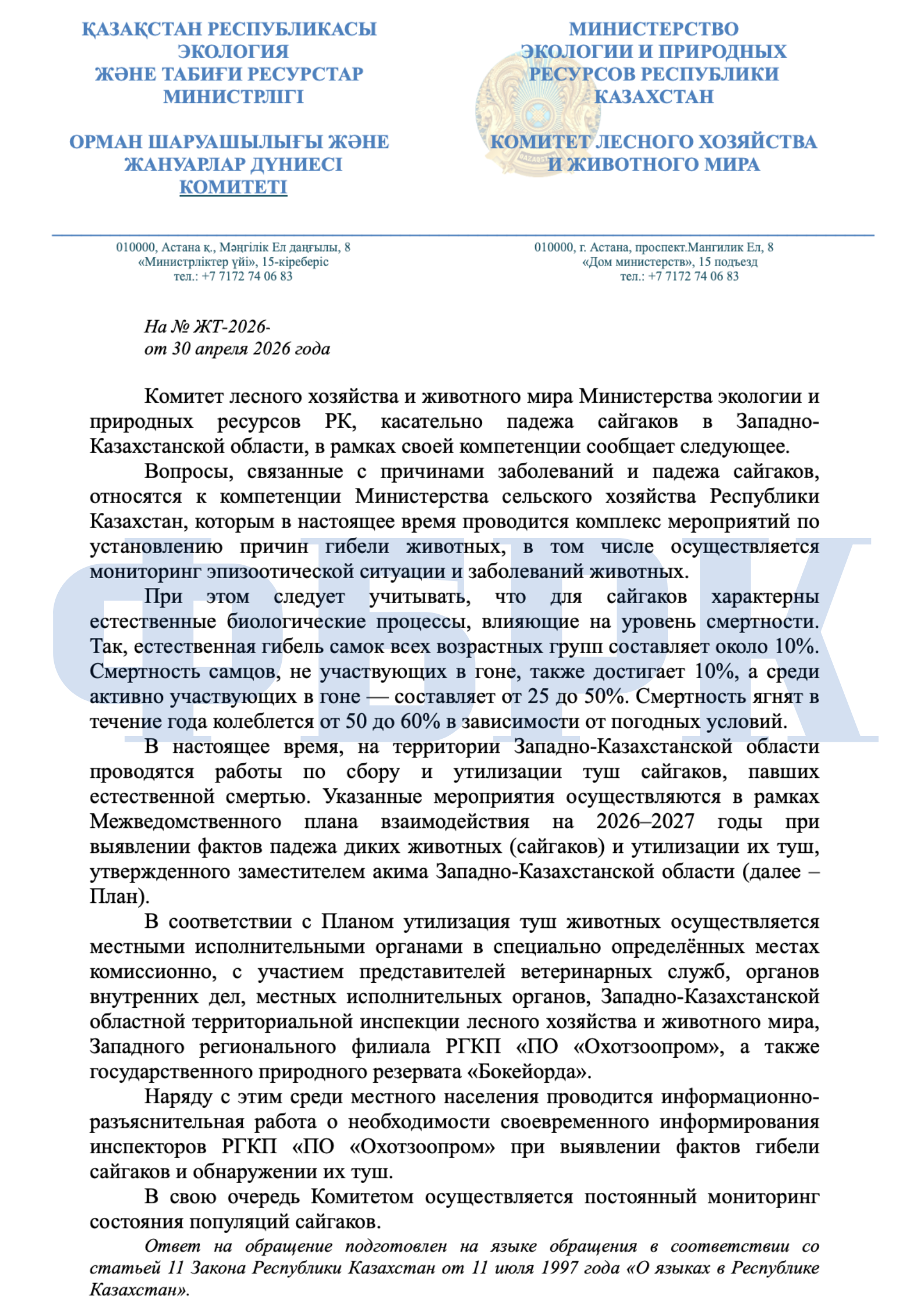
The Committee for Forestry and Wildlife of the Ministry of Ecology, in its response, recalled natural biological processes – lamb mortality is 50–60% per year, and male mortality during the rutting season is up to 50% – and reported that the disposal of carcasses is carried out according to the interdepartmental plan for 2026–2027.
"The disposal of animal carcasses is carried out by local executive bodies in specially designated locations, by commission, with the participation of representatives of veterinary services, internal affairs bodies, local executive bodies, the West Kazakhstan Regional Territorial Inspectorate of Forestry and Wildlife, the Western Regional Branch of the RSEE 'PO 'Okhotzooprom', and the state nature reserve 'Bokeiorda'," the ministry confirmed.
WHAT THIS MEANS
Both responses are written in the "everything is under control" vein and verbatim reproduce what representatives of these same departments already say in public statements. At the same time, neither document contains specific figures on the volume of research, nor does it state how many animals were examined and in how many ticks were found. It remains impossible to verify the departments' words, especially given that the official version of events strongly diverges from the version of local farmers.
It is also worth recalling that quite recently, at the 93rd General Session of the World Organisation for Animal Health (WOAH) in Paris, Kazakhstan received the status of a country free from foot-and-mouth disease.
And as tempting as this may look for the relevant departments, the current status is by no means a reason to close the matter. On the contrary, this is perhaps the best moment to explain in detail to citizens how epizootic monitoring works and why its results differ from the observations of farmers in the West Kazakhstan Region (WKR). The only question is whether the departments will seize this opportunity.
Against this backdrop, a piece of news that went almost unnoticed looks all the more curious. Shortly before the ceremonial acquisition of the status in Paris, the Committee for Veterinary Control and Supervision of the Ministry of Agriculture authorised the transit through Kazakh territory of live farm animals and meat products from "disease-free regions" of Russia. The very country where an outbreak of foot-and-mouth disease was recorded. The decision was made "taking into account the assessment of veterinary risks" – by whom exactly and according to what criteria – the department did not explain.
It is probably worth noting that international status obliges not only achievements but also transparency regarding decisions that could call that status into question.
If your farm has suffered from the "unknown disease" or you have information on the topic, you can send materials to our anonymous bot @fund_kz_bot.