A few kilometres from the government buildings and glossy facades of Astana, a large-scale illegal dump has been discovered, the threads of which, it turns out, lead to companies linked to a Forbes-listed millionaire and a figure in an international scandal.
The FBRK editorial team received information that an unauthorised dump is located in the Saryarka district, not far from the busy Alash highway. We decided to verify this information. Our correspondent went to the location.
Drone footage captured an area filled with various types of waste. The images show tracks from lorries and heavy machinery across the entire site. In the central part of the area, a depression in the ground is visible, along which runs a strip of light-coloured material, presumably consisting of construction waste.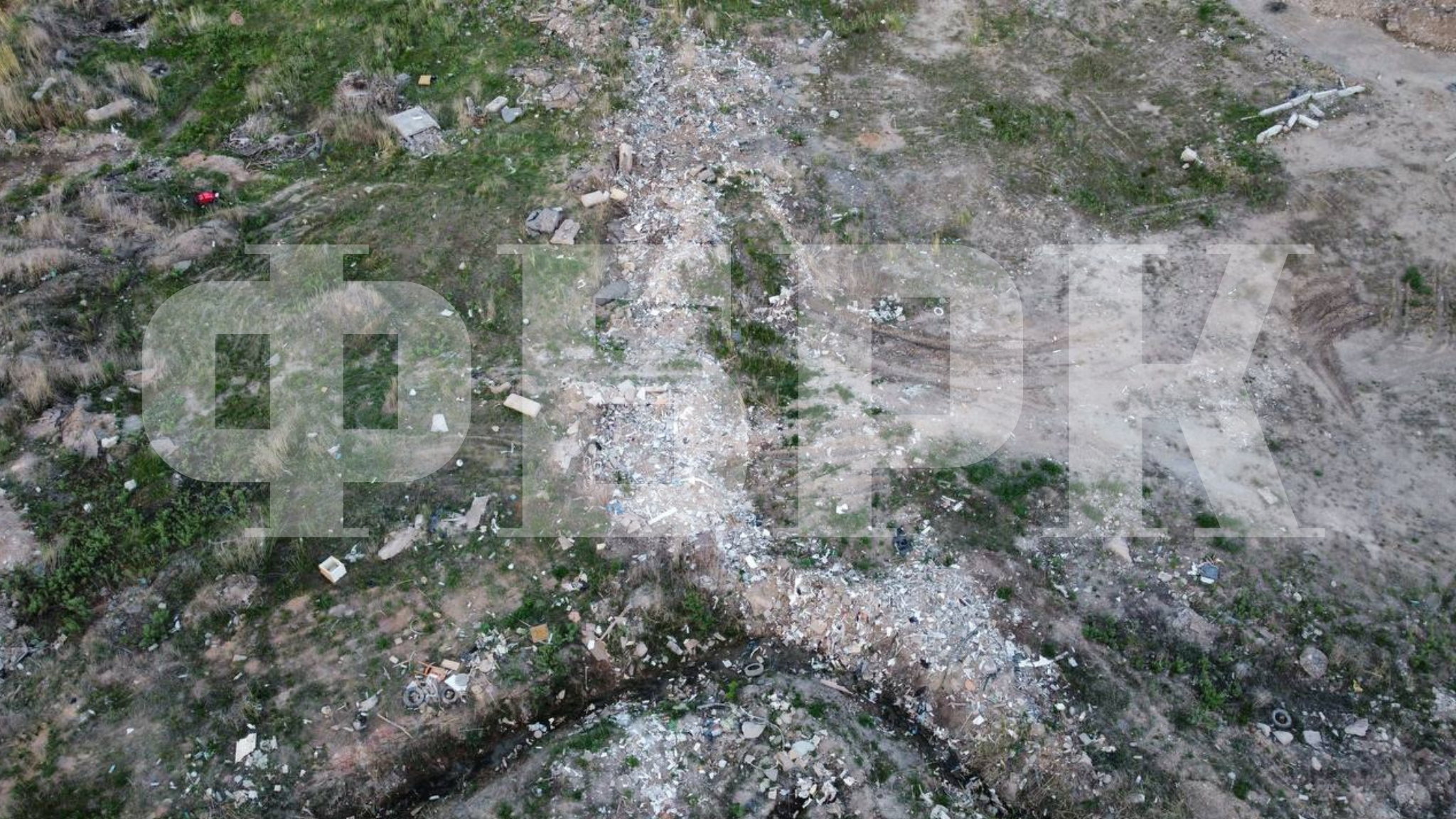
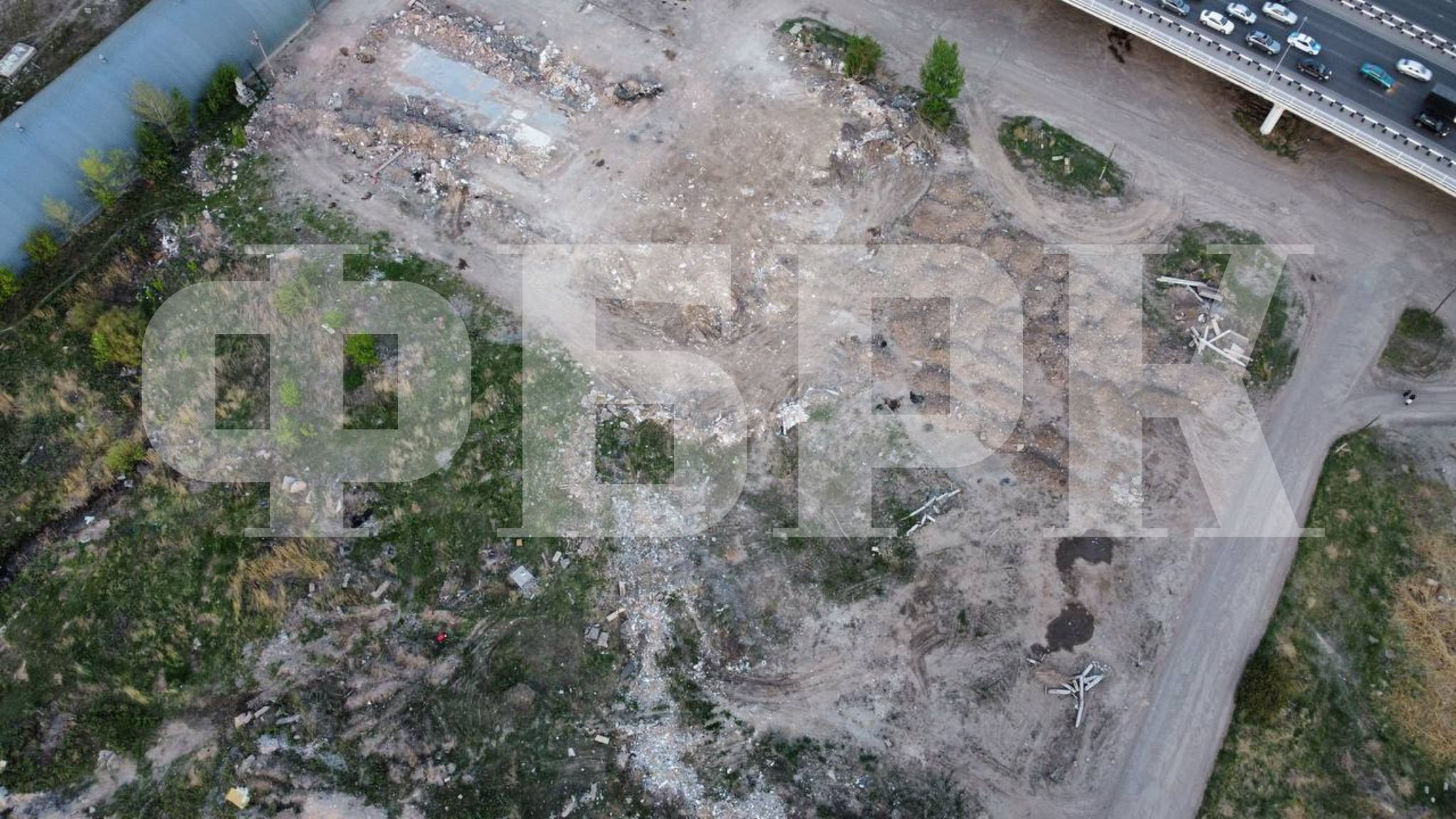
Among the chaos of waste, car tyres piled in heaps around the perimeter of the site, construction debris and household waste are clearly distinguishable. Fresh piles and signs of recent unloading are visible — clear evidence that the dump is actively used and possibly even maintained. 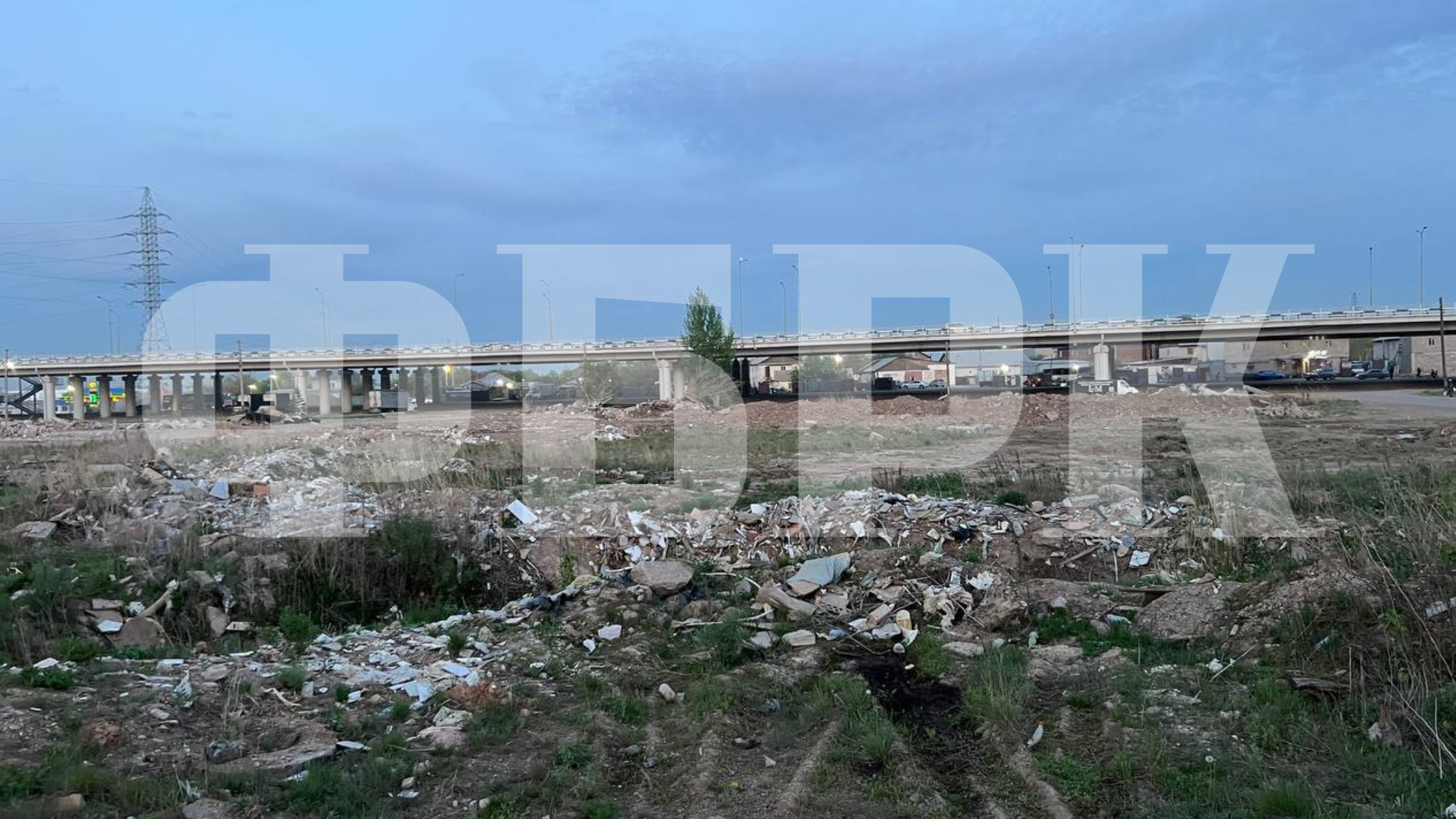
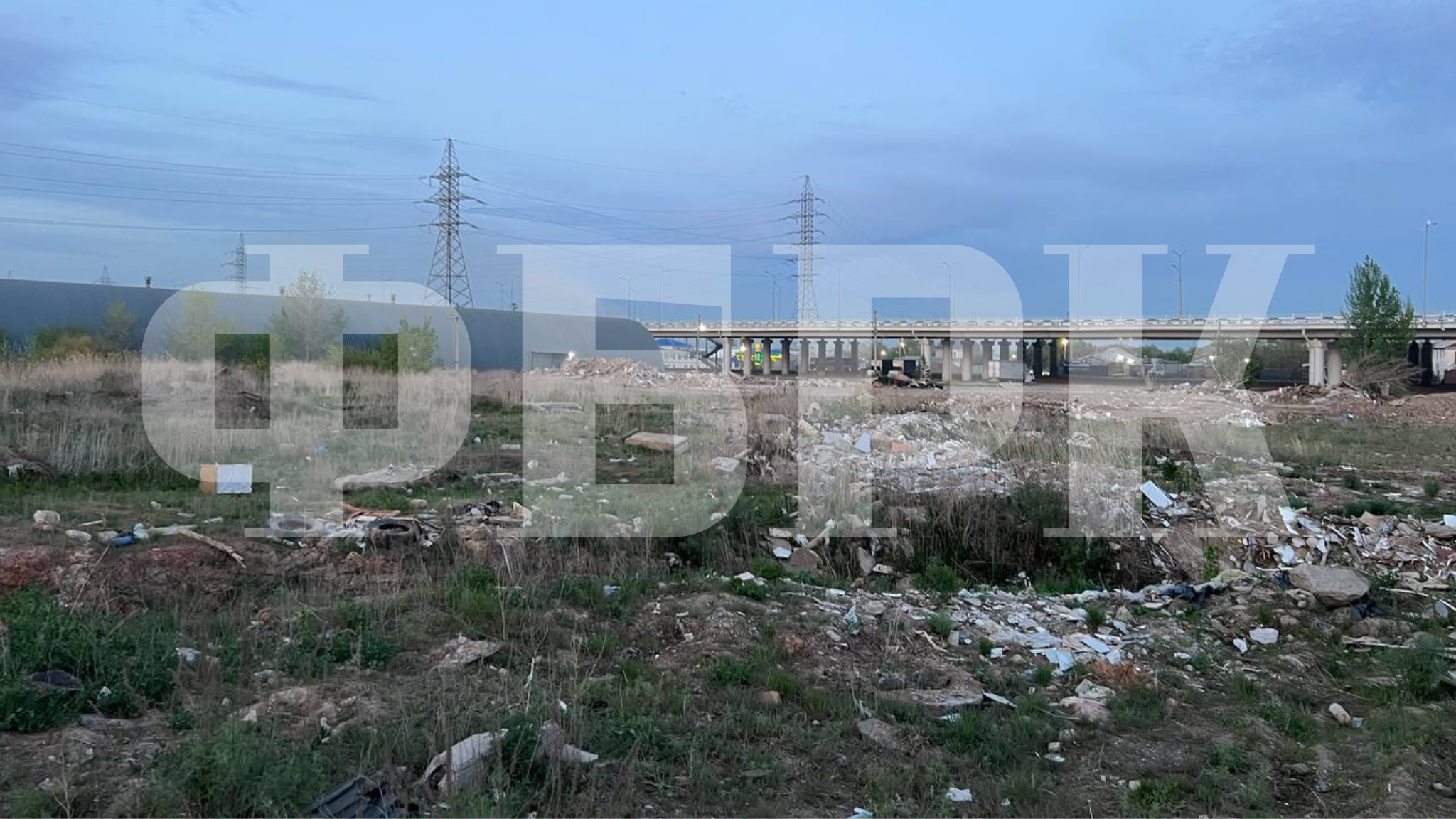
According to the information we have studied, this dump is located on land designated for a completely different purpose. Part of this territory has belonged to Komfort Stroy LLP (on a five-year lease) since October 2022 and was intended for the construction of a multi-apartment residential building with built-in premises and underground parking. However, instead of construction cranes and workers, on a site of approximately 11,000 sq m, we see only mountains of rubbish and tracks from dump trucks.
Komfort Stroy LLP was registered in September 2021; the company has been on the market for less than four years. Its first director, Bekbolat Olzhabaiuly, also heads other construction companies: Eksklyuzivmonoltservis LLP and Olzha Group Astana LLP, founded a couple of months ago. The founder, Samat Kassenov, also manages several companies, including the construction firm TSE Build LLP, which, according to the kompra.kz service, has paid a modest 117,000 tenge in taxes over four years of operation, as well as the Almaty-based trading company Investment Partner LLP, linked to Asian Cement Trade LLP and Rikvest Kazakhstan LLP.
An examination of the history of the adjacent plots revealed even more intriguing details. The land adjoining the main dump to the south is designated for the operation of a petrol station and a car service centre. The history of this plot is itself extremely interesting: in the early 2000s, it was privately owned by Maiken Abayeva, then temporarily leased to Kanat Abayev. In 2010, the plot was seized by order of the financial police, but despite this, in 2012 it was transferred into permanent shared land use by the capital's housing department.
Such a transfer raises questions, given that the plot has a commercial designation for a petrol station, and the institution that received it does not operate fuel infrastructure facilities. Drone images show no signs of an existing or planned petrol station — only part of the same dump, indicating a disregard for land use conditions.
Drone footage and maps show a warehouse located next to the rubbish zone. On the 2GIS map, it is marked as Unityre tyre warehouse. The plot on which it is located previously belonged to Yunitary LLP, and in March 2019, ownership was transferred to Vertex Tyre LLP, registered in Almaty. Notably, Yunitary LLP previously owned the adjacent plot of 383 sq m, designated for the construction and operation of a mini-car service centre with a car wash. This plot now also belongs to Vertex Tyre LLP.
Vertex Tyre has existed since February 2020. Its first director is Dmitry Shekhovtsev, and its founders include Elza Dzhumanbayeva and the foreign company Vertex Netherlands B.V., registered in Almaty. An interesting detail: in 2019, one of the founders of Vertex Tyre was also Yunitary LLP, owned by Vladimir Dzhumanbayev, Alexander Morgunov and Yuri Nomikosov.
Of course, the name Vladimir Dzhumanbayev attracted our particular attention. In 2024, he ranked 25th in the Forbes Kazakhstan rating with a fortune of $365 million. He holds stakes in a number of large companies, including Altynalmas JSC, Karazhyra JSC, Benkala Mining Company JSC, and others.
Of particular interest is the fact that in the summer of 2024, Dzhumanbayev found himself at the centre of an international scandal. The State Committee for National Security of Kyrgyzstan accused him of financing an organised criminal group linked to Kamchy Kolbayev — a man described by the US as "the most influential criminal authority in Central Asia". The businessman was placed on an international wanted list via Interpol.
Kyrgyz special services alleged that Dzhumanbayev's company registered in Kyrgyzstan, Vertex Gold Company, supposedly transferred one million soms monthly to Kolbayev's group from 2021 to 2023. The businessman himself rejected all accusations, emphasising that he was not hiding, had no connection to organised crime, and was ready to cooperate with the investigation. Two weeks after being placed on the wanted list, the criminal case was dropped due to the absence of a crime, and Dzhumanbayev's name was removed from the Interpol database. In an interview with Forbes, he claimed he learned of the wanted notice from the news and considered it a misunderstanding caused by a local struggle for assets.
Analysing the situation with the unauthorised dump, we can highlight several key points.
Firstly, we can assume that this is a case of systematic violation of the intended use of land plots. Lands allocated for housing construction, petrol stations and service facilities, based on the gathered materials, have been turned into an unauthorised dump. This could indicate serious gaps in the land use control system in the capital.
Secondly, the convoluted history of property rights transfer for the plots, especially the transfer of land from under seizure to state management, and then its actual use as a dump, suggests possible schemes in the area of land resource distribution.
Thirdly, the connection of the rubbish site to companies affiliated with a Forbes-listed businessman who recently featured in an international scandal raises questions about the potential use of environmentally problematic territories in shadowy business schemes. After all, an unauthorised dump could easily generate significant illegal income for its operators through fees for waste removal and disposal.
Furthermore, the location of the dump near a tyre warehouse and the predominance of car tyres there suggest that waste may also come from automotive businesses linked to the plot owners, which would be economically advantageous in terms of minimising the costs of legal disposal.
Finally, the non-intervention of environmental and regulatory authorities in a situation with a clear environmental violation occurring practically in the open could indicate systemic problems in the environmental protection sphere or possible protection of the violators by certain structures.
The FBRK editorial team has sent official requests to the relevant departments to obtain their comments on the current situation.
To be continued…