Journalists have reported on what apartment owners need to know about their rights to manage the building, where to complain about dishonest chairmen of the HOA/Condo Association, and how tariffs for housing maintenance are set.
According to ORDA, citing Article 34 of the Law of the Republic of Kazakhstan "On Housing Relations", apartment owners are obliged to pay for the maintenance of common property — roofs, basements, entrances, lifts, and the work of the managing organisation (HOA/Condo Association). Utility bills include two line items: "capital repair savings" and "housing maintenance costs".
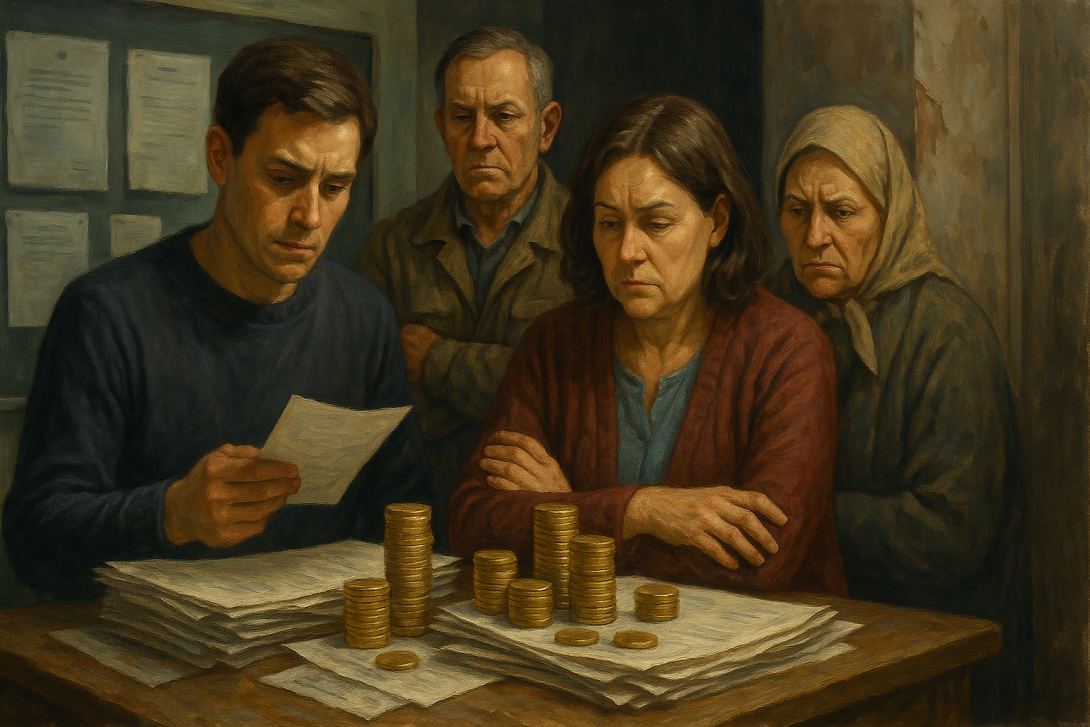
While saving for capital repairs is usually straightforward — owners can check the account balance and arrears — monitoring the expenditure side raises questions. Some HOA/Condo Association chairmen claim they receive a minimum wage (around 85,000 tenge), whereas technical staff — electricians, plumbers — earn significantly more. However, when owners of non-residential premises request accounting statements, access to information is generally restricted.
Journalists note that complaints about the lack of transparency of HOA/Condo Association chairmen regularly appear in building chats and on social media. Residents report that annual reports are not shown to them, that premises are rented out to commercial tenants without authorisation, and tariffs are raised without the consent of the owners.
Journalists sent an official request to the head of the Department of Communal Infrastructure and Housing Inspection of Almaty, Sharkhan Tursunbayev, asking for clarification on how the law regulates tariffs and what help is available to citizens in disputes with the HOA/Condo Association.
The response from the deputy head of the department, Galymzhan Abdishukyruley, confirmed that only the general meeting of apartment owners determines the tariff rate for building maintenance and capital repairs.
"In accordance with Article 2 of the Law 'On Housing Relations', the highest governing body of a condominium is the meeting of owners of apartments and non-residential premises of an apartment building. The meeting is authorised to make decisions if more than half of the total number of owners of apartments and non-residential premises are present. Decisions are made by a majority vote of the total number of owners who directly participated in the voting," the official explained.
It is noted that usually no more than 20–30 residents attend meetings, which is insufficient for making important decisions.
"Issues related to the management of the condominium and the maintenance of the common property of the condominium, according to Article 42-1 of the law, are considered by the owners of apartments and non-residential premises at a meeting. This decision is documented in minutes and must not contradict the legislation of the Republic of Kazakhstan. Decisions adopted at the meeting are binding on all owners of apartments and non-residential premises and serve as a document for the consideration of disputes and other issues in court," Abdishukyruley clarified.
The calculation of tariffs is regulated by the Methodology for Calculating the Cost Estimate for Condominium Management and Common Property Maintenance. This document is available to all owners. Journalists emphasise that many HOA/Condo Association chairmen ignore this requirement, setting tariffs independently.
The deputy head of the housing inspectorate noted that only the owners determine the amount of monthly payments from businesses for non-residential premises. The ground floors of many buildings in Almaty are occupied by shops, hairdressers, sports clubs, and offices.
Residents are often unaware of the amounts tenants transfer, and building managers advise contacting the tax authorities, which raises doubts about the transparency of HOA/Condo Association activities.
"The meeting has the right to set a different amount of monthly expenses for the management of the condominium and the maintenance of the common property of the condominium for owners of non-residential premises. This amount must not exceed the monthly expenses set for apartment owners by more than twice," the official explained.
The deputy head of the Department of Communal Infrastructure and Housing Inspection of Almaty, Galymzhan Abdishukyruley, spoke about the minimum tariff that building managers often refer to when explaining to residents why they must pay over 40 tenge per square metre.
"This tariff is calculated in accordance with the approved methodology for calculating the cost estimate for managing the condominium and maintaining the common property of the condominium, as well as the methodology for calculating the minimum amount of expenses for managing the condominium and maintaining the common property of the condominium dated March 30, 2020, No. 166," the statement said.
The approved minimum tariff includes services for the management and maintenance of the residential building. It is applied in buildings where the owners have not decided on the amount of expenses, as well as where owners previously decided to approve a payment lower than the established minimum tariff.
Journalists note that the prosecutor's office rarely investigates citizens' complaints against HOA/Condo Association chairmen. The department reported that in 2024, more than 6,500 applications were processed, including:
- lack of transparency in the activities of management bodies;
- lack of routine and capital repairs of buildings;
- increases in targeted housing expenses without agreement with residents;
- failure to provide monthly and annual (financial and operational) reports;
- leasing out common property without the consent of residents;
- difficulties in changing the management body and the chairman of the Condo Association/HOA.
Economist Marat Abdurakhmanov, in turn, stated that HOA/Condo Association minutes can only be challenged in court. Residents who have not signed the documents are still obliged to pay the tariff. Challenging the minutes will require a lawyer and possibly expert assessments. For a 64-apartment building, checking all signatures could cost around 192,000 tenge.
He also noted that if residents suspect fraud, they can contact the police, but practice shows that criminal cases are rarely initiated.
Meanwhile, housing and communal services expert Vladimir Malishevsky advises involving officers from the housing inspection department if tariffs have not been approved by a quorum at the general meeting.
"Ask the officials to appear in court as third parties. They must give their opinion on the illegality of the tariff approved by the HOA/Condo Association. Although they practically never do this," he stated.
The costs of auditing and inspecting an HOA/Condo Association can reach 300,000–600,000 tenge, taking into account the fees of specialised companies.
The editorial board of the FBRC has repeatedly encountered similar problems. For example, in January, residents of the "Nurly" consumer cooperative appealed with complaints about the activities of the cooperative's chairperson, Karakoz Karipova.
Last year, we actively covered the problem at the "Nurly" consumer cooperative, where the Akimat of Tselinograd district illegally leased out land plots belonging to more than 200 owners.
Shortly after our publications, the district authorities began working on restoring the rights of the owners.
The plot owners mentioned that the chairperson may have known about the violations related to the plots but did not communicate this information to the rest.
Incidentally, according to amendments to the Law of the Republic of Kazakhstan "On Housing Relations", after September 15, Condo Association chairmen are elected at meetings for a three-year term and may become members of the building council.