One document, two versions, four companies with exclusive rights. The FBRK editorial team has obtained a protocol from a government commission on beef export quotas, where the texts in Russian and Kazakh tell completely different stories.
On 29 August, a meeting of the Interdepartmental Commission on Foreign Trade Policy and Participation in International Economic Organisations (MVK) was held in the offices of the Government. Deputy Prime Minister Serik Zhumangarin chaired the discussion of a pressing issue: whether beef exports from Kazakhstan should be restricted.
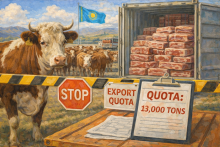
The meeting protocol (No. 121), which the FBRK has obtained, stipulated that the Ministry of Agriculture (MoA) should draft an order, set out criteria for exporters, and distribute the quota fairly. A decision was soon made to introduce a quota of 13 thousand tonnes until the end of the year.
But this is where it gets interesting.
The Russian-language version of the protocol contains clause 2.4. (On the expediency of imposing a ban on the export of beef from the territory of the Republic of Kazakhstan), which opens a loophole for the chosen few. Until the order establishing a temporary quantitative restriction (quota) on beef exports was adopted, four companies were permitted to export beef without restrictions.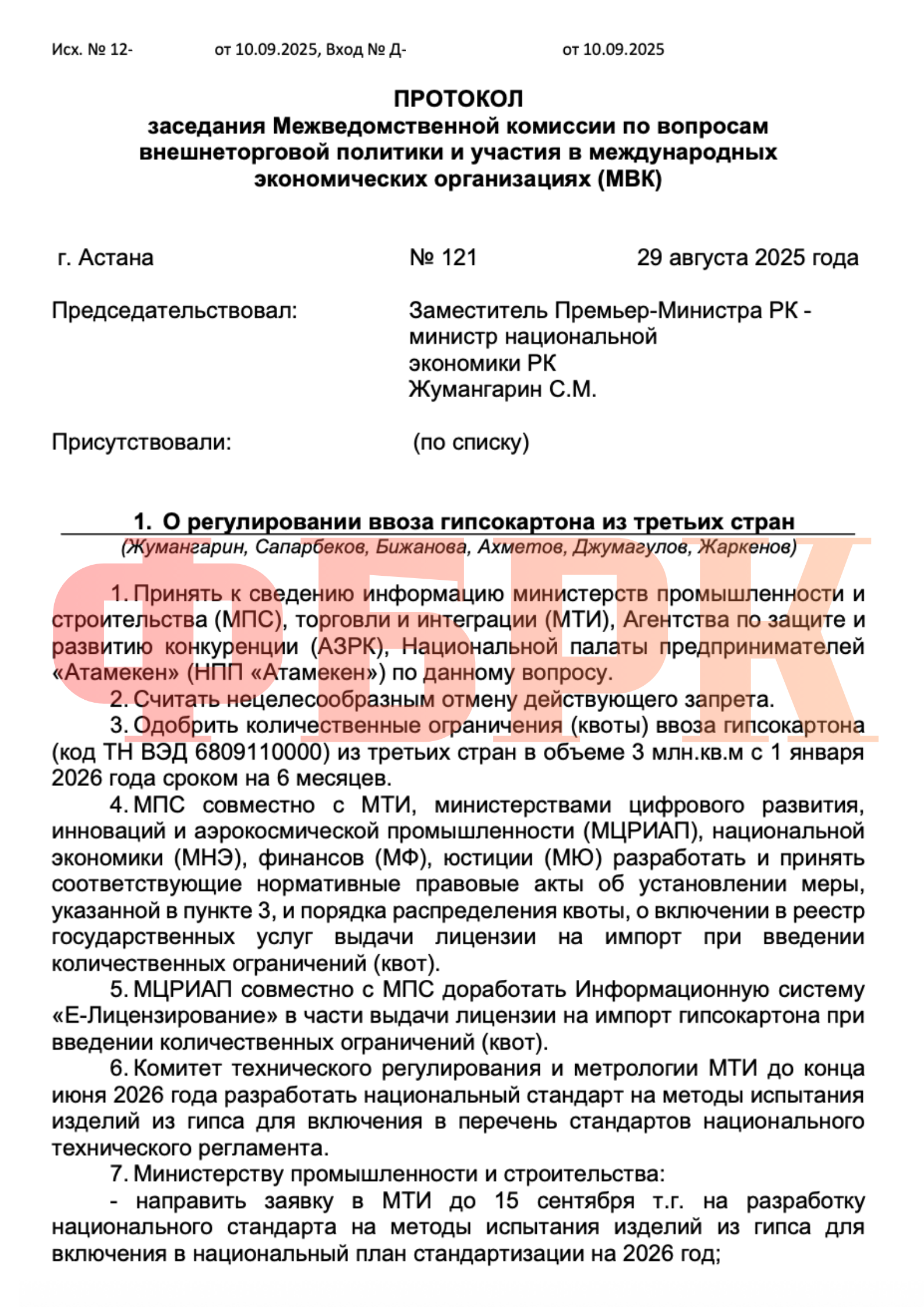

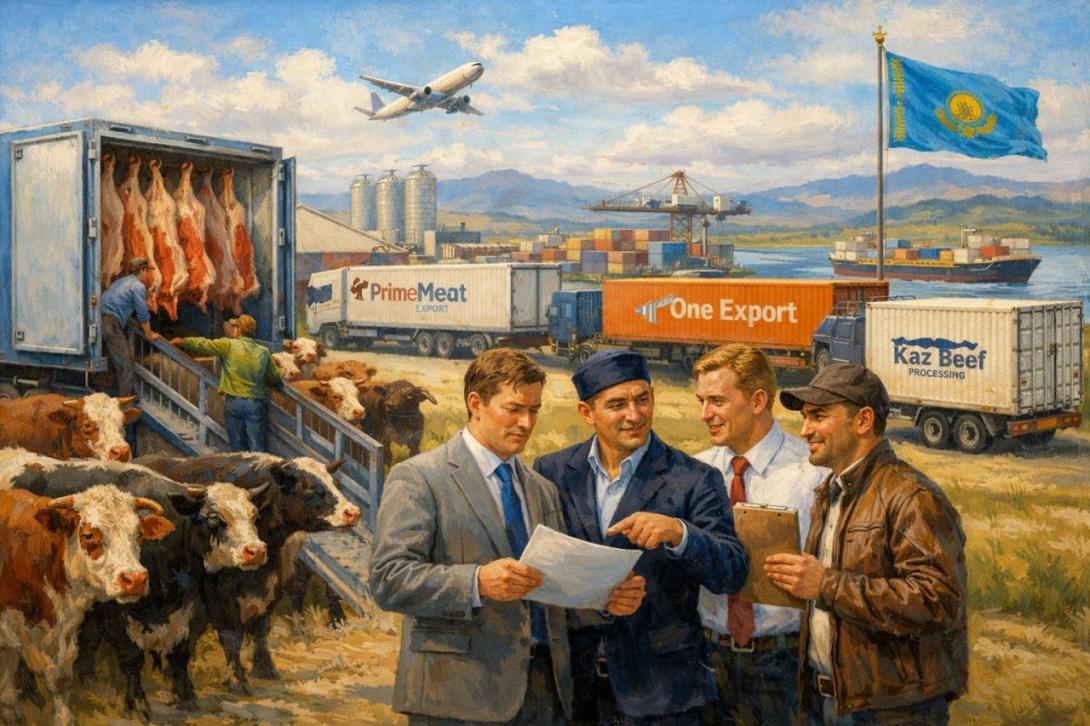
These companies are KazBeef Processing LLP, Terra-Akzhaik LLP via the export company PrimeMeat Export KZ, Terra LLP via Grain Industry Trading House, and Kaiyp-Ata LLP, operating via One Export. 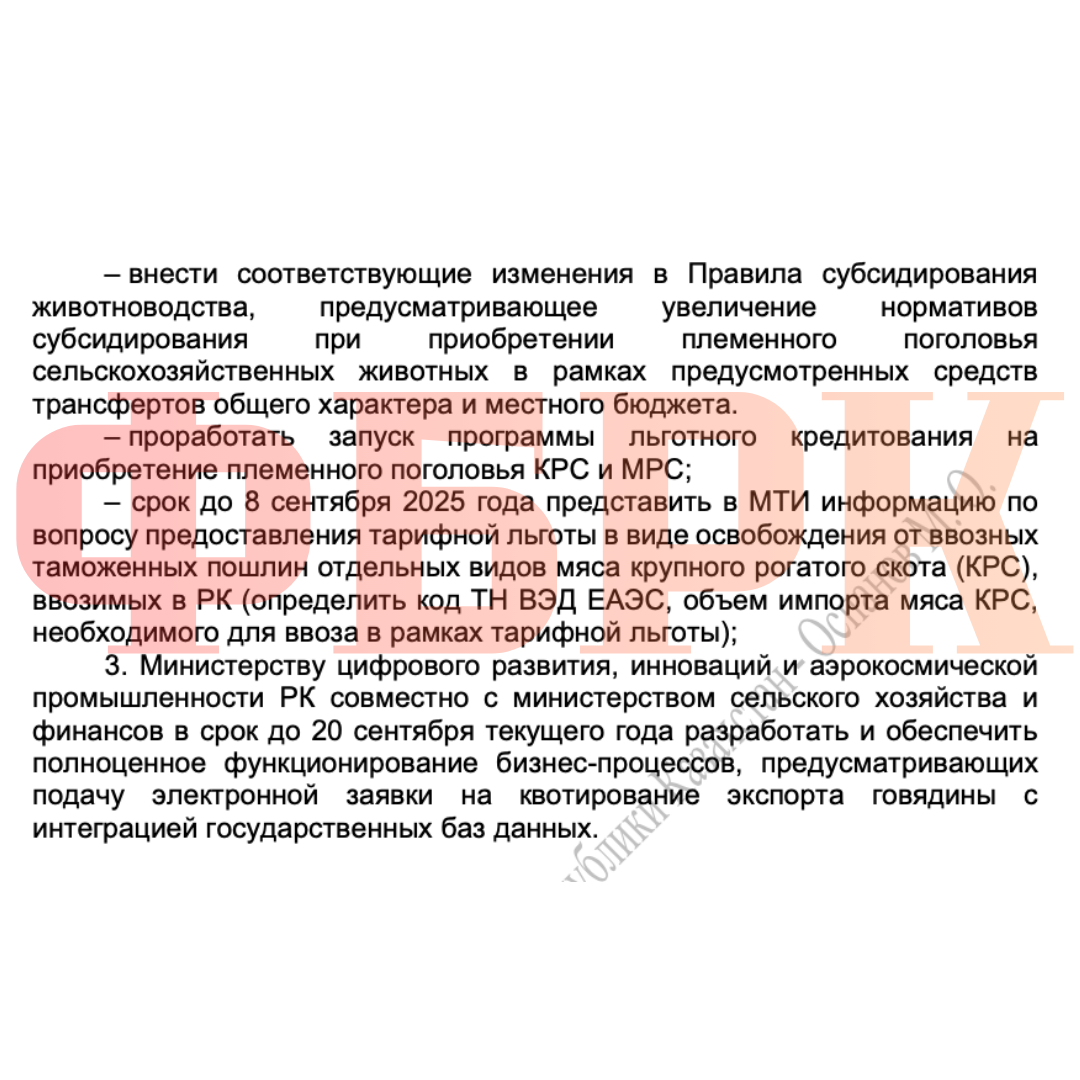 Now let us consider the version of the same protocol in the Kazakh language. This clause does not exist there. Not at all. The Kazakh text instead states that an export ban is inexpedient, and that the quota should apply only to third countries, excluding members of the Eurasian Economic Union (EAEU).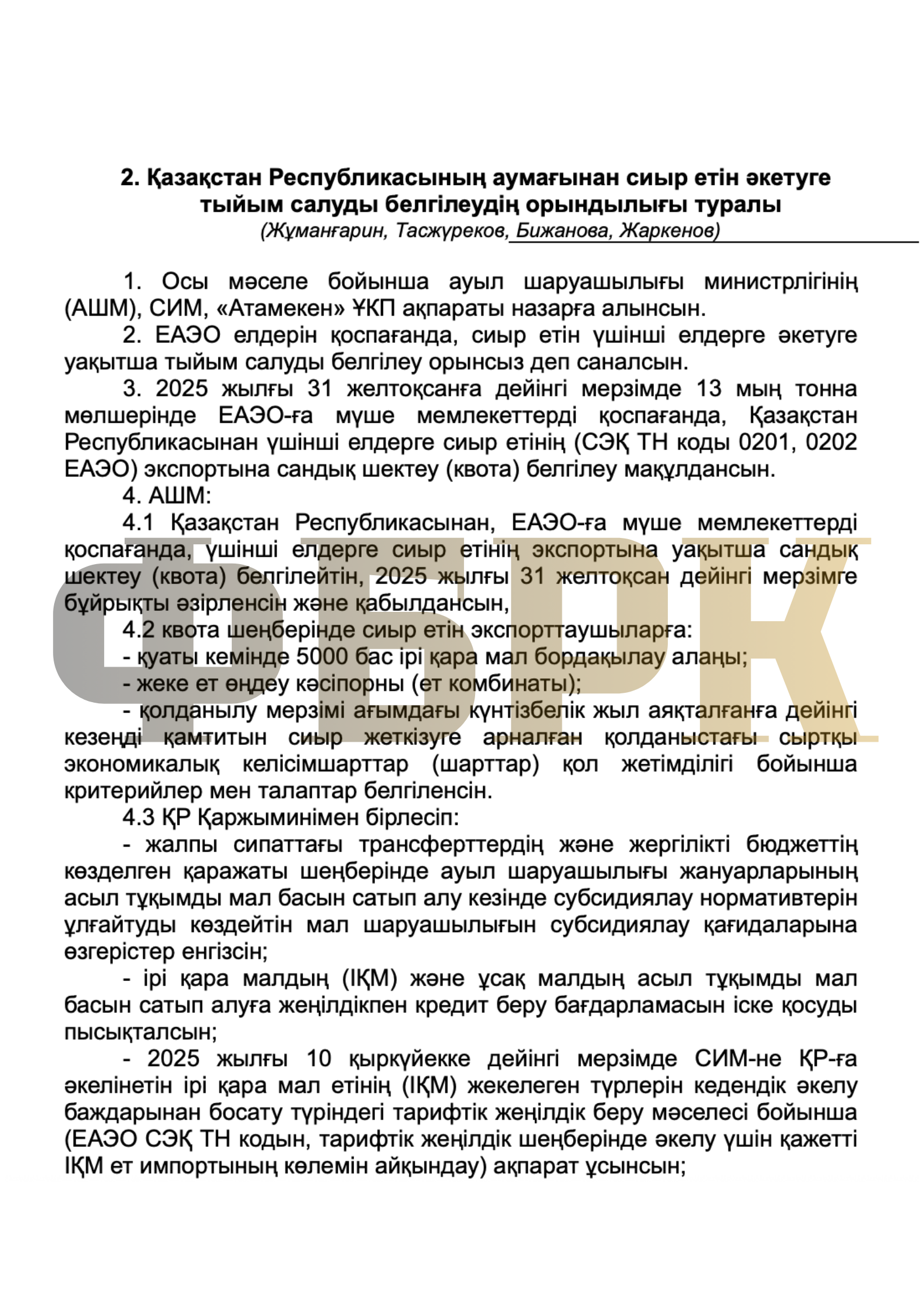
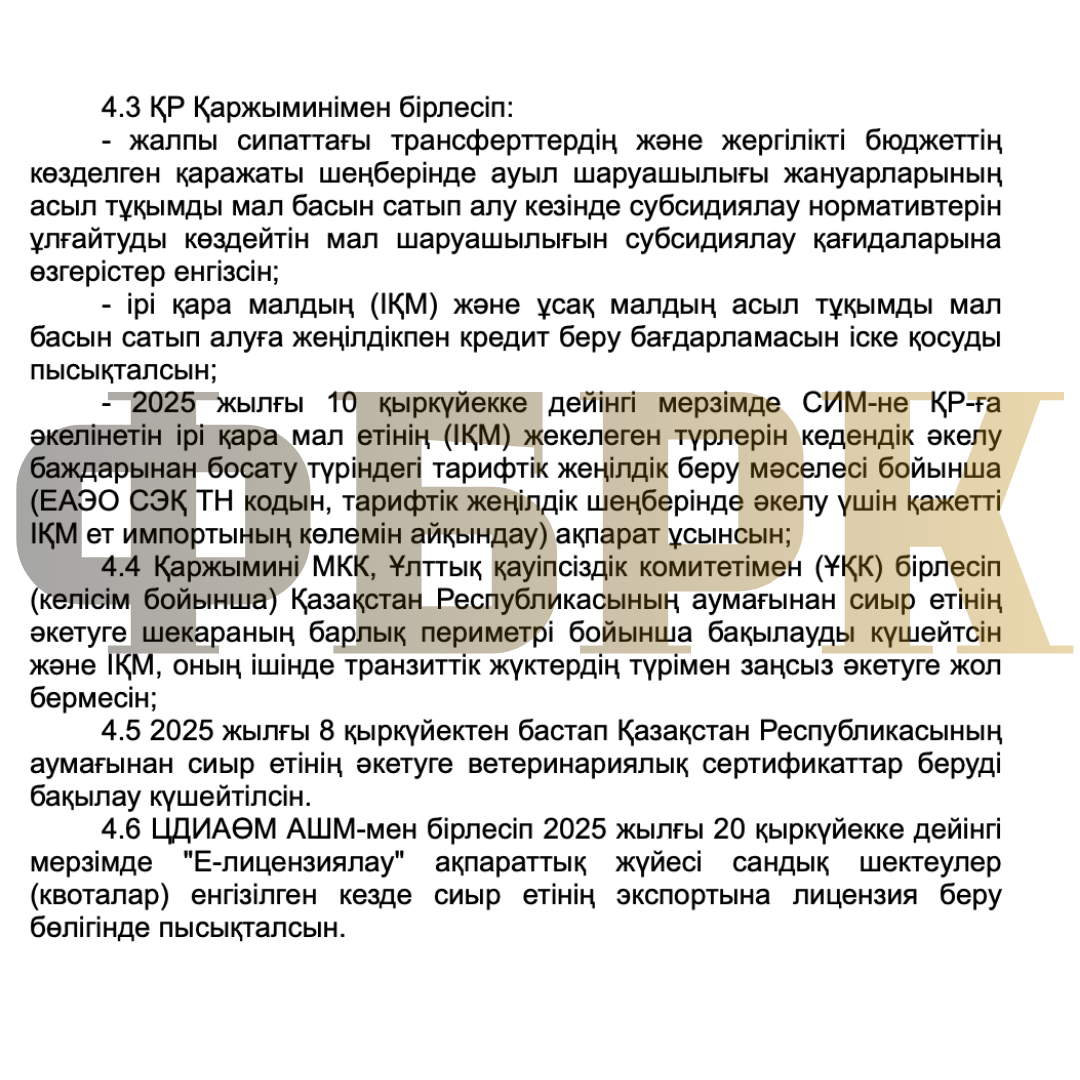
The commission's decision is dated late August, but the order from the Ministry of Agriculture (No. 441) appeared only on 28 November. It was registered with the Ministry of Justice on 1 December, and came into force after its publication.
Three months between the decision and its implementation. Three months during which the four companies, named only in the Russian-language text, could operate freely while the rest awaited the official introduction of the rules.
It should be noted that the protocol of the interdepartmental commission is an internal government document not usually published in the public domain. This means the discrepancies between the language versions could have remained a secret.
According to an anonymous source, the volumes of beef exported over the autumn period significantly exceeded the established limit (quota). Furthermore, exports were concentrated in the hands of a narrow circle of participants – precisely those companies that appear in the official documents.
Moreover, the source claims that export permits continued to be issued to certain participants even after the restrictive decision was adopted, but before it actually came into force.
If these claims are to be believed, it turns out that the discrepancy between the texts of a single government document gave four companies a de facto monopoly for three months. While the official rules for distributing quotas were being prepared, these companies exported goods worth what is likely tens of millions of dollars.
Whether this was the result of an awkward bureaucratic error, a translation discrepancy, or a deliberate decision favouring specific players is difficult to state definitively. But this inevitably raises another question: why were these particular companies placed in an advantageous position, and who made the decision that does not appear in one of the language versions of the official document.
These questions remain unanswered for now. However, too much about this story suggests that the discrepancy between the two versions of the protocol may have played a key role in the redistribution of export opportunities.
The FBRK editorial team will continue to investigate the circumstances surrounding this decision, its consequences, and its beneficiaries.
(KazBeef Processing LLP insists that no 'privileges' were granted to it and emphasises that the matter concerned exclusively the proper execution and completion of obligations under existing contracts. The company also stressed the complete transparency of its supply chains - ed. note FBRK)
Continuation to follow next year...