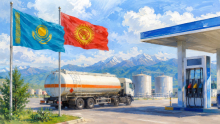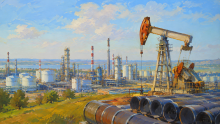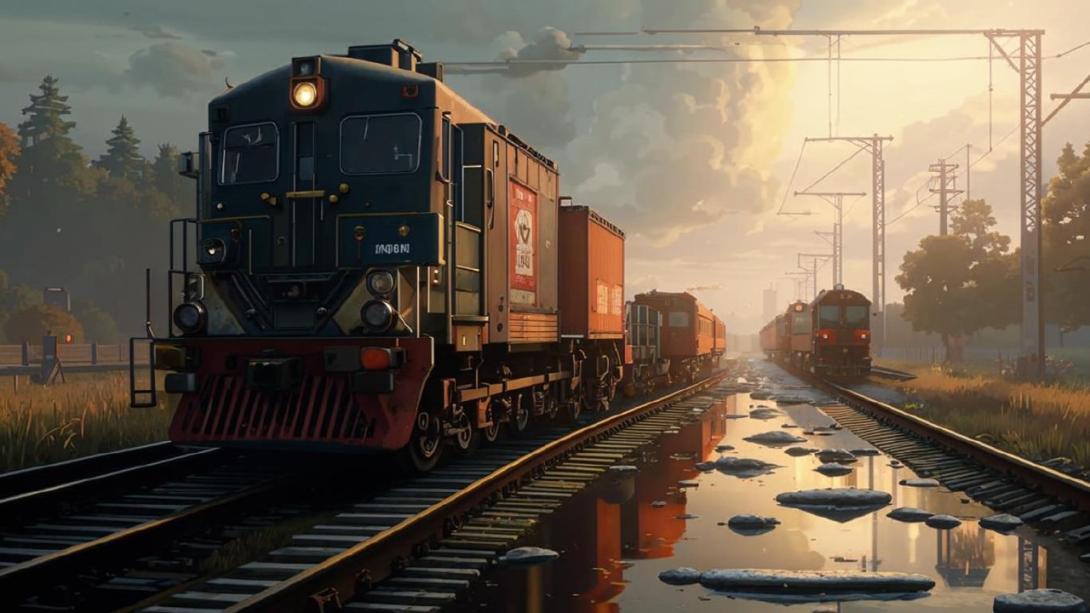
The Ministry of Energy is planning to extend the ban on the export of petroleum products by rail for another six months.
According to the press service of the department, the restriction may be extended to avoid a shortage of fuels and lubricants on the domestic market.
"The Ministry of Energy of the Republic of Kazakhstan has developed a corresponding draft joint order 'On some issues of exporting petroleum products from the territory of the Republic of Kazakhstan' to establish a six-month ban on the export of petroleum products from the territory of the Republic of Kazakhstan, including to member states of the Eurasian Economic Union, which provides for a ban on the export of petroleum products by road and rail", the statement says.
It is reported that there is currently an atypical increase in the consumption of fuels and lubricants and a decrease in reserves on the domestic market. In particular, significant growth is observed in the southern border regions of the country.
"This circumstance is due to the existing difference in prices for petroleum products in the Republic of Kazakhstan and neighbouring countries, which leads to their flow into border countries", the statement says.
The draft Joint Order was published on the website "Open NPA".
Recall that from 29 March 2024 a ban was introduced on the export of petrol, diesel fuel and certain petroleum products from Kazakhstan. The ban was supposed to last six months. In May, it was reported that Kazakhstan would additionally ban the export of liquefied petroleum gas by car and train for six months.
Shortly before this, it became known that since the beginning of the year, 103 attempts at the illegal export of fuels and lubricants amounting to 13,650 litres were detected on the Kazakhstan-Russia border, and on the Kazakhstan-Uzbek border 68 attempts, with the total volume of smuggled energy resources in this case amounting to 11,135 litres. Fines were issued totalling 3.7 million tenge.