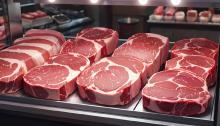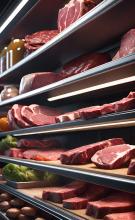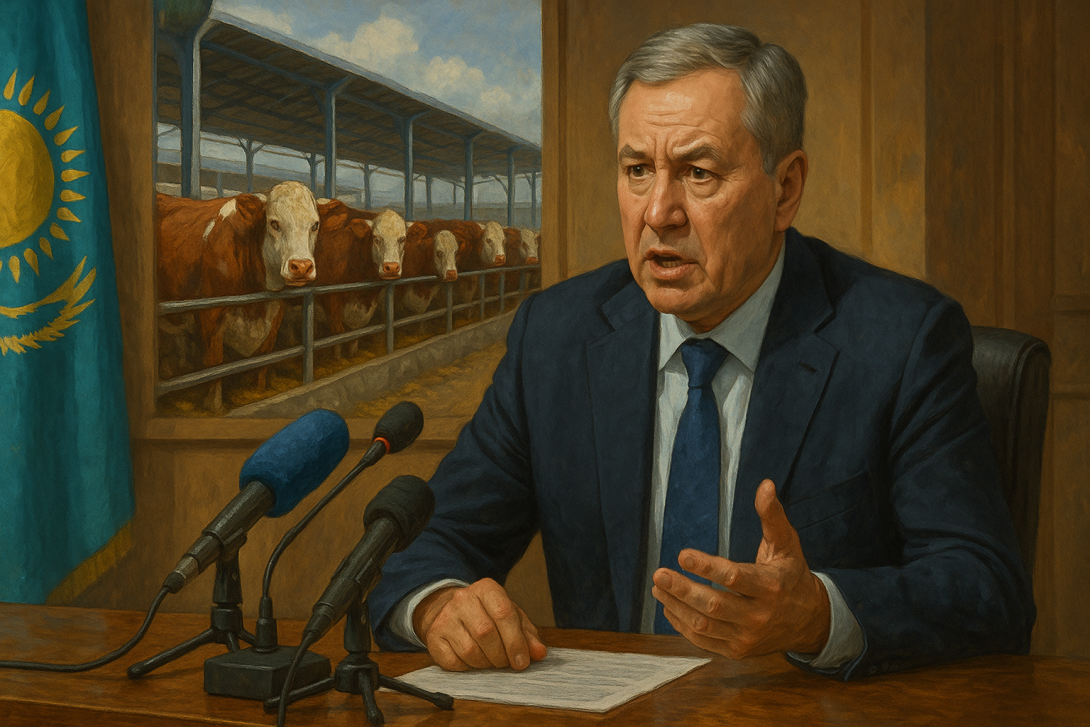
The former Minister of Agriculture, Chairman of the Meat Union of Kazakhstan Assylzhan Mamytbekov published a post criticising the introduced restrictions on beef exports and pointing to a possible decline in domestic production.
On his Facebook page, he reminded that in September of this year the government set an export quota of 13.5 thousand tonnes, and in October introduced a complete ban on beef exports, including supplies to EAEU countries.
"According to explanations from state bodies, the measure is aimed at ensuring food security, developing the processing of livestock products and stabilising beef prices," Mamytbekov noted.
He also drew attention to the fact that meat is being imported en masse from Russia into Kazakhstan, which is being sold at markets "for a pittance". At the same time, according to meat processors, neither the Russian counterparties nor the Kazakh recipients pay taxes.
According to Mamytbekov's data:
- in 2019, Kazakhstan exported 63 thousand tonnes of beef cattle meat (in the form of meat and live cattle in meat equivalent);
- the number of beef cattle in 2019 was 7.4 million head;
- by 2025, the livestock herd had grown to 8.7 million head.
However, the former minister emphasises that even with such an increase in livestock, the quota of 13.5 thousand tonnes noticeably affected the market.
"If such a small export volume has such a significant impact, it may mean that beef production volumes in the country have decreased considerably," Mamytbekov concluded.
Incidentally, Kazakhs on social media periodically raise the issue of rising beef prices. It was reported that over 8 months of the current year, beef cattle meat in the country rose in price by as much as 23%. In some cities, beef was sold at 7,100 tenge per kilogram.