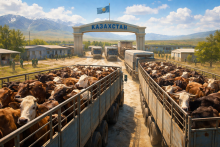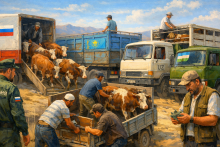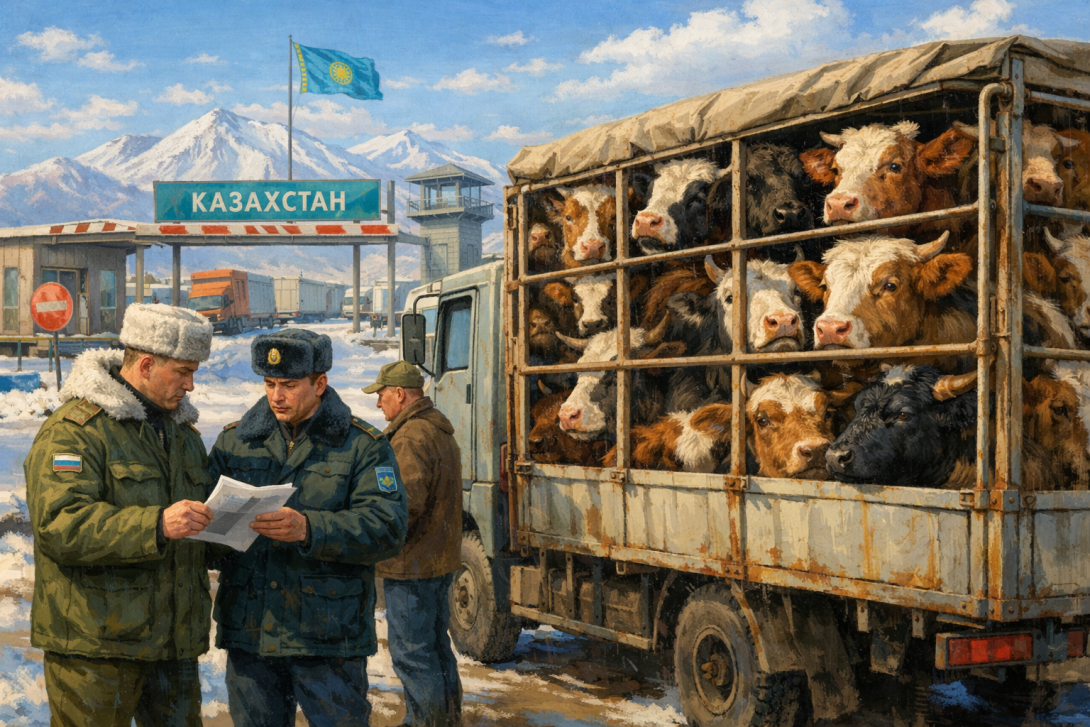
(22 January 2026 | Source: FBRC)
The editorial board of FBRC has obtained documents for the export of 100 head of cattle from Russia to Tajikistan via Kazakhstan. Formally, everything looks legal: there is a veterinary certificate, a border inspection report, and stamps.
However, upon detailed analysis, it transpires that 25 days passed between the processing of the documents and the actual border crossing, and the number of animals in a single transport raises questions about their transportation conditions.
FACTUAL BASIS
On 22 December 2025, the Russian state veterinary service issued a certificate for the export of 100 head of cattle to a recipient in Tajikistan.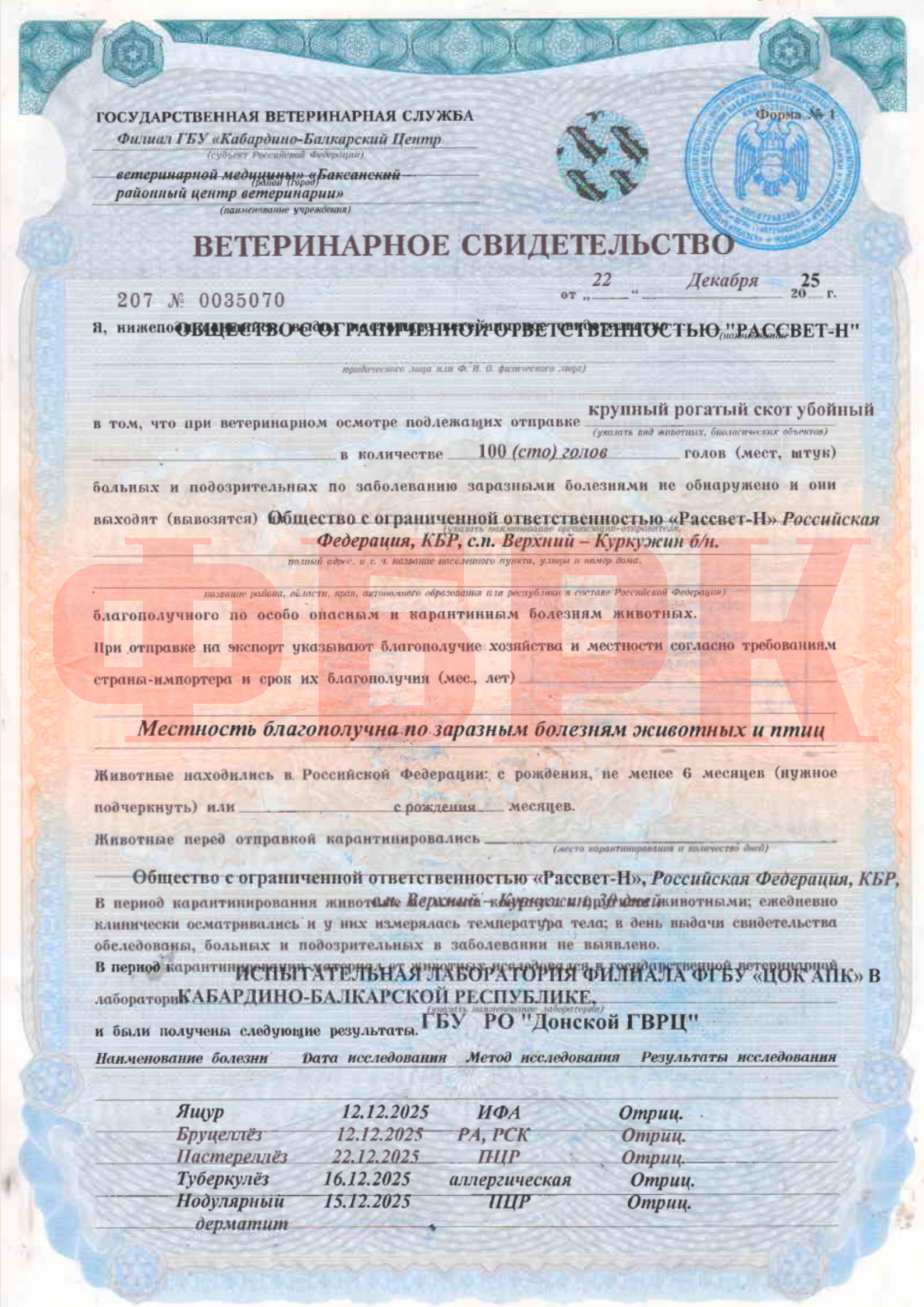
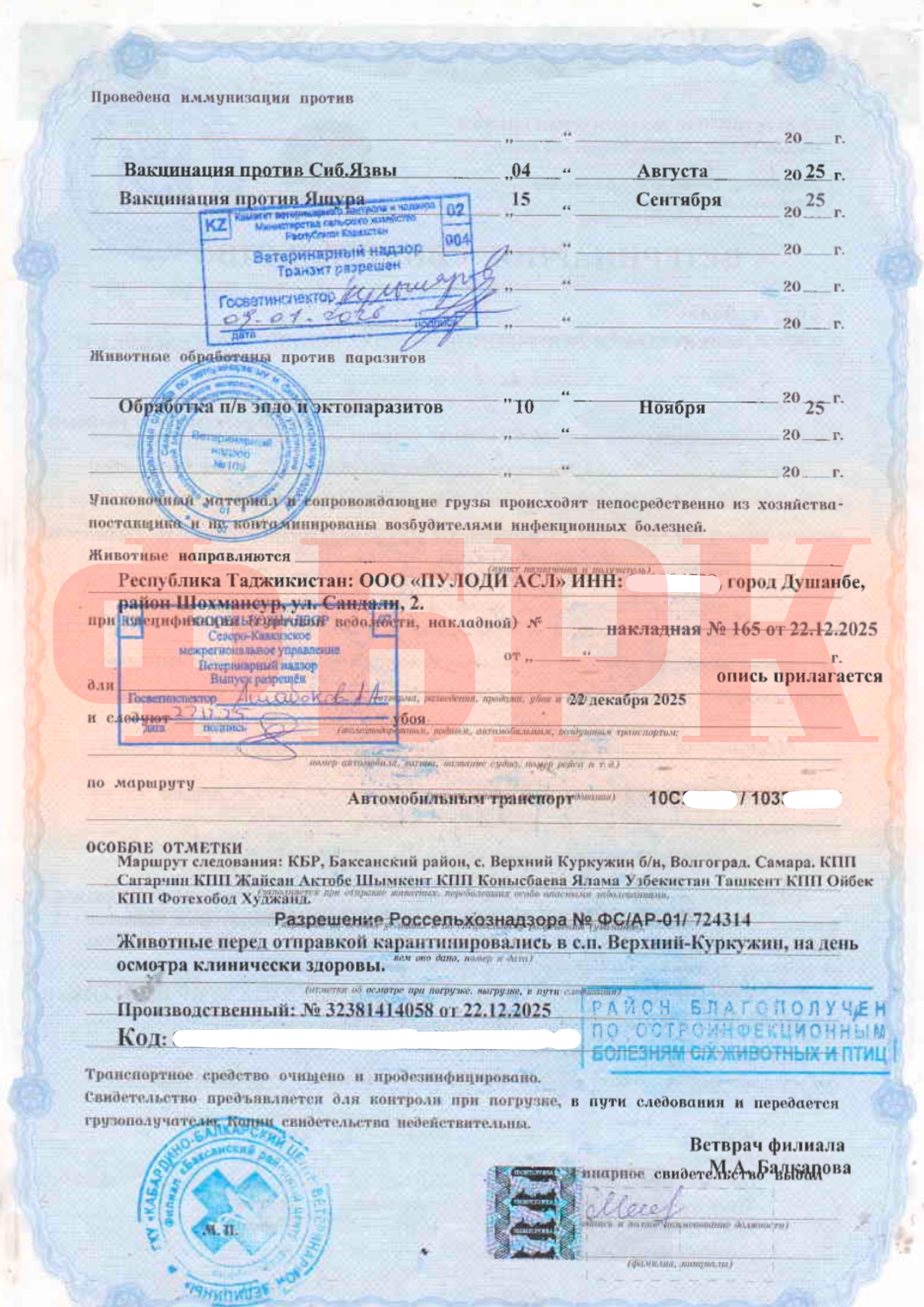
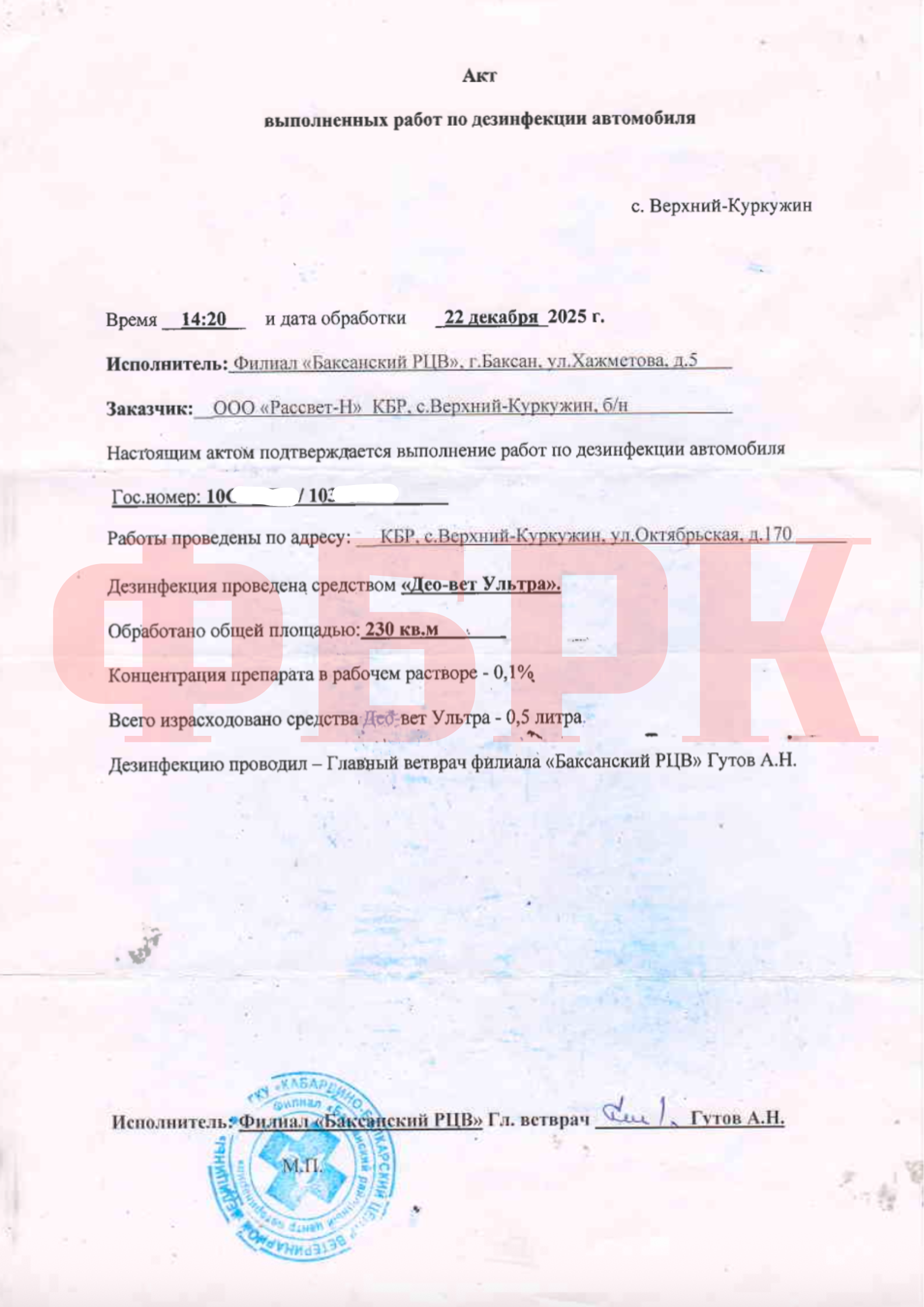
On 16 January 2026, this consignment arrived at the veterinary control post (VCP) named after B. Konysbayev. The chief specialist, Nasyrkhan Raimkulov, compiled an inspection report stating that the cargo matched the accompanying documents in all respects.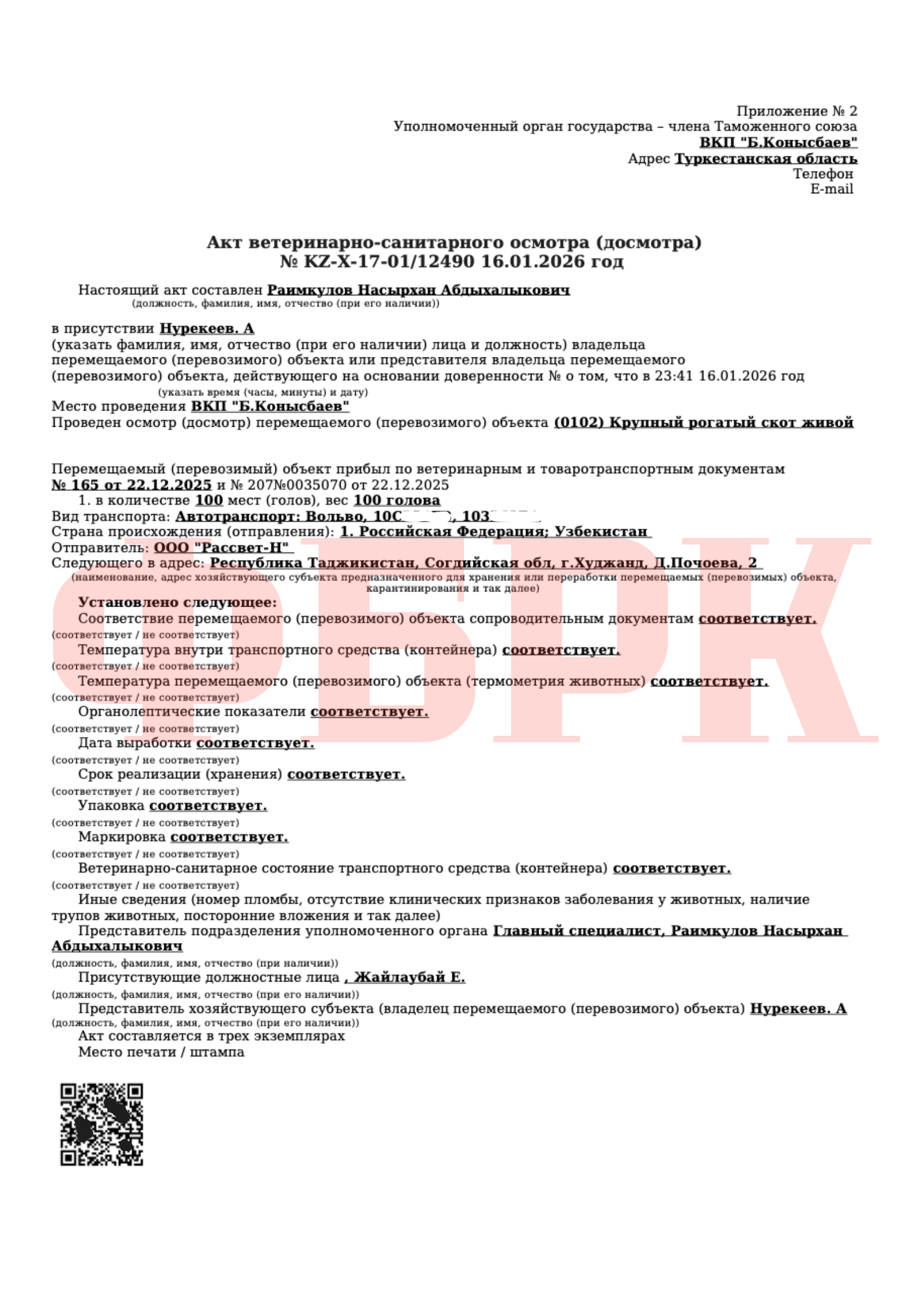
At the same time, 25 days passed between the issuance of the Russian veterinary certificate and the inspection at the Kazakhstani border.
CONTEXT AND REGULATORY FRAMEWORK
Veterinary certificates of form No. 1 are valid for five days from the date of issue. After five days, the guarantees of livestock health lose relevance: during this time, incubating diseases may manifest or living conditions may change.
Requirements for transporting cattle do not stipulate a fixed number of animals per vehicle, but they do mandate compliance with norms regarding space, living conditions, and animal welfare during transport.
In practice, this means accommodating approximately 12–16 head of cattle in one livestock trailer, which is necessary to ensure minimum space, access to water, and the ability to lie down during transportation.
INCONSISTENCIES IN THE DOCUMENTS
Comparing the papers reveals several oddities.
For example, almost a month passed between the processing of the papers and the actual transit. The animals could not have been in the transport the entire time. Even with feed and water, prolonged transportation under overloaded conditions would have led to mass livestock mortality due to stress, injury, and disease.
Furthermore, according to information from an FBRC source, the customs cargo declaration was issued on 13 January 2026, that is, three weeks after the veterinary certificate was issued, but three days before the actual passage through the Kazakhstani post.
POSSIBLE SCENARIOS
There are few logical explanations for these inconsistencies.
We might assume that the documents were prepared in advance and later used for a different consignment of animals. In this case, the real animals that crossed the border on 16 January have nothing to do with those 100 steers that were inspected in December.
Another option: the cargo did depart at the end of December but got stuck at an intermediate stage of the route. This then raises the question of the location of the animals' housing for three and a half weeks, and why the documents were not re-issued.
Or perhaps the scheme is well-practised and involves circulating the same papers for different deliveries. An FBRC source reported that earlier on the same route, five trucks were "turned away." This could indicate multiple attempts and possible coordination of actions between the parties in the chain.
ROLE OF THE KAZAKHSTANI SIDE
The Kazakhstani specialist put a mark of compliance next to the item regarding validity periods. Likely, the date was either not checked at all, or was deliberately ignored.
The report is signed in the presence of a representative of the cargo owner and an official. This means all participants in the inspection confirmed that there were no objections to the documents.
The overloading of the transport is a particular cause for concern. 100 head in one vehicle means the animals were probably kept in conditions incompatible with the basic requirements of humane and safe transport. This is no longer a matter of bureaucratic formalities, but a matter of the physical condition of living beings.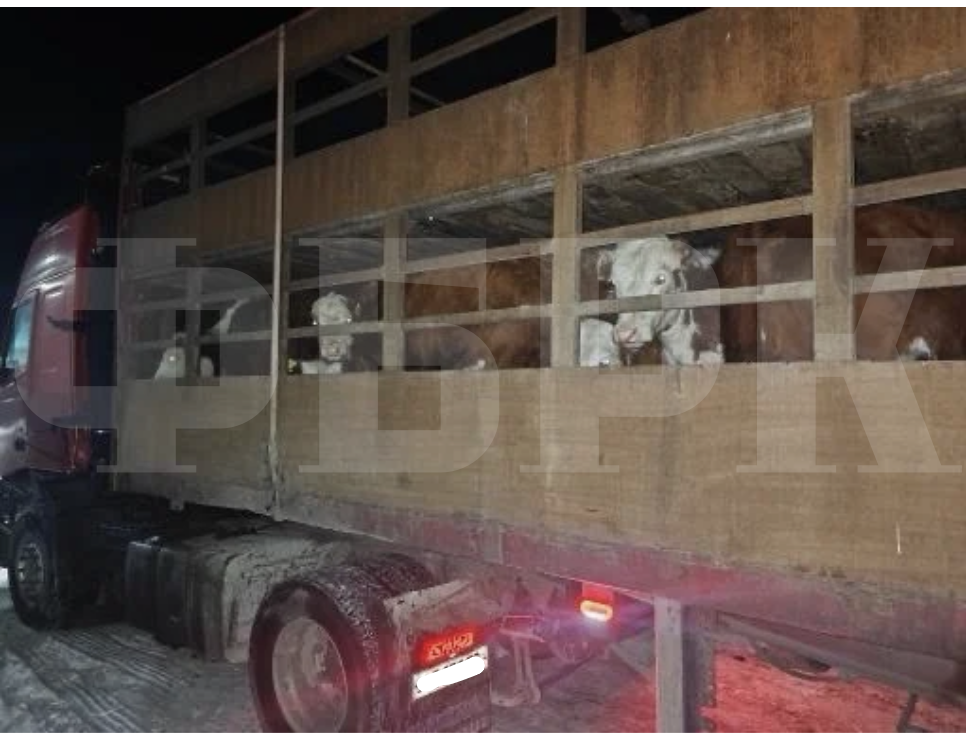
And as long as the parties in the chain are confident in their impunity, the number of such incidents will grow. The question is not even how often this happens, but why it happens at all, and who is covering up such obvious violations.