In the North Kazakhstan region, a case of inefficient use of more than 3.3 billion tenge was identified during the construction of unique closed-type treatment facilities in the village of Novoishimskoye, Gabit Musrepov District. The facility, which is 95% complete, was never transferred into municipal ownership, and the project could not be completed due to systemic errors — from design to public procurement and supervision.
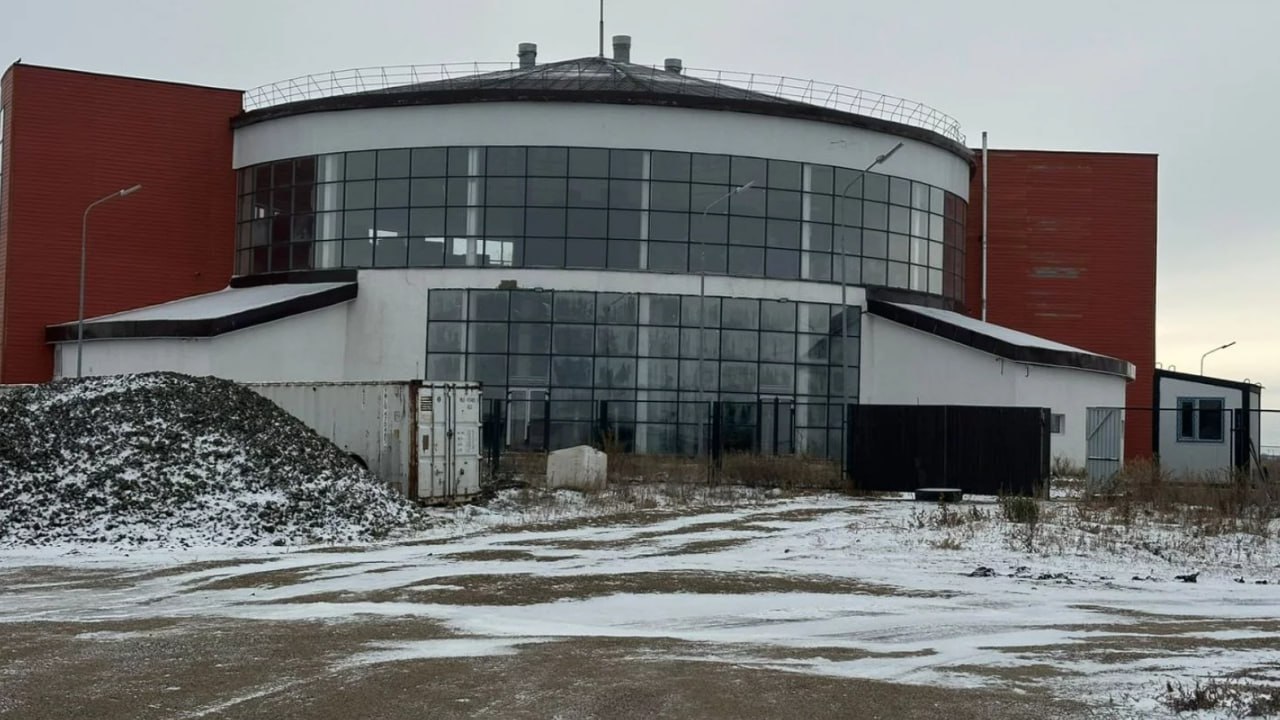
According to ORDA, in May 2018, the district housing and utilities department entered into a contract with Caspian Contractors Trust LLP for 3.3 billion tenge. The company undertook to build sewer networks and closed-type treatment facilities within a year.
The project was described as a pilot: the wastewater was to undergo multi-stage treatment — from mechanical filtration to ultraviolet disinfection — and the placement of tanks inside the building, according to the designers, would prevent the waste from freezing and eliminate unpleasant odours. The facility was included in the roadmap for solving the region's environmental problems until 2025, but the project was never put into operation.
It emerged that not a single certificate of work completed was signed between 2021 and 2024. Meanwhile, the client concluded 18 additional agreements, repeatedly changing deadlines and the financing schedule: the standard 21 months stretched to 74 months.
The inspection revealed violations in public procurement, design, construction, and the spending of budget funds. The project was approved without a feasibility study, and the selected technological solution was intended for cities with populations of 1.2 million to 8 million people. Novoishimskoye, however, has approximately 12,000 residents, half of whom use independent sewage systems.
It is noted that the client allowed the loss of bank guarantees worth 164 million tenge, and a prematurely filed lawsuit against the contractor led to the rejection of the claims. An expert assessment found that the certificates of work volumes did not match the actual degree of completion.
"The project was initially designed for 6,000 cubic metres per day. In 2020, the capacity was halved to 3,000 cubic metres, but the project cost did not decrease. Furthermore, in September 2024, the contractor carried out work without permission from the state architectural and construction control authority," the commission reported.
Commission member Marat Yebzhanov noted that the final result was not achieved, and the budget incurred significant costs that did not match the real needs of the settlement.
At the meeting, local officials tried to explain the reasons for the delays. According to the district deputy mayor Yerlan Amanzholov, one of the reasons was the pandemic, as well as the absence of certain equipment in the project.
"The facility itself is technically complex and large. There was a revision of the project, and it did not include equipment without which this facility will not work. Because of this, we want to conduct a judicial expert assessment of the entire facility and revise the project to include the additional equipment. Plus, according to the project, there is no laboratory, which is mandatory because these are waste treatment works; samples need to be taken," he said.
The district authorities are currently suing the contractor, seeking the return of the cost of the remaining 5% of the work — 153 million tenge — and to impose an obligation on the project author to carry out the revision.
According to preliminary data, the facility will not be able to be commissioned before 2027. It is possible that additional funding will be required to complete construction. The commission meeting also raised the question of the future tariff.
"We calculated that 300 million tenge a year would be spent on electricity alone. But wages also need to be paid, and there will be additional costs. Without state subsidies, the cost of services for the population will be astronomically high," the deputy mayor reported.
It is noted that over 7 years, the project saw four different district governors (akims), but not one of them managed to complete the construction of the facility, which was initially described as key to improving the environmental situation in Novoishimskoye.