It took almost six years for Majilis deputies and the Supreme Audit Chamber (SAC) to publicly draw attention to the billions of tenge in budget funds allocated for connecting engineering infrastructure to a soda plant that was never built.
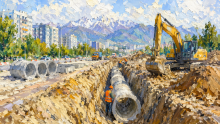
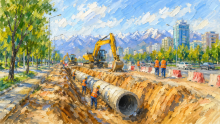
According to Hronika.kz, infrastructure elements for this enterprise were first recorded in May 2020. This concerned water supply pipes, sewage systems, and heating networks laid to a plot of agricultural land. At that time, public hearings on the preliminary environmental impact assessment of the enterprise had failed once again.
Ecologists, chemists and other specialists pointed out that the chosen technology for producing soda ash — the Solvay method — is environmentally outdated and potentially dangerous for the region.
In their estimation, each tonne of product would generate up to two tonnes of waste, and the water intake could lead to the shallowing of the Irtysh River. Meanwhile, the Solvay method remains the cheapest.
At the beginning of 2020, after the appointment of Abylkhair Skakov as akim of the Pavlodar region, journalists asked him about the prospects for building the soda plant. He stated that the project could not proceed without holding and approving public hearings. However, it later emerged that during the same period, utilities were already being connected to the future plant — two water pipelines, a sewage system, and heating networks worth a total of approximately 1.5 billion tenge.
It is reported that later, a power line costing around 1 billion tenge was built for the project. Furthermore, part of the special economic zone territory was transferred for the needs of Pavlodar-Soda LLP without notifying the SEZ management, despite the company not being a member of the zone.
The public hearings were ultimately deemed to have taken place only in July 2021 — in an online format, using administrative resources. Meanwhile, the design and estimate documentation for the plant was never developed.
After Danial Akhmetov finally left government service, potential co-investors lost interest in the project. Moreover, in September 2021, construction began on a soda ash plant in the Zhambyl region with a capacity five times greater than what was planned in the Pavlodar region.
Journalists have been raising the question of the fate of the already-built infrastructure at briefings of the Pavlodar regional akimat for several years. Thus, on 19 December, the akim of the Pavlodar region, Asain Baikhanov, was again asked about the possibility of using the idle networks. He stated that the water pipelines and sewage system are not yet being transferred to other facilities — in case a potential investor returns.
On 24 December, at a plenary session of the Majilis, the head of the SAC, Alikhan Smailov, publicly raised this case.
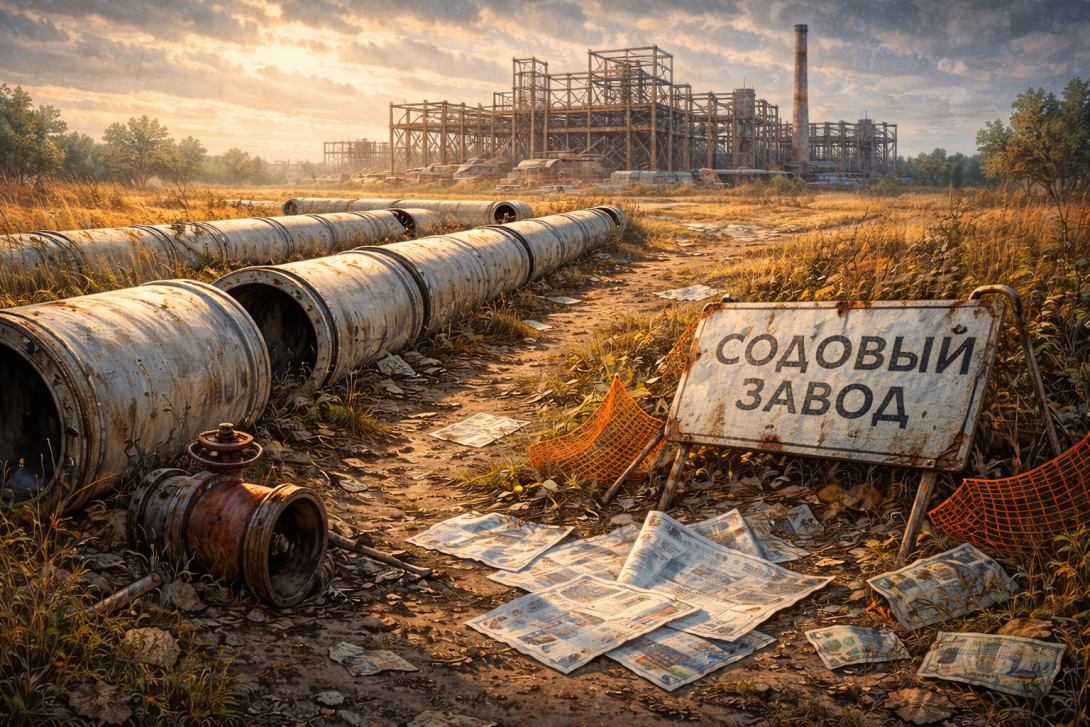
"Recipients of state support measures must have counter-obligations placed upon them. If these are not fulfilled, the funds are subject to repayment. However, such obligations were not always stipulated. As a result, in Pavlodar, engineering networks worth 2.4 billion tenge were connected to a plant that effectively does not exist," Smailov stated.
Several Majilis deputies mentioned this fact in their speeches. Via video link, the Deputy Akim of the Pavlodar region, Aigerim Kabyltayeva, was heard, who clarified that the total cost amounted to 2.5 billion tenge, of which 1.1 billion tenge from the regional budget must be returned to the republican budget.
At the same time, it remains unclear whether financial claims will be made against the project's investor — Talgat Akhmetov, who was previously listed among the wealthiest Kazakhs according to Forbes.kz — or whether the responsibility for repaying the funds will fall entirely on the regional budget.
Journalists were told by the press service of the Akim of the Pavlodar region that, in accordance with a directive from the SAC, 1 billion tenge spent on infrastructure construction will be reimbursed.
It is also noted that if the investor definitively abandons the project, the authorities will consider the possibility of using the already-built infrastructure for other priority projects in the region.