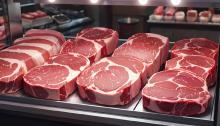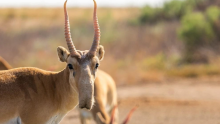
In August, Kazakhstani shoppers were able to buy saiga meat in shops for the first time. This product, unusual for most of the country's residents, appeared on the shelves of eleven cities and regions at a price of 1,200 to 1,600 tenge per kilogram.
According to Informburo.kz, 21 slaughter points in eight regions of the country have already processed 40,000 carcasses of steppe antelopes.
The sales geography covered an area from the capital to remote villages of the Kostanay region, with the highest prices recorded in Astana and Almaty — at 1,600 tenge per kilogram.
In the regions, saiga meat can be bought more cheaply: in the villages of the Kostanay region — from 1,200 tenge, in Aktobe and Taraz — at 1,300 tenge.
However, Kazakhstani appetites for exotic meat turned out to be quite selective. In Astana, despite active trading, only 2,698 carcasses were sold, which, at an average price of 1,600 tenge per kilogram, brought in around 73 million tenge in revenue. In Almaty, demand was even more modest — only 389 carcasses found buyers, generating approximately 10.6 million tenge for traders.
A completely different picture emerged in the West Kazakhstan Region, where residents purchased around 16,000 carcasses — almost half of the total volume of prepared meat.
At an average retail price of 1,550 tenge per kilogram and an average saiga weight of 18 kilograms, revenue from sales here would exceed 445 million tenge — an amount more than five times greater than the income from saiga meat sales in all other cities of the country combined.
This consumption pattern is easily explained: in the western regions, where saigas traditionally live, the local population has long been familiar with this type of meat and knows how to cook it.
The company "Kublei" is also located here, purchasing almost 10,000 carcasses for producing canned goods at a price of 1,300 tenge per kilogram.
Thus, the authorities have signalled a course towards the commercialisation of natural resources, turning controlled (if official reports are to be believed) culling into a source of income for the state.
However, low demand in large cities may be explained not only by the absence of consumer culture, but also by justified doubts about the quality of the product. Not long ago, the FBRK editorial team even attempted to speculate on how the methods of obtaining and controlling saiga meat potentially affect the safety of this heavily advertised delicacy for the consumer.
Perhaps urban shoppers are intuitively showing reasonable caution, understanding that saving a few hundred tenge per kilogram could lead to much greater expenses on recovering their health.
For context, at the beginning of September, a video appeared in the media showing the internal organs of saigas scattered across the steppe, serving as yet another piece of evidence of the potential failure of state policy in the field of wildlife protection.
This is far from the first sign that the Ministry of Ecology has again lost control over the process that it itself initiated. And this happened thanks to the so-called biological justification, the materials of which the ministry is hiding from the public.
The FBRK editorial team spent months beating against the brick wall of government departments — we appealed with requests to make public the biological justification for the saiga cull, but received one refusal after another. And when we addressed an open letter to the Prime Minister, we were, as if with mocking politeness, redirected to that very Ministry of Ecology, whose officials are the ones who support this opaque system.
The absurdity of the situation knows no bounds. The state classifies as secret documents about the culling of red-listed animals, and when journalists and the public ask uncomfortable questions, it sends complainants back to the very officials who built this system.
It turns out that the transparency of the "listening state" is as much of a variable as the price of the steppe delicacy.