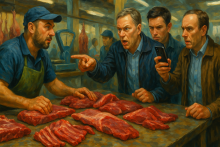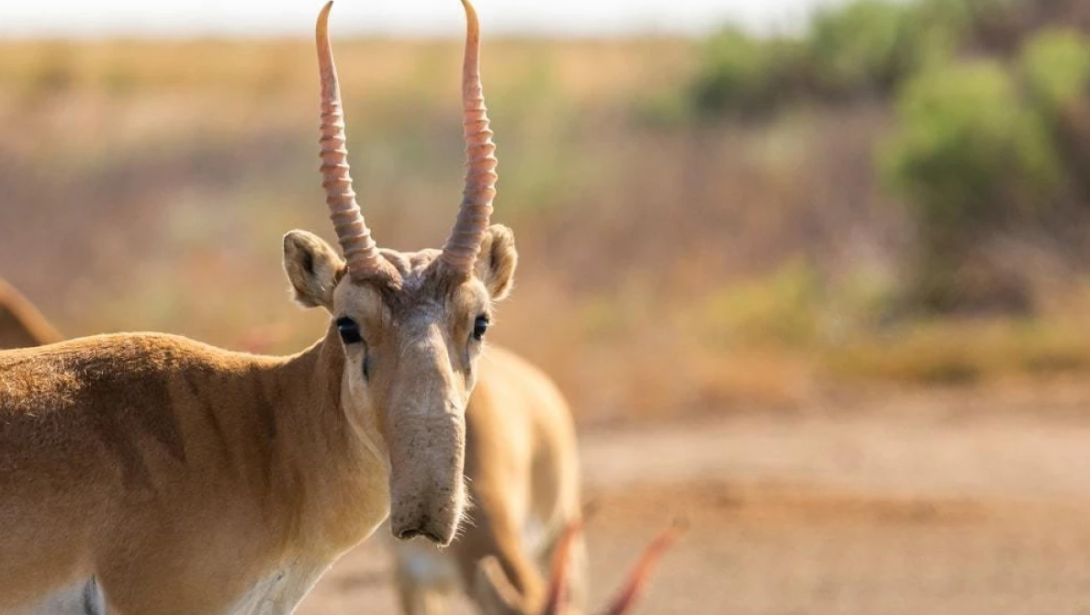
Sales of saiga meat have begun in Kazakhstan. The Minister of Ecology and Natural Resources, Yerlan Nysanbayev, has assured citizens of the product's quality. However, the appearance of wild animal meat on the market raises a number of questions that are worth discussing.
Minister of Ecology and Natural Resources Yerlan Nysanbayev is confident: if the meat has reached the market, then there is nothing to worry about. According to him, the carcasses are delivered to certified meat processing plants, where sanitary and veterinary specialists work, and all necessary analyses and procedures are carried out. The minister emphasised that "there should be no doubts about the quality of the meat".
No doubts at all; surely Minister Nysanbayev himself enjoys the safe saiga meat. Nevertheless, let us try to think things through a little.
Saigas are obtained in the wild using a method specialists call "coral slaughter". The animals are herded into a confined space and mass shooting takes place. It makes you wonder, how does this technology affect the quality of the resulting product?
When under stress, mammals experience a powerful release of cortisol, adrenaline, noradrenaline and beta-endorphins. Cortisol raises blood glucose levels and accelerates the breakdown of muscle tissue, reducing the water-holding capacity of the meat. Adrenaline and noradrenaline cause sudden muscle contraction and deplete glycogen stores. Without glycogen, the enzymatic ageing process of the meat is disrupted, which can make it dark, tough and dry. What do you think, does such meat store well and is it suitable for long-distance transport?
Does meat obtained after stressful coral slaughter meet international veterinary standards for humane animal treatment? Does this technology comply with religious norms for halal and kosher slaughter? Something to think about.
Another issue is that the habitats of saigas coincide with areas of natural foci of various diseases. According to maps of zoonotic disease distribution in Kazakhstan, the migration areas of the three main saiga populations – the Ural, Ustyurt and Betpak-Dala – overlap with foci of anthrax, echinococcosis, tularemia and plague.
Already feel like buying saiga meat? Then here are a couple more questions: how effectively do field slaughter conditions allow for the detection of infected carcasses? Are there veterinarians on-site and laboratory equipment for analysis at the point of capture?
Incidentally, anthrax spores can survive even after home cooking. Echinococcus larvae accumulate in the liver and lungs of animals that drink from the same water sources as livestock. During field evisceration without sanitary protection, parasite eggs can get onto knives, the hands of those doing the butchering, and then onto the meat. What do you think, is it possible to ensure the necessary sanitary conditions in the steppe?
Saiga migration routes can also pass through areas with radioactive sources and former military test sites, and across fields with excessive pesticide residues. And heavy metals, as it happens, tend to accumulate in muscle tissue. Perhaps Minister Nysanbayev could tell us, are analyses conducted for the presence of these substances in the meat of wild animals?
And these are just a few of the many questions worth asking before buying lottery meat. On the other hand, is there any reason not to trust a ministry that hides the biological justification for the saiga cull from the public? That is what we think, too.