Dear Olzhas Abayevich,
FBRK is addressing you with an open letter in connection with the unprecedented situation surrounding the mass culling of saiga antelopes in Kazakhstan. As of today, it appears evident that the campaign for 'population regulation' is being implemented in complete secrecy, with the public relegated to the role of silent observers, obliged to trust the ministry's statements without any means to verify their scientific validity.
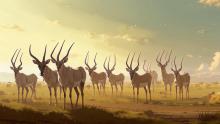
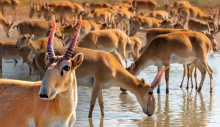
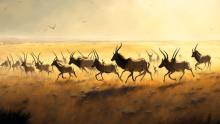
In July 2025, a mass cull of the rare steppe antelope began in Kazakhstan. And although this decision affects every citizen of Kazakhstan, the actions of state authorities rather suggest attempts to conceal the true reasons for the cull.
The saiga is not just an animal, but a part of the national natural heritage, one of the symbols of the Kazakh steppes. As a Red List species, saigas are under international protection, and Kazakhstan has obligations to the global community for their conservation. Any decisions regarding the use of natural resources are made in the name of the people and using taxpayers' funds, meaning we have the right to know the justification for such decisions. This right is a fundamental principle of a democratic state.
FBRK appealed to the Ministry of Ecology and Natural Resources with a request to provide the scientific justification for such a significant decision. However, provision was refused on grounds of copyright. In other words, the department indicated that scientific work carried out by a state institution using budget funds under a state assignment had suddenly become commercial intellectual property.
We explained that copyright law explicitly permits the use of materials for informational purposes. The Ministry of Ecology then stated that, 'since this biological justification is a document linked to an official-use document, it is not subject to distribution'.
What exactly is a 'document linked to an official-use document'? According to this logic, not only the document itself can be classified, but also any information associated with it. Where are the limits of such 'association'? Or should documents linked to documents, which are linked to other documents, which are linked to official-use documents, now also become inaccessible?
The central question is this: on what grounds was the biological justification given a 'for official use' classification? The Ministry merely stated that the document was 'developed as part of fulfilling a Government directive' with the corresponding marking, without providing any explanation regarding the reasons for the classification.
Yet, according to the very Rules the Ministry refers to, only 'information whose dissemination restrictions are dictated by official necessity' can be recognised as restricted official information. What official necessity requires the classification of scientific data on the saiga population? What harm could the publication of research methodology or statistical data cause to the state?
Today, a situation is developing where decisions about the culling of nationally significant animals are made in secret. It creates the impression that the goal of secrecy is not to protect state interests, but to conceal the weakness of the scientific basis.
We cannot know the truth as long as we are denied access. But the citizens of Kazakhstan have the right to understand on what basis the fate of national heritage is being decided. The saiga is not just an object of economic use, but also an important part of the ecosystem, the cultural code, and the country's international commitments.
FBRK asks you to order the declassification of the biological justification. If it is high-quality scientific work, its publication will strengthen trust and the state's position. If the evidence base is weak, then the people should know this.
Transparency in decision-making is not a luxury, but a condition of trust between the authorities and society. Especially when it concerns the environment and the country's future. We hope for your understanding and await constructive steps from the Government to ensure openness of information.