(4 March 2026 | Source: FBRK, Orda.kz)
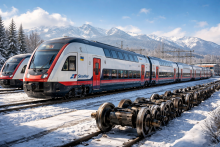
The delivery of 51 Stadler passenger carriages for JSC «NC «Kazakhstan Temir Zholy» (KTZ), scheduled for December 2025, is delayed. The Ministry of Transport cited differences in technical standards between Switzerland and Kazakhstan and additional questions regarding the carriages' parameters as the reason.
Earlier, FBRK warned about possible technical compatibility issues between the new carriages and the railway platform infrastructure.
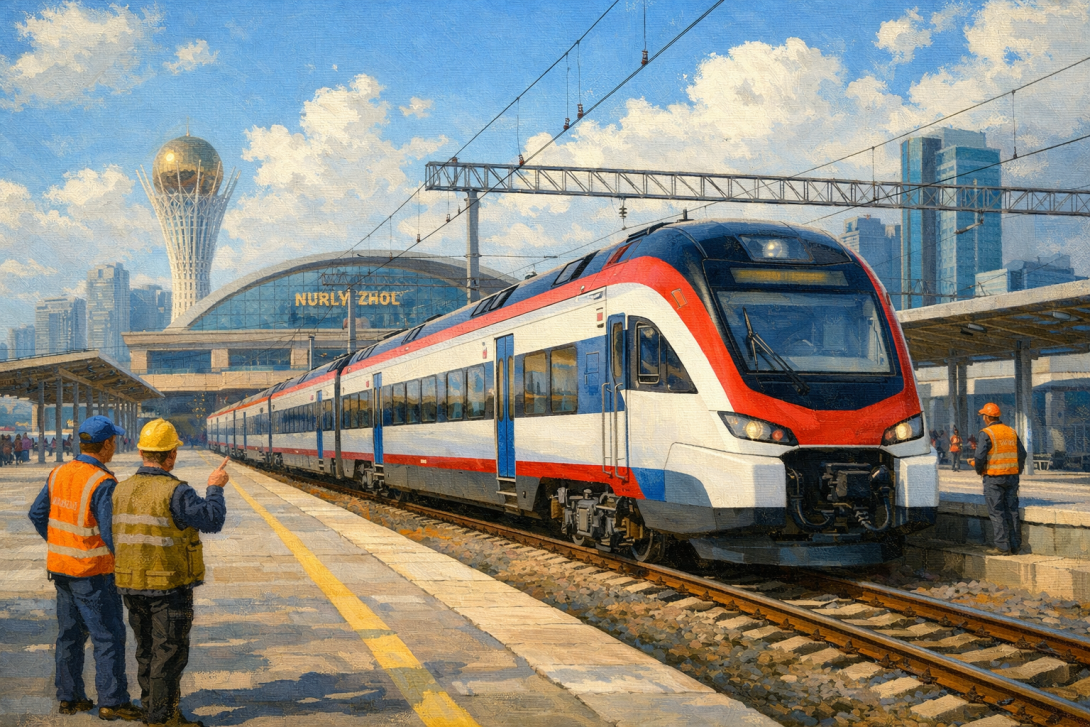
FBRK WARNED OF RISKS TO CARRIAGE COMPATIBILITY
We wrote about possible compatibility problems for the new carriages with the infrastructure as early as December 2025. At that time, the editorial team obtained the technical parameters for the platforms of Nurly Zhol station in Astana from KTZ upon request and compared them with the specifications of the Stadler carriages.
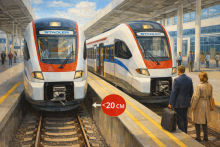
According to company data, the width of the Stadler carriage body is 3100 mm, that is, 1550 mm from the track centre to the edge of the carriage. Meanwhile, the distance from the track centre to the edge of the platforms at Nurly Zhol station is:
- 1745 mm on tracks No. 1, 2, 3, and 6
- 1840 mm on tracks No. 4 and 5
Calculations showed that the potential gap between the carriage and the platform could be:
- 195 mm (less than 20 cm) on tracks No. 1, 2, 3, and 6
- 290 mm (around 29 cm) on tracks No. 4 and 5
In railway practice, a distance of at least 250–300 mm is usually considered safe, as carriages can sway when moving, and passengers require a safe distance from the edge of the platform when boarding and alighting.
Thus, even before the delivery of the first batch, a question arose regarding the compatibility of the new carriages with the station's infrastructure.
MINISTRY OF TRANSPORT EXPLAINED DELAY BY DIFFERENCES IN TECHNICAL STANDARDS
As reported by ORDA, Minister of Transport Nurlan Sauranbayev confirmed that the delivery of 51 Stadler carriages had indeed been delayed.
According to him, the main reasons were differences in technical standards between Switzerland and Kazakhstan, as well as additional questions from KTZ regarding the carriages' parameters.
"It is mostly related to adjustment. This matter is being worked on now. Stadler is a large public company, and any issues raised here could be sensitive for the company," Sauranbayev stated.
The minister also called for not politicising the situation, noting that it concerns routine technical matters.
Now in 2026, the delivery of 142 carriages is expected — this includes the 51 carriages that were supposed to arrive in 2025, and 91 carriages from the next batch.
CONTRACT WORTH €2.3 BILLION
The contract between KTZ and Stadler was signed in 2022. It provides for the delivery of 537 passenger carriages by 2030 at a total cost of €2.3 billion (around 735 billion tenge).
Production will be partially localised in Astana at a modernised plant. The level of localisation of components is planned to reach 35.2% by 2029. The project is intended to renew KTZ's passenger fleet and reduce the average age of carriages from 16 to 10 years.
PREPAYMENT ALREADY MADE
According to Nurlan Sauranbayev, a pre-payment of around 160 billion tenge has already been made under the contract. The minister called the current payment volume internal corporate information of KTZ.
WHEN DELIVERY IS EXPECTED
The Ministry of Transport expects that the first batch of carriages could arrive as early as April 2026.
The new carriages are planned to be deployed on the most popular and long-distance routes, primarily tourist destinations with high passenger traffic.
At the same time, they will not replace the existing Talgo trains — the procurement of Kazakhstani-made 'Ziko' carriages from Petropavlovsk continues in parallel.