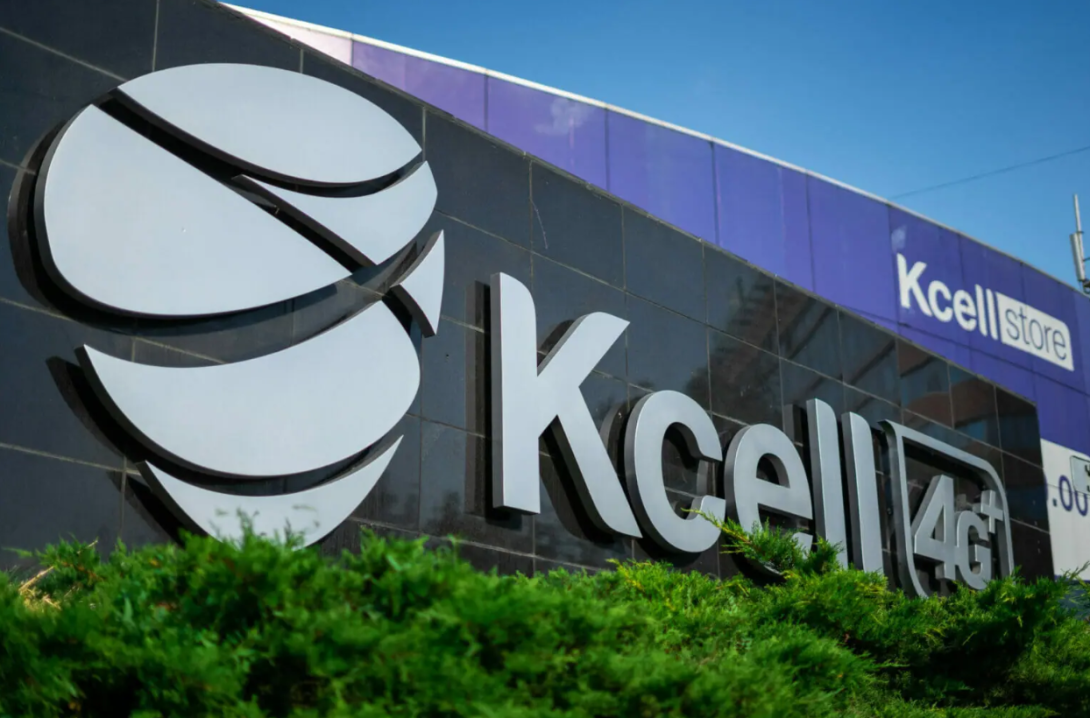
At the beginning of 2024, the Kazakh stock market saw an unexpected rise in the share price of the mobile network operator JSC «Kcell». The company's share price soared by 60%, which likely not only surprised analysts but also sparked keen interest from investors.
In conditions where market laws usually follow a familiar pattern, such rapid fluctuations are suspicious. We decided to analyse the company's financial statements for 2023 and compare the figures with the results of 2022.
According to JSC Kcell's financial statements for 2023, the totals for non-current assets amounted to 327,959 million tenge, which is 93.93% higher than in 2022 (169,105 million). Meanwhile, the totals for current assets amounted to 63,301 million tenge, which is 38.73% lower than in 2022 (103,311 million).
As for liabilities: long-term liabilities increased by 113.43%, rising from 66,147 million tenge (2022) to 141,181 million tenge (2023). Short-term liabilities, meanwhile, increased by 16.13%, from 67,648 million tenge (2022) to 78,561 million tenge (2023).
Equity increased by 23.73%. At the end of 2022, JSC Kcell's equity stood at 138,621 million tenge, and in 2023 it reached 171,518 million.
According to data from the Kazakhstan Stock Exchange (KASE), the company's revenue for 2023 totalled 227.5 billion tenge, an increase of 2.83% compared to 2022. Service revenue grew by 9.6% to 190.3 billion tenge.
At the same time, gross profit for 2023, according to the financial statements, decreased by 12.45%, operating profit by 15.34%, and net profit by 18.48%. Kcell explains the decline in net profit as being due to "growth in capital expenditure on the development and modernisation of its network, as well as investments in the rollout of fifth-generation communication technology".
It is important to note here that due to the reduction in net profit on the stock market, alarm often rises among shareholders, which can negatively impact the attractiveness of investment in the company.
Loss of profit and a deterioration in cash flows from operating activities, despite the increase in total assets and equity, may indicate problems in cost management.
Drawing from the experience of the US stock market, we can see how negative reports can affect companies' share prices. For example, in 2017, the company «General Electric» (GE) announced a 20% decline in net profit, which caused a sharp drop in its share price due to investor concerns over the company's financial problems.
However, the situation with Kcell has surprisingly turned out completely differently. Since the beginning of 2024, there has been significant growth in its share price. For instance, the share price at the start of the year was around 1,952 tenge, and by mid-March it had risen to 3,120 tenge, representing growth of nearly 60% over two months.
Notably, over the whole of 2023, Kcell shares appreciated by only 15%, from 1,694 to 1,952 tenge per share. At the same time, during the second half of the year, the company's share prices remained stable within a range of 1,900-2,000 tenge per share.
As we can see, the company's financial indicators, including those critical for shareholders, have changed significantly. Yet, against a backdrop of financial instability, a sharp rise in the share price has occurred, which contradicts market logic and laws.
According to experts, the rise in the share price could have been influenced by the holders of the securities themselves, in coordination with the company's management.
The possibility of artificial inflation of the share price and possible manipulation of financial indicators cannot be ruled out, with the aim of deterring potential investors. As early as December 2023, analysts valued Kcell shares at 24% below their price. At that time, many shareholders considered selling their shares.
For some reason, Kcell's market capitalisation on KASE still does not reflect the company's deteriorating financial and operating indicators and its loss of market share due to a steady outflow of subscribers to other operators. As practice shows, stock markets, even those that are not the most efficient, sooner or later also 'see the light'.