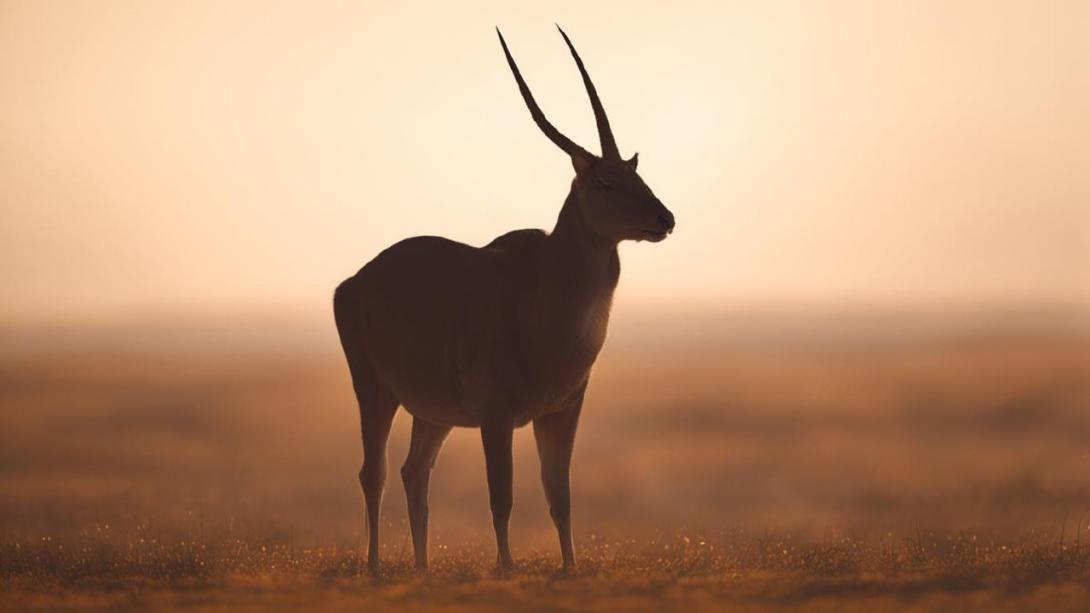
In the Karaganda region and the Ulytau region, dozens of saiga carcasses have been discovered, causing serious concern among animal rights activists.
According to KTK TV channel, the corpses of these Red Book animals are becoming prey for stray dogs. Despite the alarming picture, specialists claim that what is happening is part of a natural process of selection within the population of these rare antelopes.
Video footage, filmed near the village of Topar, demonstrates the scale of the problem.
"This is what a heap looks like, right here. And they are everywhere here, saigas, lying under the snow", comments an eyewitness to the events.
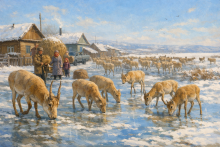
According to the information received, a large herd of antelopes recently passed through this area, some of which could not overcome natural obstacles: some animals got stuck in deep snowdrifts, others, due to exhaustion, were unable to climb to higher ground.
The situation is particularly acute in the Ulytau region, where stray dogs not only attack weakened saigas but also eat the carcasses of dead animals. This exacerbates the already difficult position of this species, which is listed in the Red Book.
Since the beginning of this year, wildlife protection inspectors have collected more than 200 dead individuals in the steppe regions. All carcasses were properly disposed of in special animal burial sites.
Representatives of the environmental services note that the horns and other valuable body parts of the animals remained undamaged, which rules out the possibility of poaching.
Specialists link the observed situation with the overall increase in numbers of the saiga population, which are forced to explore new territories, including lands located near populated areas.
According to experts, the annual mass die-off is an integral part of natural selection in the population. It is noted that the weakest individuals, predominantly males, usually lag behind the main herd.
"In December, they start the rut, mating, and during this time they lose a lot of strength. In January, they can't keep up with the herd and are left behind. This is natural selection, and the strongest survive here," explains Yerkebulan Tuyakov, an inspector of the operational group for the protection of forests and wildlife in the Karaganda region.
It is worth noting that a similar situation was observed last autumn, when video footage of dying saigas, supposedly filmed in the western regions of Kazakhstan, spread on social networks and messengers.
At that time, specialists who arrived at the scene also concluded that the observed die-off was a natural process that occurs regularly.
Despite the assurances of experts, the situation likely requires constant monitoring to prevent possible threats to the saiga population, especially given their status as Red Book animals.
It is also important to take measures to control the number of stray dogs in the habitats of these rare antelopes to minimise additional risks to the population.