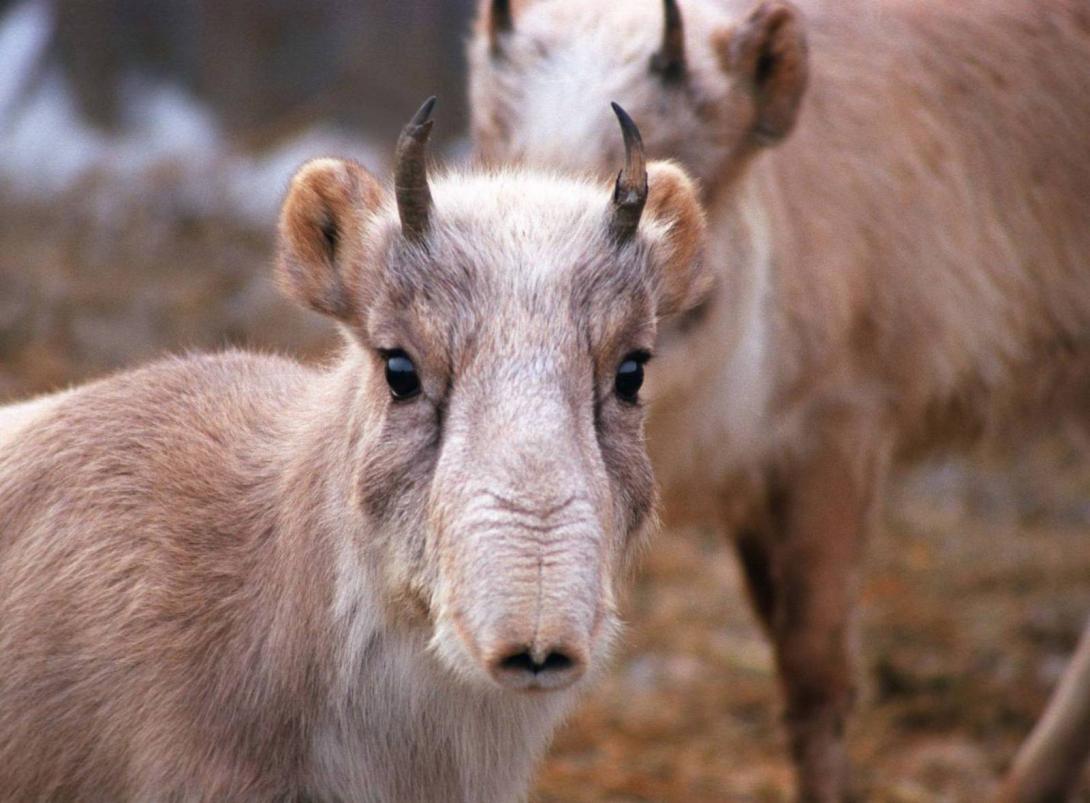
The Ministry of Ecology and Natural Resources (MENR) has decided to temporarily suspend activities to "regulate the numbers" of saiga antelopes. The so-called "removal", or simply the shooting of the steppe antelope, is promised to resume in the autumn.
The scientific community, represented by experts from the West Kazakhstan Agrarian Technical University named after Zhangir Khan, the Institute of Zoology, the Kazakhstan Association for Biodiversity Conservation (KABC), the Frankfurt Zoological Society, and the Nature and Biodiversity Conservation Union (NABU), insisted on a temporary halt to the shooting of the animals due to "unfavourable weather conditions".
Subsequently, ostensibly based on the spring aerial survey, scientific organisations will develop a new biological justification for the destruction of saiga in 2024.
For now, as an auxiliary method of "regulating saiga numbers", the ministry considers it reasonable to permit recreational hunting. The department reported that it is drafting the relevant regulatory legal acts, the adoption of which is planned for the first half of 2024.
However, just a month ago, the Minister of Ecology and Natural Resources, Erlan Nysanbayev, stated that any hunting of saiga would be illegal, and that saiga removal measures would resume in 2025 due to the sharp "growth of the Ural population".
It is not only the series of contradictory statements that reveals the carelessness of the Ministry of Ecology, but also the endless inconsistencies in the population figures. For example, in 2023, the projected saiga population was 2.6 million. And this year, Mr Nysanbayev stated that the saiga population would increase by 40% and, factoring in last year's calving, would amount to the same 2.6 million. Such arithmetic.
Furthermore, the Committee for Forestry and Wildlife will send the necessary documents to the secretariat of the Convention on International Trade in Endangered Species of Wild Fauna and Flora (CITES), in order to obtain permission for the sale of saiga horns abroad. The next meeting is expected in 2025.
________________
For reference: The Convention on International Trade in Endangered Species of Wild Fauna and Flora (CITES) is an international governmental agreement signed as a result of a resolution of the International Union for Conservation of Nature (IUCN) in 1973 in Washington.
As is known, the sale of saiga horns is an extremely profitable business. One horn on the black market costs about $2,000. According to the biological justification submitted earlier, the recommended "removal" is 300,000 individuals, and each individual has two horns.
Thus, the picture becomes clear. First, the Ministry of Ecology legalises poaching under the guise of an implausible "biological justification", and now it is pushing for the legalisation of saiga horn exports.