
The former chairman of the housing construction co-operative “Triumph-Esil” Raikhan Ismailova was convicted in a criminal case, one episode of which was linked to 14 million tenge received from the contractor LLP “Alvis” for the use of a tower crane. The court found this episode to be fraud. On 11 August 2026 the appeal left the sentence unchanged, after which it entered into legal force.
However, even before the contractor approached the police, another dispute arose between the participants in the completion — over what volumes of work “Alvis” had actually performed and what documents confirmed them. A technical audit revealed significant discrepancies, and Ismailova demanded that acts of completed work be provided before the estimate was changed.
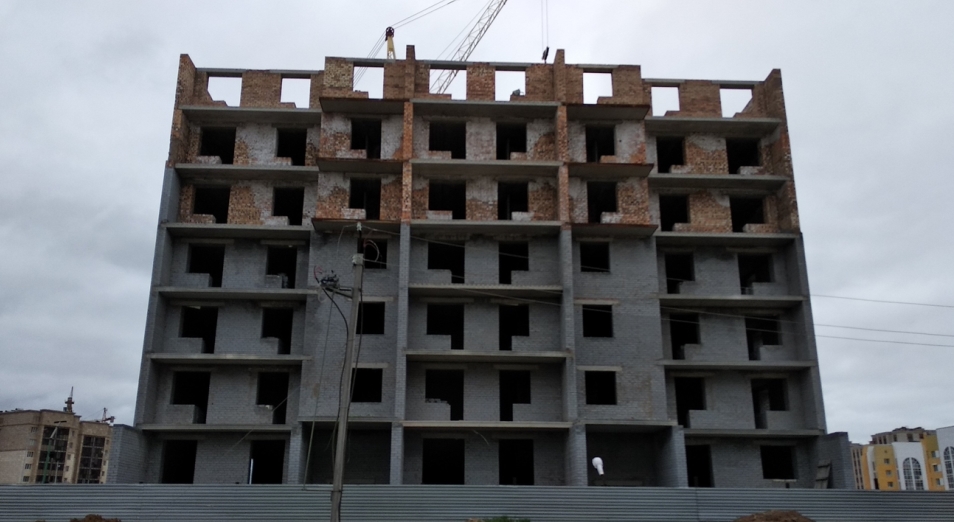
The “Triumph-Esil” residential complex has now been completed. But the judicial outcome of Ismailova’s case does not answer a separate question — how correctly the construction volumes were calculated and paid for when the facility was completed. FBK studied the materials of the criminal case, the technical audit and the correspondence of the participants in the completion.
WHAT THE AUDITORS CONFIRMED
The completion of the residential complex involved the “Triumph-Esil” co-operative, the contractor LLP “Alvis” and LLP “Elorda Qurylys Kompaniyasy” (EKK) — an organisation subordinate to the Astana akimat that took part in completing problematic facilities.
In 2022 LLP “JS Engineering” checked “Alvis’s” work for January–May. Initially their actual estimated cost was assessed at approximately 1.1 billion tenge.
After an additional check, the auditors indicated around 189 million tenge as the correct estimated cost of the actually performed volumes with as-built documentation.
Various comments arose regarding the remaining part. The largest sum — around 514 million tenge — was attributed to erroneous volumes. A further approximately 210 million tenge related to work with unsigned acts of hidden works, and around 200 million tenge to items for which some documents were missing. Separately, the auditors identified around 34 million tenge of “excess volumes”.
This does not mean that the entire difference was stolen or that work for that money was not carried out at all. The audit showed something else: a significant part of the initially declared volumes was not attributed to correctly performed work with full as-built documentation, or received other comments.
That is precisely why the question arose as to which of the contractor’s works should be taken into account in the subsequent adjustment of the cost of completion.
WHY THE ACTS WERE DEMANDED
On 14 July 2022 Raikhan Ismailova sent a letter to EKK asking that acts of completed work for the actually performed volumes be obtained from “Alvis” before the design and estimate documentation was adjusted.
Acts of completed work confirm specific construction works, their volume and cost. The design and estimate documentation determines the volumes and cost of construction.
Ismailova’s defence explained her demand by the need first to establish the work already performed and only then to adjust the estimate. According to the defence’s version, otherwise there was a risk of the previous volumes being counted again at changed rates.
The court did not establish the existence of such a scheme at “Triumph-Esil”.
In August 2022 EKK replied to the request. According to the materials submitted by the defence, the necessary acts of completed work were not provided.
WHEN THE STATEMENT APPEARED
According to the defence’s materials, on 20 July 2022 Nariman Bilyalov, director of “Alvis”, went to the police over the 14 million tenge — six days after Ismailova’s demand to provide documents. 27 July 2022 is stated in the criminal case materials as the date the statement was registered.
The defence linked the temporal proximity of these events to the conflict over construction volumes and the estimate. However, the court did not establish a causal link between Ismailova’s demand to provide documents and Bilyalov’s subsequent approach to the police.
The documents allow only the assertion that, by the time the contractor made its approach, a dispute over the construction documentation already existed.
WHERE THE 14 MILLION TENGE CAME FROM
One of the episodes of the subsequent criminal case was linked to a tower crane at the construction site.
Initially the crane was used free of charge. Later the co-operative’s board decided to switch to paid use — 1.2 million tenge per month. The correspondence shows that the question of preparing a paid lease agreement was discussed with EKK as early as 2021.
Later, two cash documents were drawn up for a total of 14 million tenge. However, the basis for payment stated in them was not the crane lease but payment for the completion of construction under an investment agreement.
Ismailova maintained that in reality “Alvis” had transferred the money specifically for the use of the crane. According to her version, the funds came into the co-operative, were reflected in the accounts, and on 29 September 2022 were returned to “Alvis”.
The documents and Ismailova’s position explained the purpose of the 14 million tenge differently. At the same time, the correspondence confirms that the question of paid use of the crane was indeed discussed even before the disputed payments appeared.
The court assessed these circumstances differently. According to the judicial act, Ismailova, by deception and abuse of trust, took possession of 14 million tenge belonging to Bilyalov and “Alvis” under the pretext of payment for the crane lease.
On 5 June 2026 the court of first instance found Ismailova guilty and imposed a final sentence of seven years’ imprisonment with a one-year deferral of execution.
On 11 August 2026 the judicial collegium for criminal cases of the Astana court left the sentence unchanged and the defence’s appeal without satisfaction. The ruling entered into legal force from the moment it was announced.
WHAT HAPPENED WITH THE PROPERTY
The dispute over the 14 million tenge was not the only episode of the criminal case. A separate charge concerned the disposal of property at the construction site.
According to the defence’s materials, the disputed inventory assets belonged to LLP “Stroydizayn Astana”. In 2019, together with the facility, a crane, crane track elements, bricks, slabs, a transformer substation, containers and other property were transferred. After the facility was transferred to “Alvis”, the defence considered this property to have been transferred to the contractor for safekeeping.
On 19 July 2021 the board of the housing construction co-operative decided to sell part of the inventory assets and enter the proceeds into the co-operative’s cash desk. The defence also cited the existence of this decision in the appeal.
The court gave Ismailova’s actions a different legal assessment and found her guilty of arbitrariness in disposing of property worth around 5.4 million tenge.
Thus, these are different episodes of one criminal case: one concerned the 14 million tenge and the use of the crane, the other concerned the disposal of property at the construction site.
WHAT WAS FOUND AT EKK
Later, state bodies separately identified violations in the activities of “Elorda Qurylys Kompaniyasy”.
In 2023, a corruption risk analysis conducted at EKK revealed the acceptance of inflated prices and volumes of work totalling 339 million tenge. The inspectors also reported an overpayment to LLP “Alvis” for completed work in the amount of 871 million tenge.
At the same time, the published results of the analysis do not state that the 871 million tenge relate specifically to “Triumph-Esil”. Therefore there are no grounds to link this overpayment to the residential complex in question.
Based on the results of 2024, a state audit revealed at EKK payment for unperformed work amounting to 707.3 million tenge. Of this sum, 693.5 million tenge was recovered, and enforcement proceedings were commenced for the remaining 13.7 million tenge.
These 13.7 million tenge are not connected to the 14 million tenge from Ismailova’s criminal case. This is a different sum, identified within the framework of a state inspection of EKK’s activities as a whole.
The results of these inspections also do not in themselves prove violations specifically during the completion of “Triumph-Esil”. They show something else: state bodies did later identify problems in EKK’s activities related to the volumes, cost and payment of construction work.
WHICH CASES REACHED COURT
In subsequent years, EKK employees also became defendants in criminal cases. These proceedings are not directly related to “Triumph-Esil” and do not in themselves confirm the position of Ismailova’s defence.
In October 2024 a court passed sentence on Ruslan Kadesov, who held the position of general director of EKK. He was found guilty of receiving through an intermediary 170 million tenge from the head of a contractor organisation for the payment of an advance and an increase in the estimate under a construction contract for another multi-apartment residential complex. Kadesov was sentenced to 10 years’ imprisonment. At the time of the official announcement, the sentence had not entered into legal force.
In March 2025 the court of first instance passed sentence on the head of an EKK department, Bazarbek. He was found guilty of fraud and of inciting the director of a contractor organisation to transfer 103 million tenge to EKK’s management for the payment of an advance and an increase in the estimate. He was also sentenced to 10 years’ imprisonment. At the time of the official publication, the sentence had not entered into legal force.
In another criminal case, the Astana prosecutor’s office reported the unlawful sale by EKK’s management of 21 flats below market value for a total of 460 million tenge. The property was returned to the state, and the company’s general director was sentenced to three years and six months. This sentence entered into legal force.
These cases cannot automatically be transferred to the story of “Triumph-Esil”. But together with the results of the inspections, they explain why the question of how EKK controlled estimates, actually performed volumes and payments to contractors goes beyond a single conflict.
WHAT REMAINS UNANSWERED
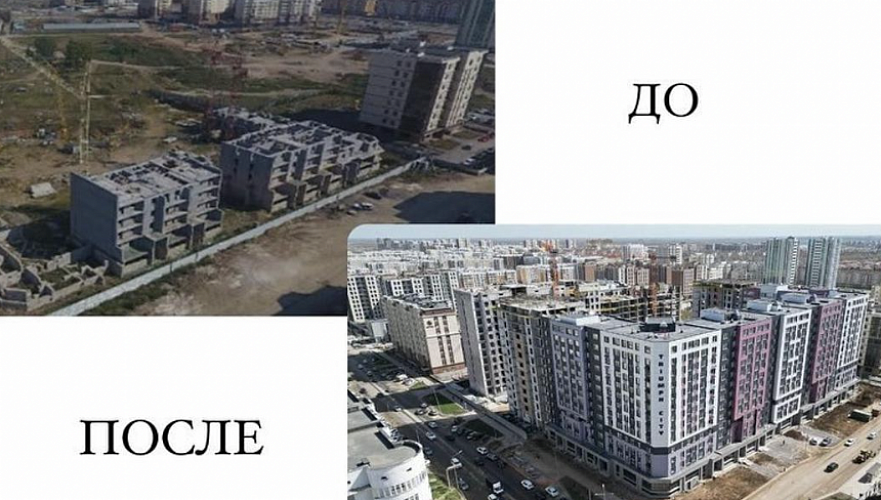
The story of “Triumph-Esil” has two completed outcomes. The residential complex has been completed. Raikhan Ismailova’s sentence has entered into legal force.
But they do not close a separate question that arises from the construction documents.
The court established Ismailova’s criminal liability on the charges brought against her. It did not resolve the question of how correctly the construction volumes were formed, confirmed and paid for during the completion.
Meanwhile, the technical audit showed a significant difference between the initially declared cost of work and the volumes that the auditors recognised as correctly performed and supported by as-built documentation. Before the estimate was changed, Ismailova demanded that acts of completed work be provided.
Later, state inspections independently identified inflated volumes, overpayments and payment for unperformed work in EKK’s activities. However, the available data do not allow the assertion that the violations identified by state bodies relate directly to “Triumph-Esil”.
Therefore, Ismailova’s sentence, which has entered into legal force, and the question of financial and construction control during the completion of the building lie in different planes.
In order to establish precisely which volumes ultimately entered into the cost of completing “Triumph-Esil” and how much was actually paid for them, it is necessary to compare the initial and adjusted estimates, the full set of acts of completed work, the results of the technical audit and the actual payments to contractors.
The building has been completed and the criminal case has been given a final judicial assessment. But the question of how documentarily justified the accounting and payment for the work were during its completion remains open.