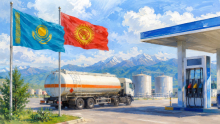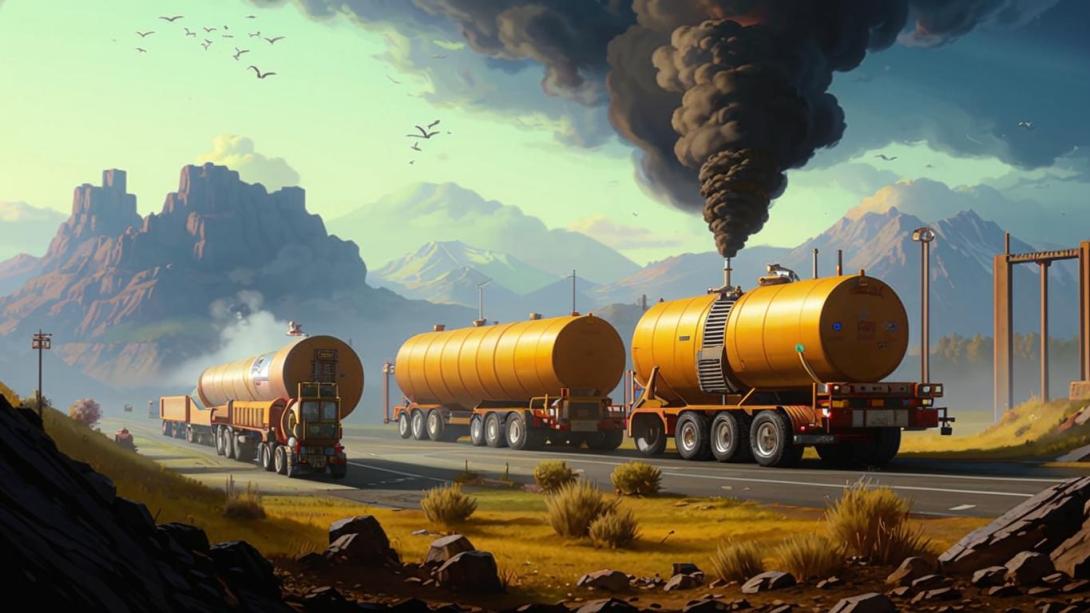
Kazakhstan will ban the export of liquefied petroleum gas by car and train for another six months.
"A ban will be imposed on the export of liquefied petroleum gas, propane and butane from the territory of the Republic of Kazakhstan by road and rail transport for a period of six months," said the acting Minister of Energy in an order.
The following are not subject to the ban:
- export by subsoil users who have carried out production under a production sharing agreement (contract) or a subsoil use contract approved by the President of the Republic of Kazakhstan, who have a stable tax regime in accordance with paragraph 1 of Article 722 of the Code of the Republic of Kazakhstan "On Taxes and Other Obligatory Payments to the Budget" (Tax Code);
- export of goods produced (processed) from Kazakhstani raw materials extracted from the Karachaganak field, on the basis of international treaties of the Republic of Kazakhstan;
- transit shipments that begin and end outside the Republic of Kazakhstan.
In turn, the Financial Monitoring Agency (AFM) and the State Revenue Committee (SRC) have signed a "Roadmap for Preventing the Export of Petroleum Products and the Illegal Traffic of Excisable Goods for the Current Year".
"The document is aimed at further effective interaction between the agencies, taking joint measures to determine the list of risky oil enterprises, interaction with state bodies and the quasi-public sector, developing risk profiles for the excisable goods risk management system, etc." the AFM press service reported.
It is noted that this year the SRC prevented 299 attempts to illegally export petroleum products, and the AFM registered 13 pre-trial investigation materials regarding the illegal traffic of oil and petroleum products.
Recall that earlier it was reported that since the beginning of the year, 103 attempts to illegally export fuel and lubricants amounting to 13,650 litres were detected on the Kazakh-Russian border. On the Kazakh-Uzbek border, there were 68 attempts, the total volume of energy resources in this case amounted to 11,135 litres. Fines of 3.7 million tenge were issued.