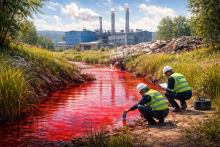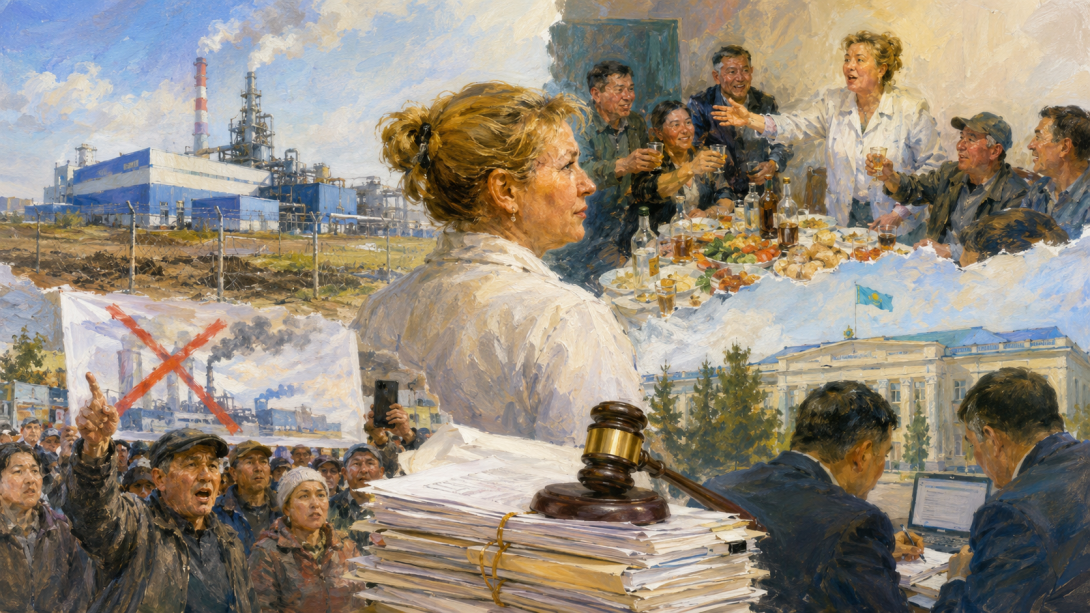
On 17 August 2026, a video appeared on social media showing a celebration of the "imminent opening" of Agro Protein LLP in the town of Akkol in the Akmola region – a factory that, just a month earlier, had featured in an FBRK article about a reprimand issued to an official precisely because the enterprise was operating without the mandatory permitting documents.
The editorial team again contacted the same agencies that had responded to us in July, and received answers: as of the end of August, the factory is officially listed as not operating. This raises a direct question: what exactly was being celebrated that evening, and who is behind one of the loudest voices defending the factory on social media?
FACTUAL BASIS
Agro Protein LLP is an enterprise processing hides and animal by-products in Akkol, which was brought into operation in October 2025. Almost immediately after launch, residents of the town began complaining about a pungent smell. Inspections confirmed that the factory was operating without a sanitary-epidemiological certificate and without an established sanitary protection zone, while associated veterinary facilities (animal burial grounds, manure storage) were being constructed without formalised land documents.
The Akkol District Court fined the enterprise 484,400 tenge under Part 1 of Article 425 of the Administrative Offences Code of the Republic of Kazakhstan ("Violation of legislative requirements in the field of sanitary-epidemiological welfare of the population, as well as hygienic standards") and established that its activity belongs not to Class III but to Class I hazard – with a mandatory sanitary protection zone of no less than 1,000 metres instead of the previously and erroneously stated 300. For this error, the head of the territorial sanitary-epidemiological service received a disciplinary reprimand.
Less than a month after that publication, on 17 August, a video appeared on the Instagram page akkol.g showing a group of people at a table with alcohol celebrating the "imminent opening" of the Agro Protein factory and ostentatiously addressing the local activist Shorman Iskakov, who has been seeking the factory's closure since February 2026. The video provoked a wave of sharply negative comments.
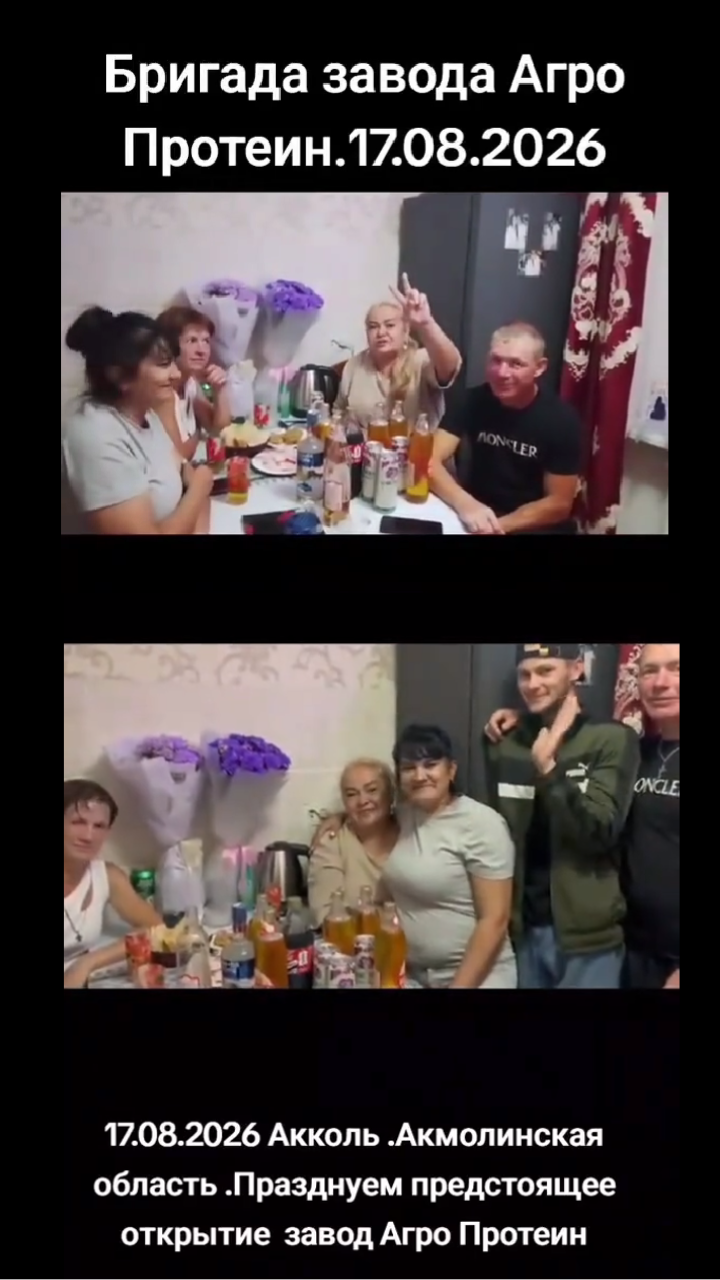
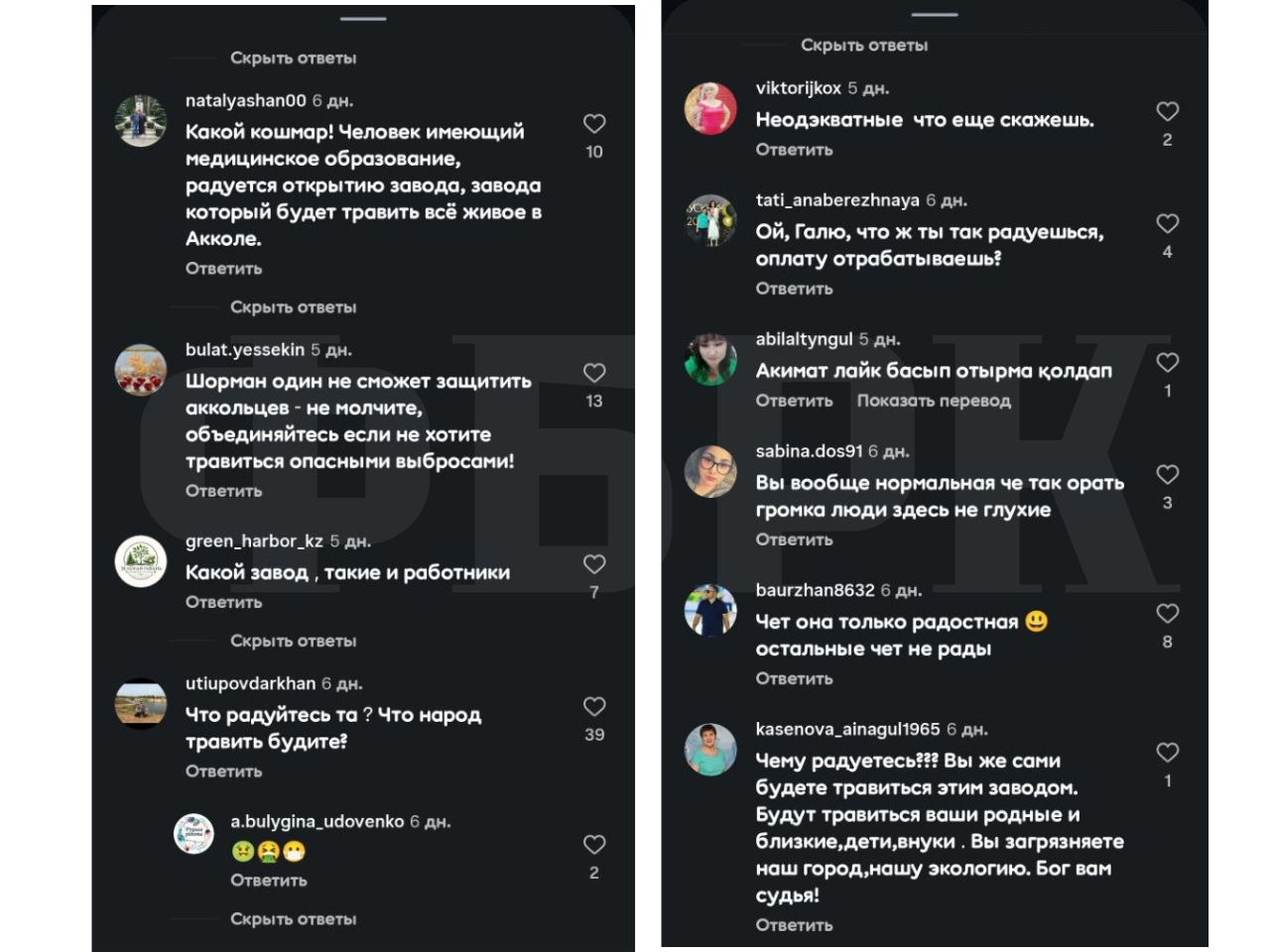
It was precisely the short interval between the July publication about the violations and the August announcement of the "opening" that prompted FBRK's new enquiry: the editorial team wanted to establish whether the factory had indeed managed to remedy the violations and obtain the necessary permits in that time, or whether the announcement bore no relation to the enterprise's actual status.
We contacted the same agencies that had responded to us in July. The Department of Sanitary-Epidemiological Control of the Akmola Region reported that, according to an inspection dated 18 June, the factory is not operating; there is no raw material or product on site; the certificate for the sanitary protection zone has still not been obtained; no application for it has been submitted; and the enterprise has not notified the agency of any resumption of activity.
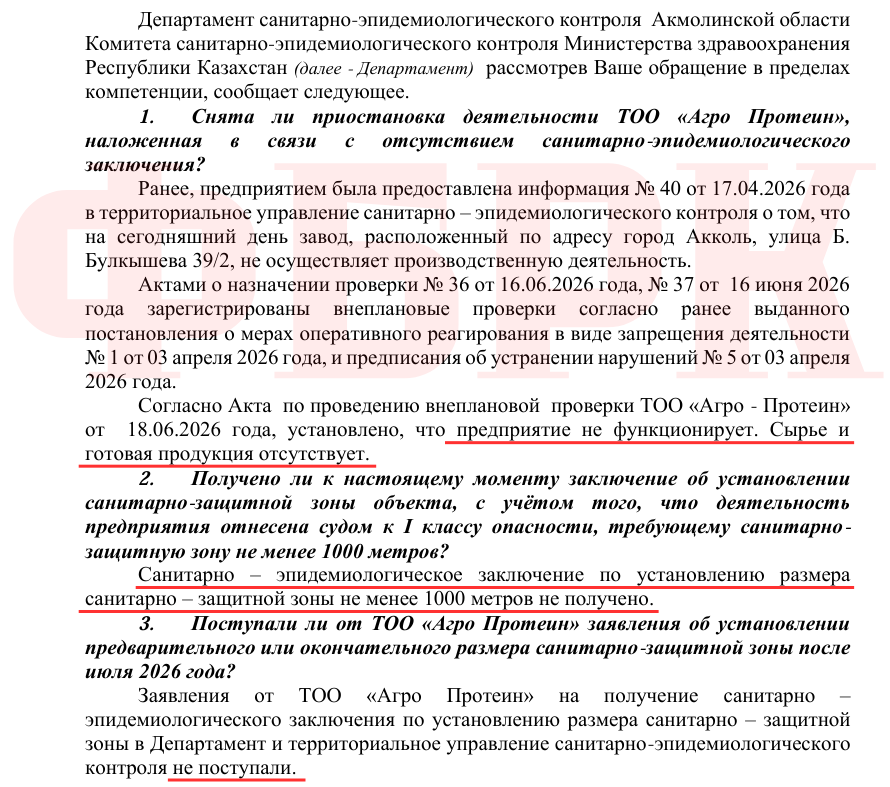
The region's Department of Natural Resources, for its part, reported that the claim to overturn the factory's environmental certificate, filed back in May, has still not been accepted for consideration by any court – the applications are being rejected due to disputes over jurisdiction, despite the fact that the plant director, Askhat Madiyev, is named personally as the defendant.
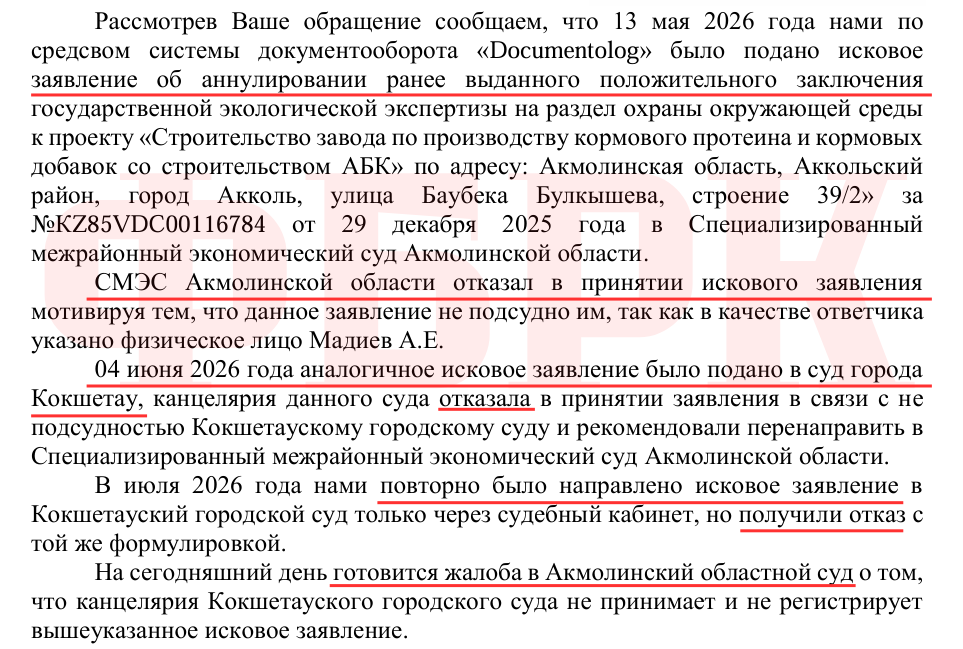
Thus, at the time of the public announcement of the "opening", the factory had neither a valid permit on the sanitary-control front, nor an authorised status for its land and veterinary facilities.
CONTEXT AND BACKGROUND
Public resistance to the factory by residents and the activist Shorman Iskakov began in February 2026. Around the same time, a figure consistently speaking out in defence of the enterprise and the position of the district akimat (local administration) became noticeable on social media – a certain Galina Fedyushko.
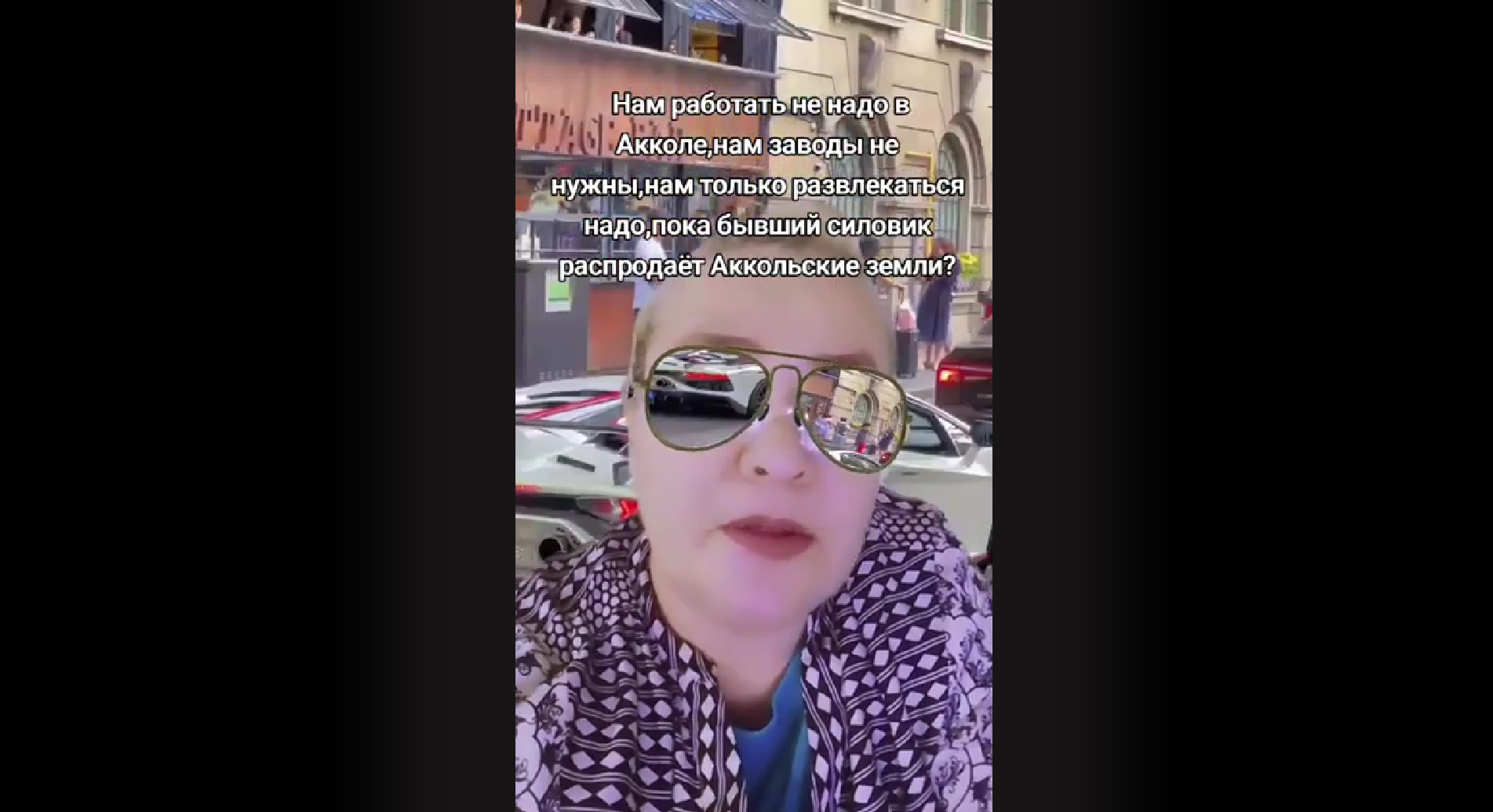
According to publications by KTK television channel, the outlets "Azattyq Asia" and Sputnik Kazakhstan, Fedyushko had worked since 2011 as a paramedic in the village of Radovka in the Akkol district and, for more than ten years, had been involved in a series of high-profile public conflicts specifically with the local authorities: several dismissals followed by reinstatement through the courts, administrative and criminal cases, and mutual accusations involving the akimat and some villagers. In 2023, she left her minor son at a police station, demanding that the authorities pay attention to her appeals – this episode also received coverage in the national media.
ANALYSIS AND INTERPRETATION
Herein lies the central paradox: almost all of the media publications documented over the years portray Fedyushko as a person who has spent years in a state of conflict specifically with the Akkol akimat and its leadership – she was accused, dismissed, had complaints written about her "from above". Yet in the factory affair, she suddenly and consistently takes the side of precisely those same local authorities she previously fought against – and does so colourfully, demonstratively, and in unison with the version put forward by Deputy Akim Kenzhetay Sayat, who explains Iskakov's protests as being driven by personal motives. Such a 180-degree turnaround is in itself a notable detail requiring explanation: either Fedyushko's circumstances and motivations have changed, or her public activity is being used as a tool.
A scheme in which a controversial project receives public support through supposedly independent private individuals is described in global practice by the term astroturfing – the simulation of grassroots, spontaneous public support where, in reality, an organised interest stands behind it.
To assert that this is precisely such a scheme cannot be done on the available evidence – there is no direct proof of coordination. But the alignment of rhetoric, the synchronicity in timing, and the sharp reversal of position by someone with a long history of public, media-documented conflicts with the same authorities make this term an appropriate framework for describing what is happening and warrant a separate investigation.
According to Iskakov himself, Fedyushko has no official connection to the factory, but her son is employed at the youth centre attached to the akimat's internal policy department – a structure the activist describes as a channel for distributing budget funds with signs of fictitious employment. He also claims that Fedyushko offered him paid support and directed complaints against his relatives. At the time of publication, these assertions are not documented and represent one side's version of the conflict.
Also deserving particular attention is the manner in which the agency is attempting to challenge the factory's environmental certificate. The claim was filed back in May – seemingly a straightforward procedure for a government body acting within its powers. Yet three months later, the claim has still not been accepted for consideration by any court: the applications are being shuttled between instances due to a formal dispute over who should be the defendant – the legal entity or its director.
To an outside observer, such a protracted procedural blockage looks unusual: if even the specialised government agency cannot get a simple claim accepted for proceedings, this naturally raises the question: how influential are the interests behind this particular project in the region, and is this bureaucratic stalling not an accident but the result of someone's influence on the system?
POTENTIAL CONSEQUENCES
If the factory has in fact begun operating without the required certificates, this creates grounds for new administrative proceedings – this time for violating a previously issued order. The prolonged judicial deadlock over the claim to overturn the environmental certificate calls into question the supervisory body's very ability to secure a review of the permitting documents within a reasonable timeframe – and, consequently, the state's ability to ensure compliance with its own decisions in this particular case at all.
CONCLUSION
As of the end of August 2026, the Agro Protein factory was not entitled to carry out production activity – the discrepancy between this fact and the public display of the "opening" on 17 August has been documented and requires an official explanation from the enterprise and the akimat.
The abrupt and unexplained reversal in Galina Fedyushko's position – from a long-standing opponent of local government to its public defender, precisely in the conflict over the factory, coinciding in timing with the start of the protests and in content with the rhetoric of the deputy akim – gives the editorial team grounds to suspect that her current public activity may be part of an organised support campaign for the factory and the akimat, rather than an independent resident's opinion. The FBRK editorial team continues to monitor developments.
To be continued…