Access to water supply and sanitation remains one of the most vulnerable sectors in terms of corruption risks. According to an estimate cited in the World Bank's book "The Many Faces of Corruption", abuses in this industry have a particularly severe impact on low-income populations.
WHY THE WATER SECTOR IS CONSIDERED VULNERABLE
Economist Ruslan Sultanov, in his Telegram channel "TENGENOMIKA", citing the World Bank's book "The Many Faces of Corruption", highlighted several factors that make the water supply and sanitation sector susceptible to corruption risks.
Among the factors that increase corruption risks in the water sector, the author highlights:
- natural monopoly;
- significant infrastructure costs;
- complex technical processes;
- insufficient transparency;
- limited ability for consumers to influence the service provider.
He notes that the consumer, as a rule, cannot choose another water supplier as they are dependent on the existing system.
HOW CORRUPTION AFFECTS CONSUMERS
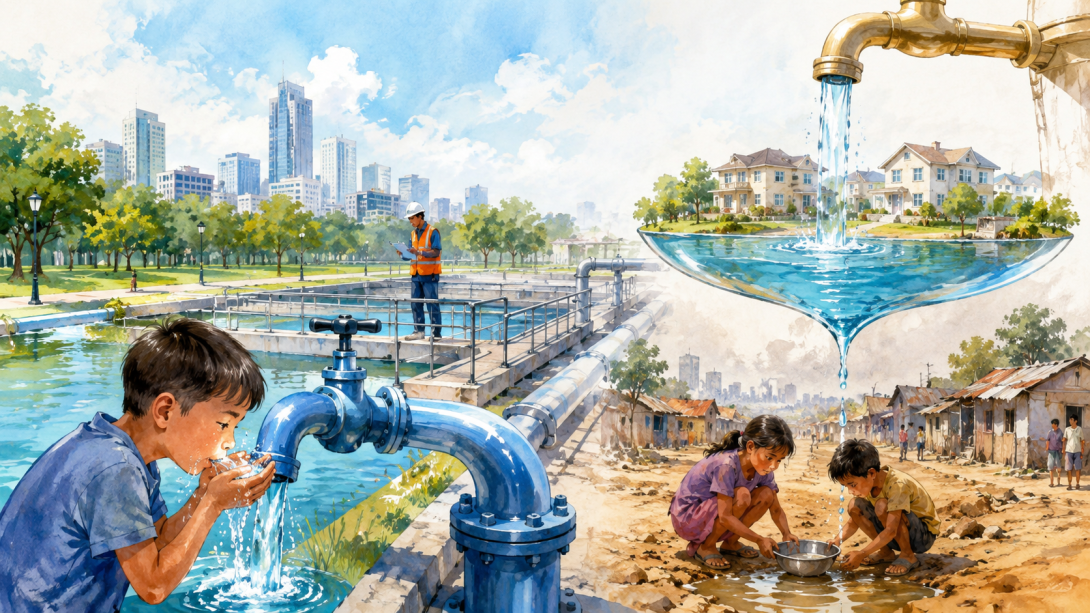
The publication concludes that corruption in the water sector disproportionately affects the poorest segments of the population. Wealthier families can resort to alternative solutions, such as purchasing water or installing additional equipment. For low-income households, the lack of reliable water supply becomes a daily problem.
According to Sultanov, this situation contributes to increasing social inequality.
WHAT FORMS OF CORRUPTION ARE MENTIONED
Corrupt practices in the water sector can arise both at the level of interaction with consumers and during the implementation of large infrastructure projects.
Among the examples of so-called petty corruption, the author lists payments for speeding up connections, illegal additional fees, tampering with meters, and obtaining services through personal connections. The publication notes that the prevalence of such practices can reduce consumer trust, decrease the real income of service providers, worsen service quality, and delay investment in development.
Risks are also separately mentioned concerning the construction of water pipelines, the creation of treatment facilities, equipment procurement, and the distribution of investment funds.
WHY THIS MATTERS
According to Ruslan Sultanov, the state of the management system directly affects the quality of water supply. It is noted that when institutions function effectively, investment can contribute to infrastructure development and improved service quality. If the system is subject to corruption risks, significant financial resources, the author claims, do not always lead to an improved quality of life.