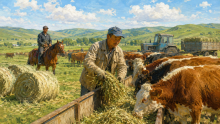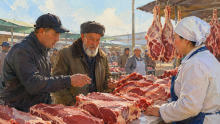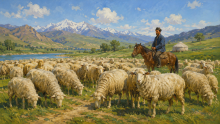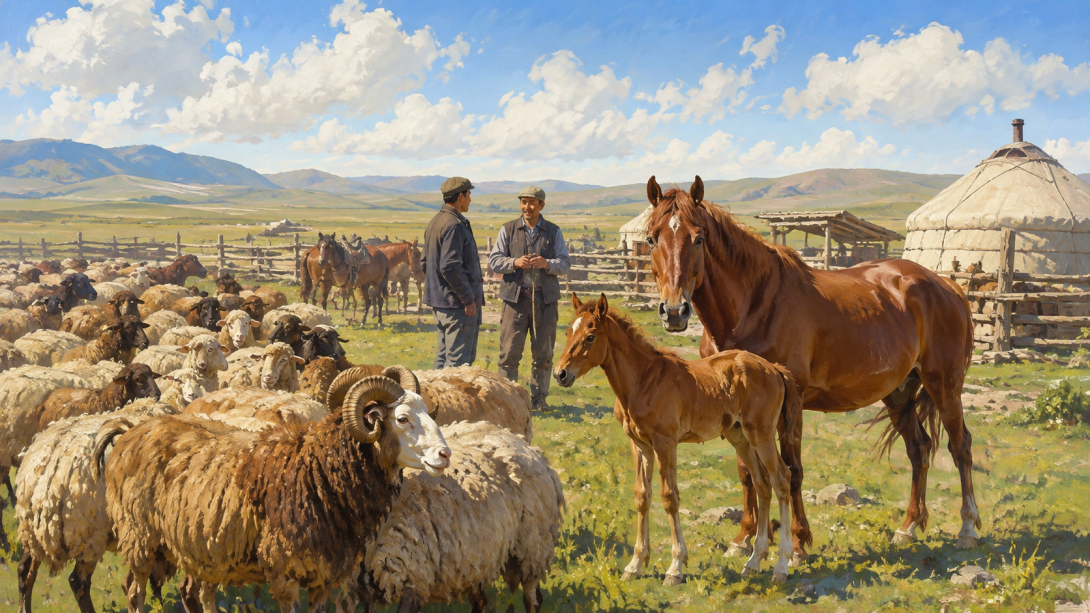
Price rises for lamb and horsemeat in Kazakhstan are persisting, despite an increase in the number of sheep and horses. According to experts, the key reasons remain the high cost of production, an insufficient volume of commercial meat, the state of the feed base, and the influence of intermediaries.
WHY THE GROWTH IN LIVESTOCK NUMBERS HAS NOT REDUCED PRICES
According to Informburo.kz, as of early May 2026, the country had 23.5 million sheep and 5.1 million horses, which exceeds the figures for 2025. At the same time, industrial production of fresh and chilled meat has been declining for the second consecutive year.
Kaiyrly Omashev, a Candidate of Agricultural Sciences and Executive Director of the Republican Chamber "Sheep of Coarse-Wool Productivity Direction", explained that an increase in livestock numbers does not in itself mean a growth in the volume of quality commercial meat. In his words, the situation is influenced by animal productivity, the seasonality of production, and the insufficient development of fattening and storage infrastructure.
WHICH FACTORS ARE INCREASING THE COST OF PRODUCTION
According to Kaiyrly Omashev's assessment, the main part of the fattening cost — about 55–65% — is made up of feed costs. In addition, spending on fuel and lubricants (F&L), veterinary services, electricity and tariffs is rising.
The expert also noted that feed production in the country does not fully meet zootechnical standards, and some pastures have degraded or are unused due to a lack of water. An additional impact on costs comes from dependence on imports of veterinary drugs, equipment and genetic material.
WHY MEAT BECOMES MORE EXPENSIVE BETWEEN THE FARM AND THE SHOP SHELF
A significant part of the final cost of meat, according to the expert, is formed after the product leaves the farm. Around two-thirds of the sheep population is kept in personal subsidiary and small farms, which find it difficult to independently form large batches of produce and supply it directly to retail chains.
The expert noted that a long chain of intermediaries increases the cost of the product for the end consumer, while the bulk of production risks remain with the farmers.
WHAT SOLUTIONS ARE EXPERTS PROPOSING
The head of the Meat Union of Kazakhstan, Maksut Baktibaev, believes that retail prices are determined not only by the cost of production but also by the balance of supply and demand. In his assessment, there remains a slight shortage of red meat on the market.
Among possible solutions, the expert cited reducing intermediary costs, developing direct sales channels for produce, modernising production, and implementing the Comprehensive Livestock Development Plan. He also believes that restricting exports can only have a short-term effect and does not address the fundamental causes of price rises.
WHY PRODUCTIVITY IS CALLED THE SECTOR'S MAIN RESERVE
According to Kaiyrly Omashev, the sector's potential is linked primarily to improving animal productivity, not just to increasing their numbers. The expert noted that the average daily weight gain of sheep in Kazakhstan is 150–200 grams, whereas the global benchmark is 350–500 grams.
To improve efficiency, in his view, modern fattening technologies, the development of cooperation among small farms, digital traceability of animals, and strengthened breeding and scientific work are all needed.
CONTEXT
A moderate rise in meat prices is continuing in Kazakhstan. Earlier, Minister of Trade and Integration Arman Shakkaliyev stated that the main reasons were high domestic and export demand, as well as a shift in the structure of global consumption. In his words, there is no shortage of produce on the market.
Deputy Prime Minister – Minister of National Economy Serik Zhumangarin instructed that a detailed analysis of the meat market be carried out due to the continuing price rises.
At the same time, Vice-Minister of Agriculture Azat Sultanov, in public comments on the meat market situation, expressed disagreement with forecasts of a significant price increase and spoke of an absence of preconditions for a sharp rise in prices.
Thus, in June 2026, he stated that after the rise in lamb prices at the end of May, prices in a number of regions had begun to fall. At the same time, he admitted that the cost of meat had been affected not only by seasonal demand during Kurban Ait, but also by exports: in his words, Kazakh lamb is in high demand on foreign markets, which is reflected in domestic pricing.
In February 2026, following livestock farmers' statements about a possible price for beef of 10–12 thousand tenge per kilogram, Azat Sultanov made reassuring comments. He said that talk of rising meat prices did not mean an automatic increase in the cost of produce on the domestic market.
In December 2025, Sultanov commented on the forecast that Kazakhstan could in future begin importing meat from Uzbekistan at a price of 15–20 thousand tenge per kilogram. The ministry did not share such assessments. He also stated that meat prices had already stabilised and settled at around 3.3 thousand tenge per kilogram for the shoulder cut.
According to Kazakh farmers, the price rise is linked to increasing production costs. In their words, the main expenses go on feed, labour, veterinary services, taxes and the upkeep of farms. Producers also noted that purchase prices remain on the verge of profitability, and cited the insufficient development of deep processing of livestock products as one of the reasons for the high cost of meat.
The discussion of the causes of rising meat prices is taking place against the backdrop of persistent problems in livestock farming. Cases of animal disease and mortality continue to be recorded in various regions of Kazakhstan.
Earlier, in the Irgiz district, veterinarians confirmed that fallen livestock had three diagnoses at once - theileriosis, piroplasmosis and leptospirosis, due to which villagers of the settlements of Shenbertal and Kurylys lost dozens of head within a matter of days.
In mid-July, in some villages of the Kostanay region, restrictions were introduced due to brucellosis in livestock.
At the same time, some independent veterinary experts have publicly contested official assessments regarding a number of outbreaks, while the Ministry of Agriculture (MoA) maintains its position.