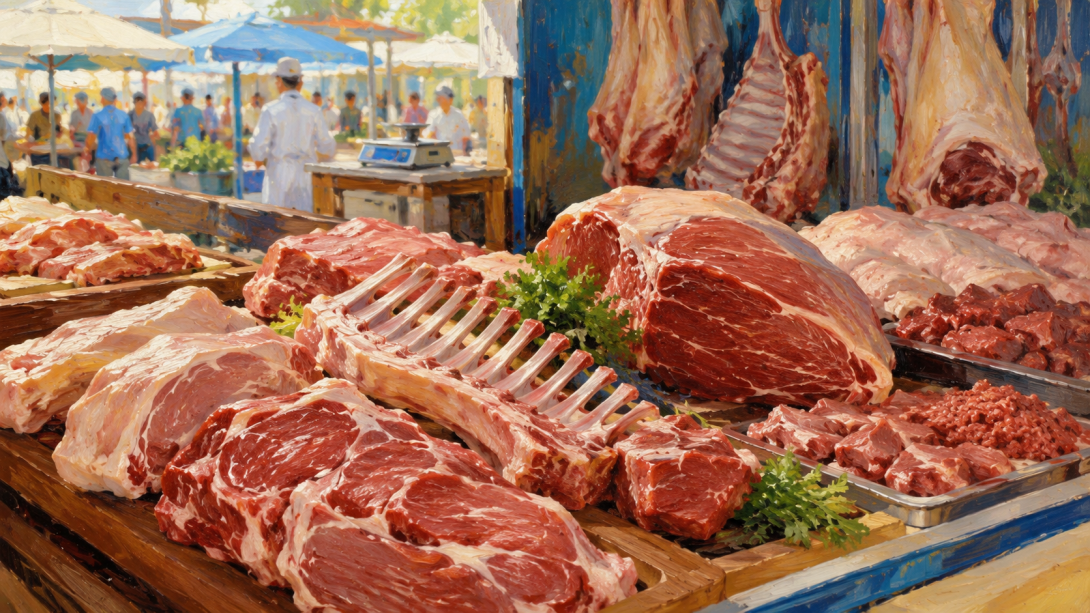
Production of fresh and chilled meat in Kazakhstan for January–July 2026 rose to 48.2 thousand tonnes, yet meat prices rose by an average of 15.8% over the year. The most notable price increase was recorded for lamb — 27.9%.
WHY PRODUCTION GROWTH DID NOT STOP MEAT PRICES RISING
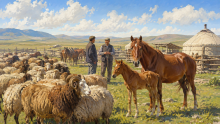
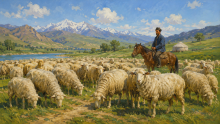
According to EnergyProm.kz, in January–July 2026 Kazakhstan produced 48.2 thousand tonnes of fresh and chilled meat from cattle, pigs, sheep, goats, horses and other equine animals. This is the highest figure for the equivalent period since records began in 1999.
At the same time, output has barely changed over ten years. In January–July 2016 it stood at 47.2 thousand tonnes, meaning that by 2026 it had grown by only 2.1%.
HOW MEAT CONSUMPTION AMONG KAZAKHSTANIS HAS CHANGED
According to the Bureau of National Statistics, in the first quarter of 2026 each resident of the country consumed an average of 20.7 kg of meat and meat products, compared with 20.6 kg a year earlier.
The largest volumes of consumption relate to beef — an average of 6 kg per person per quarter. Consumption of pork has remained at around 0.8 kg since 2021, and lamb at 1.1 kg. Meanwhile, consumption of horse meat rose from 1.8 kg in the first quarter of 2021 to 2.2 kg in the equivalent period of 2026.
WHICH TYPES OF MEAT SAW THE BIGGEST PRICE INCREASES
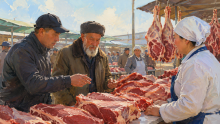
In July 2026, meat overall cost 15.8% more than in July 2025. Among the main types of meat, lamb saw the sharpest rise — up 27.9%.
Over the same period, beef rose in price by 15.1%, horse meat by 14.4%, and pork by 11.3%.
Lamb prices rose particularly sharply in spring and early summer. In May 2026, its price rose by 4.7% in a single month — the highest figure since records began in 2011. In June, prices rose by a further 4.2%, before slowing to 2.3% in July.
WHERE MEAT PRICES ROSE FASTEST
Price increases over the year were recorded in all regions of the country. Meat prices rose most sharply in Zhetysu Region — by 21.9%.
In Akmola Region and Ulytau Region, prices rose by 19.6%, in Zhambyl Region — by 17.4%, in North Kazakhstan Region — by 17.1%, and in Turkestan Region — by 16.7%.
The smallest increases were recorded in East Kazakhstan Region — 12.2%, Kyzylorda Region — 12.9% and Almaty Region — 13.6%. However, even in regions with the lowest figures, prices rose by more than 10% over the year.
In July 2026, a kilogramme of beef on the bone cost an average of 3.8 thousand tenge across the country. Lamb, including boneless, cost an average of 4.5 thousand tenge per kg. The average price of pork was 3 thousand tenge per kg, and horse meat — 4.3 thousand tenge per kg.
CONTEXT
Earlier, Minister of Trade and Integration Arman Shakkaliyev stated that the main causes were high domestic and export demand, as well as changes in the structure of global consumption. According to him, there is no shortage of product on the market.
Deputy Prime Minister – Minister of National Economy Serik Zhumangarin ordered a detailed analysis of the meat market due to continuing price rises.
At the same time, Vice-Minister of Agriculture Azat Sultanov, in public comments on the meat market situation, disagreed with forecasts of significant price increases and said there were no preconditions for a sharp rise in prices.
Thus, in June 2026, he stated that after lamb prices rose in late May, prices in a number of regions had begun to fall. At the same time, he acknowledged that meat prices had been affected not only by seasonal demand during Qurban Ait, but also by exports: according to him, Kazakh lamb is in high demand on external markets, which is reflected in domestic pricing.
In February 2026, after livestock farmers made statements about the possible price of beef at 10–12 thousand tenge per kilogramme, Azat Sultanov came out with reassuring comments. He said that talk of rising meat prices did not automatically mean higher prices for products on the domestic market.
In December 2025, Sultanov commented on the forecast that Kazakhstan could in future begin importing meat from Uzbekistan at a price of 15–20 thousand tenge per kilogramme. The ministry did not share such assessments. He also stated that meat prices had already stabilised and settled at around 3.3 thousand tenge per kilogramme for shoulder cut.
According to Kazakh farmers, the price rise is linked to rising production costs. According to them, the main expenses are feed, labour, veterinary services, taxes and farm upkeep. Producers also noted that purchase prices remain at the edge of profitability, and cited the insufficient development of deep processing of livestock products as one reason for the high cost of meat.
The discussion of the causes of rising meat prices takes place against the backdrop of persistent problems in livestock farming. Cases of livestock disease and mortality continue to be recorded in various regions of Kazakhstan.
Earlier in the Irgiz district, veterinarians confirmed that dead livestock had three diagnoses simultaneously — theileriosis, babesiosis and leptospirosis, as a result of which villagers in the settlements of Shenbertal and Kurylys lost dozens of head within a matter of days.
In mid-July, some villages in Kostanay Region introduced restrictions due to brucellosis in livestock.
At the same time, some independent veterinary experts publicly disputed official assessments of a number of outbreaks, while the Ministry of Agriculture maintains its position.