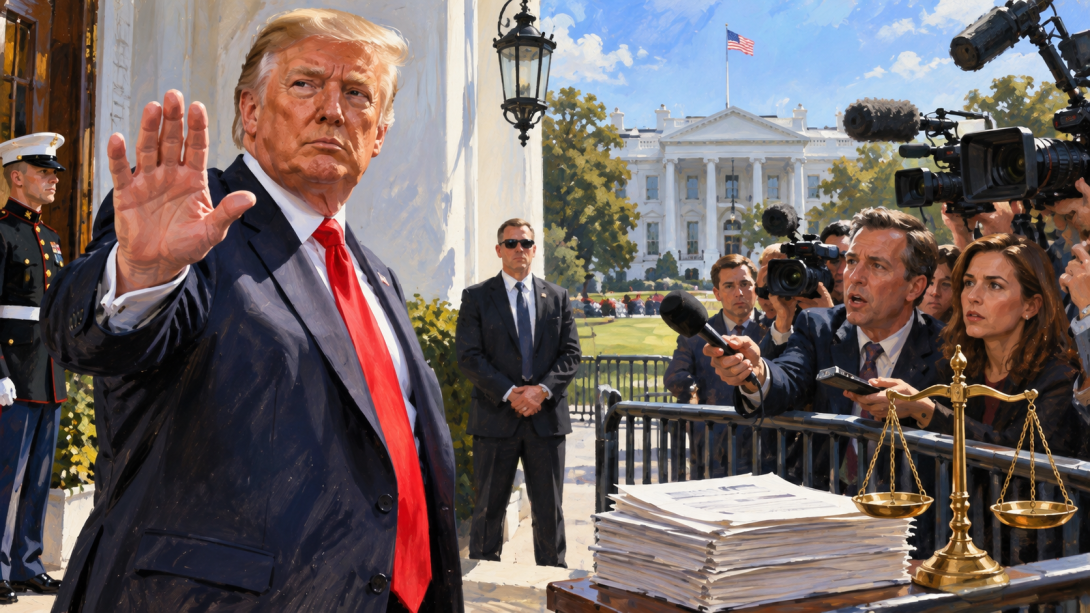
CNN, MS NOW and Politico are filing a lawsuit in the federal court for the District of Columbia after the US President Donald Trump's administration revoked journalists' passes and restricted the access of three media outlets to the White House. The newsrooms claim that the decision violates the First Amendment to the US Constitution and guarantees of due process.
WHY THE MEDIA OUTLETS WENT TO COURT
The three news organisations notified the US Government of the filing of the lawsuit on 21 September 2026. They also intend to seek a temporary restraining order to restore journalists' access to the White House.
In the draft lawsuit, the newsrooms state that the passes were revoked without prior notice and procedure after the President expressed dissatisfaction with the media outlets' publications. According to the three organisations, such a decision affects not only their work but also the public's access to information about the government's activities.
WHAT HAPPENED TO THE JOURNALISTS
The restrictions followed Trump's statement on 18 September banning CNN, MS NOW and Politico. After that, the journalists' press passes were deactivated.
On 19 September, MS NOW correspondent Akayla Gardner, CNN's Betsy Klein and Politico's Cheyenne Haslett attempted to enter the White House grounds. Secret Service officers denied them entry and confiscated their press passes.
CNN and MS NOW also lost access to television equipment and camera positions on the White House grounds. In addition, CNN was excluded from the pool for joint coverage of events involving the President.
WHAT THE LEGAL CLAIMS ARE BASED ON
The lawsuit is based, among other things, on the provisions of the First Amendment to the US Constitution, which protect freedom of the press. The media outlets intend to argue that the administration used the criterion of attitude towards publications when making the decision to restrict access.
CNN's publication also cites a 1977 court precedent involving journalist Robert Sherrill. At that time, federal courts restored his White House pass, and the Court of Appeals for the District of Columbia pointed to the inadmissibility of restricting access because of the content of journalistic speech or discrimination against a protected category of expression.
It is noted that courts have previously considered similar disputes involving journalists. During Trump's first presidential term, legal proceedings arose after the suspension of the passes of CNN journalist Jim Acosta and Playboy correspondent Brian Karem. In the second term, a legal dispute arose after Associated Press's access to the Oval Office and the President's aircraft was restricted.
WHAT THE TRUMP ADMINISTRATION SAYS
Trump explained the decision by the attitude towards publications that he considers negative. According to him, media outlets can write such material, but this does not mean they must be granted access to the White House.
At the same time, the President stated that his actions are not directed against the free press, but against media outlets that he calls "FAKE NEWS". CNN requested comment from the White House regarding the upcoming lawsuit.
CONTEXT
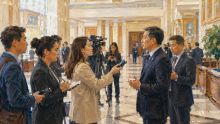
At the same time, a discussion has arisen in Kazakhstan about restricting journalists' access to Kurultai deputies. In September, media representatives were restricted from approaching deputies directly in the corridors, and were asked to submit questions through the press centre.
Media lawyers and human rights organisations expressed concern about the possible restriction of journalists' access to deputies. In their opinion, the new requirements must have a clear legal basis, be officially adopted and published in advance.
Kurultai representatives, in turn, stated that this is not about restricting the work of the media, but about regulating interaction between journalists and deputies.