A major investment dispute is heating up in Astana between JSC "Kazakhstan Gharysh Sapary" (KGS) and LLP "King Development", in which 85% is owned by the Malaysian company Goldmore Ventures.
The national space company unilaterally terminated the contract for the construction of the second phase of the National Space Centre, citing systematic breaches of obligations by the developer. The investor, however, considers the decision unfounded and intends to fight for its rights, including through international courts.
A PROJECT OF NATIONAL IMPORTANCE
In 2018, KGS and King Development signed a contract for the implementation of the second phase of the National Space Centre in Astana. According to the agreement, the national company provided a land plot of 14.5 hectares on Turan Avenue for long-term use, and the investor undertook to invest 96 billion tenge in the project and build six residential complexes, a business centre with apartments, a school and a kindergarten.
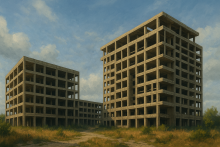
Over the past six years, the investor has built one residential complex and the Tamos Space School, and also began construction of the second phase of the residential complex (70% complete). According to the director of King Development, Chingis Akhanov, 20 billion tenge has been invested in the project to date, including 1.6 billion for engineering utilities.
THE INVESTOR'S POSITION
In February 2024, "Kazakhstan Gharysh Sapary" unexpectedly terminated the contract, citing rent arrears amounting to 700 thousand tenge. According to representatives of King Development, this amount had been paid before the official termination of the agreement.
The investor explains the construction delays as a result of the national company itself failing to meet its obligations, particularly regarding the timely procurement and installation of equipment for the electricity distribution substation. Furthermore, King Development emphasises that the COVID-19 pandemic significantly impacted the project's implementation, yet this factor was not taken into account by the judicial authorities.
"We believed in Kazakhstan, its economic stability, and invested significant funds. We created infrastructure, jobs, and educational projects, but now we are effectively being driven out of the country. This is an alarming signal not only for us but also for the international investment community," media outlets report, quoting the founder of the Malaysian investment company, Hii Wei Wen.
THE NATIONAL COMPANY'S REFUTATION
For its part, JSC "Kazakhstan Gharysh Sapary" asserts that the contract termination was due not only to the rent arrears but also to serious violations of contractual obligations.
"Of the six planned residential blocks, only one has been fully built; construction of the others has not been completed within the established timeframe and continues to be incomplete, with work on four blocks not even having started on time," states a press release from the national company.
Regarding the rent, according to KGS, the developer systematically delayed payments: the total amount of overdue payments was 7.2 million tenge, and the total period of debt reached 701 days. "The most critical instances were payment delays of 232, 199, and 128 days," the statement notes.
The national company also refutes the claim about electricity supply problems: "Throughout the entire construction period of the facilities, including the completed block 'D' and the school, electricity has been and continues to be supplied without interruption from the Company's existing substation ("Kazakhstan Gharysh Sapary" - ed. note FBK)".
THE LEGAL DISPUTE
In May 2024, KGS filed a lawsuit in court, demanding that "King Development" mothball the unfinished construction projects, return the unutilised land plots, and hand over all design and estimate documentation.
By a decision of the Specialised Inter-District Economic Court of Astana dated 23 July 2024, the national company's claims were upheld, which was subsequently affirmed by the appeals instance in September of the same year. In February 2025, the Supreme Court rejected the investor's cassation appeal.
Nevertheless, the developer does not consider the matter closed. According to Akhanov, they are counting on the support of the Prosecutor General's Office, which could submit a cassation protest to the Supreme Court. Failing that, the company intends to appeal to international judicial bodies.
The Commissioner for the Protection of the Rights of Entrepreneurs in Kazakhstan, Kanat Nurov, expressed support for the investor: "I have signed a corresponding appeal to the Prosecutor General's Office requesting the submission of a cassation protest to the Supreme Court. I believe this will be a landmark case."
CONCLUSION
The conflict between JSC "Kazakhstan Gharysh Sapary" and LLP "King Development" goes beyond an ordinary commercial dispute, turning into a precedent that could affect the investment climate in the country.
On the one hand, the legality of the national company's demands has been confirmed by all judicial instances. On the other hand, the termination of a multi-billion tenge contract due to a relatively small debt raises questions within the business community.
This case demonstrates the need for careful drafting of investment contracts and a clearer definition of the parties' obligations. For Kazakhstan, which seeks to attract foreign investment, it is crucial to build a reputation as a country where not only the letter but also the spirit of agreements is observed, and where dispute resolution is fair and transparent for all parties.
The editorial board of FBK will continue to monitor developments in this high-profile case, particularly the Prosecutor General's Office's decision on a possible protest and the prospects for international legal proceedings.