(6 January 2026 | Source: Akorda press office)
The rise in the number of cars, millions of traffic violations and thousands of deaths each year — road safety remains one of the most acute problems for Kazakhstan. In an interview with the newspaper "Turkistan" President Kassym-Jomart Tokayev explained why fines alone are not enough and what systemic solutions are needed to reduce accidents.
SCALE OF THE PROBLEM IN FIGURES
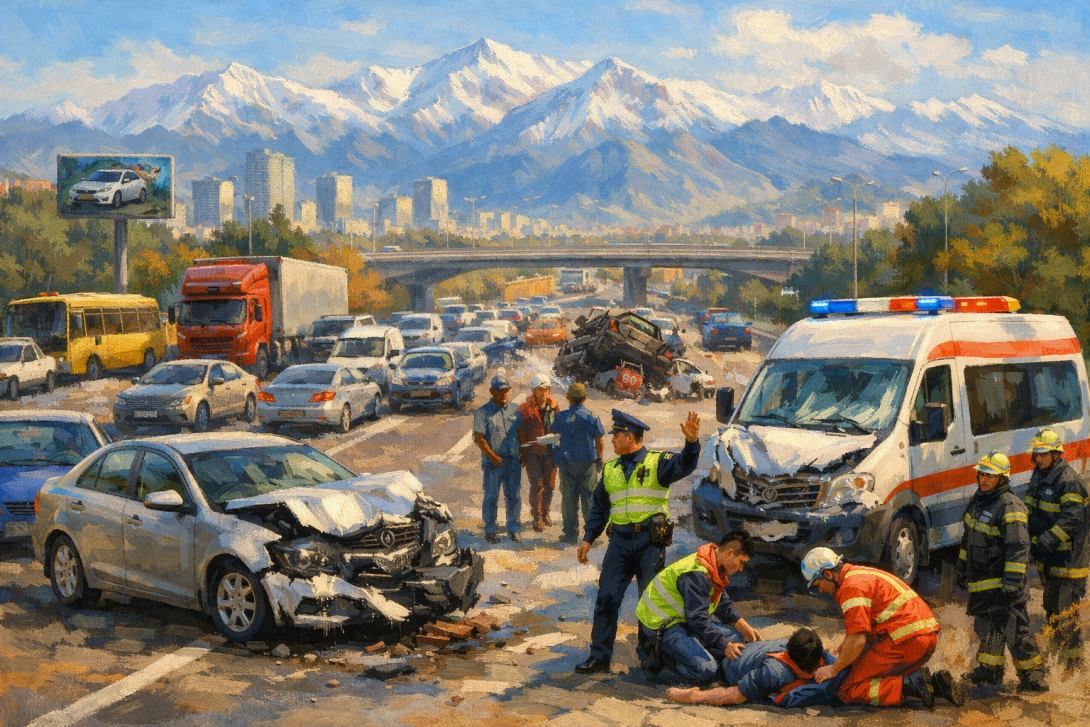
According to the authorities of legal statistics and special records, by the end of November 2025 in Kazakhstan, 31,428 road traffic accidents were registered.
In 1,588 cases the accidents resulted in fatalities, which, according to the President, clearly demonstrates the level of risks that road users face daily.
MAIN CAUSE — DRIVER BEHAVIOUR
As noted by the Head of State, citing data from the Ministry of Internal Affairs (MIA), about 90% of road accidents occur due to driver fault and are linked to poor traffic discipline.
Each year the police detect around 13 million traffic violations, which points to the systemic nature of the problem and its direct dependence on behaviour behind the wheel.
MOTORISATION AS AN OBJECTIVE FACTOR
The President emphasised that the rise in accidents is also driven by objective processes. In the past year alone the number of cars in the country increased by 300,000, and over the last five years the vehicle fleet grew by 1.7 million cars.
Furthermore, up to 3 million transit vehicles pass through Kazakhstan annually, which additionally increases the strain on road infrastructure.
STATE RESPONSE AND EFFECT OF MEASURES
Under these conditions the MIA has intensified its work on detecting and stopping offences, while simultaneously improving road infrastructure and strengthening control.
The decision to increase fines, according to Tokayev, was made based on the priority of ensuring road safety.
The President noted that positive trends are already being recorded — mortality in road accidents has decreased by 9.4%. At the same time, he stressed that administrative and technical measures will not produce a lasting effect without a change in public consciousness.
RESPONSIBILITY AS A SOCIAL NORM
In the interview, the practice of developed countries was cited, where the focus shifts towards fostering internal responsibility among road users. In such models, observing the rules is perceived not as a fear of punishment, but as a matter of personal safety and respect for others.
TECHNOLOGY AND SPECIFIC RISKS
Alongside this, the President stated the need for more active implementation of modern technologies, including solutions based on artificial intelligence, the development of non-stop traffic streets and increased attention to the safety of public transport.
It was noted separately that the number of road accidents involving buses continues to rise and requires specific systemic solutions.