
The Anti-Corruption Agency has identified corruption risks in vehicle registration and the issuance of driving licences at the country's Specialised Centres.
According to the agency's press service, employees of the Specialised Centres entered false data and issued counterfeit documents.
"Over three years, the Agency has investigated 23 criminal cases. More than 3,000 illegal vehicles were registered, and 60,000 driving licences were unlawfully issued. Appropriate recommendations have been made to the authorised bodies, some of which have already been implemented," the statement said.
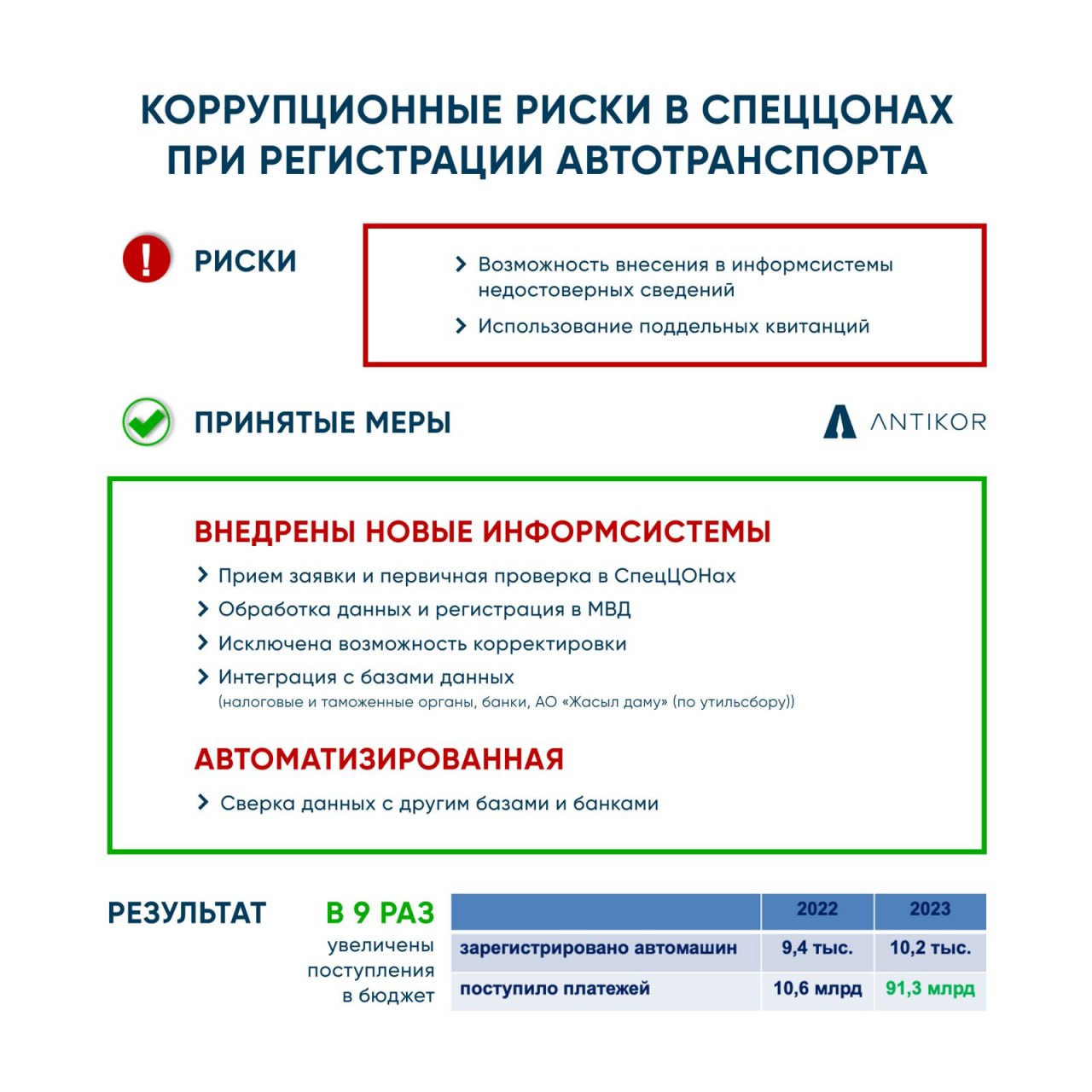
At the same time, new information systems for vehicle registration at Specialised Centres and the Ministry of Internal Affairs were announced, in which the ability to amend data when processing applications has been eliminated. Changes can now only be made by the Administrative Police Committee.
Additionally, only the IIN now needs to be entered to register applications; all other data will be automatically populated from other information systems. The system will also check the payment of mandatory fees, fines, and so on.
"In 2022, 10.6 billion tenge was collected for the registration of 9,400 vehicles; in 2023, including legalisation, 91.3 billion tenge was received for the registration of 10,200 vehicles. As a result of eliminating these risks, budget revenue increased ninefold last year," the Anti-Corruption Agency stated.
To prevent the substitution of individuals and exam results using remote computer access, the Anti-Corruption Agency has introduced mandatory biometrics and live video recording during exams.