(13 March 2026 | Source: Forbes)
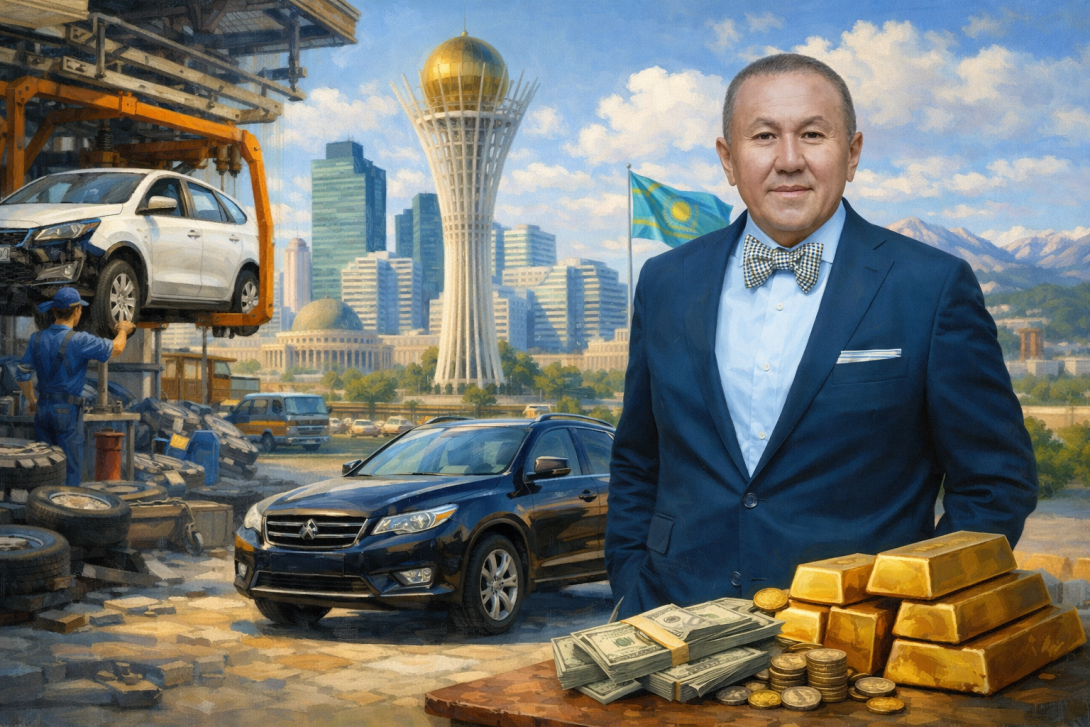
Kazakhstani entrepreneur Nurlan Smagulov has entered the Forbes global billionaires list for the first time. The publication estimates his wealth at approximately $1.3 billion. The growth of his business is linked to Kazakhstan’s automotive market, which has been regulated for many years by high import duties and recycling fees.
The emergence of a new billionaire from Kazakhstan has drawn attention not only to his business, but also to the country’s system of automotive market regulation itself. In recent years, this policy has been actively debated in society due to its impact on car prices.
HOW SMAGULOV ENDED UP ON THE BILLIONAIRES LIST
Forbes magazine has included Nurlan Smagulov in the 2026 global billionaires list. This is the first time an entrepreneur from the country has entered the publication’s global ranking.
His wealth is linked to his activities in the automotive business. A key role in the development of this sector has been played by market regulation rules, including recycling fees and high import duties on affordable cars. These measures limit competition from cheaper foreign vehicles. As a result, cars in Kazakhstan are often significantly more expensive than in markets with freer competition.
ADMINISTRATIVE MEASURES IN THE AUTOMOTIVE MARKET
For many years, Kazakhstan’s automotive market regulation system has included mechanisms to protect domestic production. These include recycling fees and high import duties on budget cars.
Such measures effectively make foreign cars more expensive and create more favourable conditions for local manufacturers and assembly plants. As a result, the final cost of cars for buyers can be higher than in a market with freer competition.
Several publications claim that companies linked to Nurlan Smagulov may be among the main beneficiaries of this policy. At the same time, the formally applicable rules and industrial assembly agreements are being observed.
THE QUESTION OF PRODUCTION LOCALISATION
One of the key topics of discussion surrounding the entrepreneur’s automotive enterprises remains the level of production localisation.
According to the terms of the industrial assembly agreements, the aim is to gradually increase the share of local production to 51%. However, according to sources, the actual level of localisation at the enterprises remains less than 30%, as the basis of production remains vehicle kits supplied from abroad.
For comparison, in other major automotive regions, localisation requirements are significantly higher. Under the USMCA trade agreement between the US, Mexico, and Canada, the rule for duty-free trade is 75% regional vehicle content. In the European Union, measures are being discussed that would require up to 70% of components to be produced within the EU. In developed automotive clusters such as Japan, South Korea, and China, the level of production localisation can reach 90%.
Formally, the requirements of the agreements are considered fulfilled, as enterprises meet the minimum conditions stipulated by the current industrial assembly support programmes.
PUBLIC IMAGE OF THE ENTREPRENEUR
In the public sphere, Nurlan Smagulov is often portrayed as an entrepreneur who achieved success through his own efforts.
In autumn 2025, Nurlan Smagulov was the subject of a four-hour episode of the “Zamandas” podcast, one of the longest in the project’s history. After the episode was published, users on social media speculated about possible financial backing of the project by the businessman.
Some commentators also noted that the interview did not address questions about the structure of the automotive business, the level of localisation, or the role of state benefits in the development of the industry.