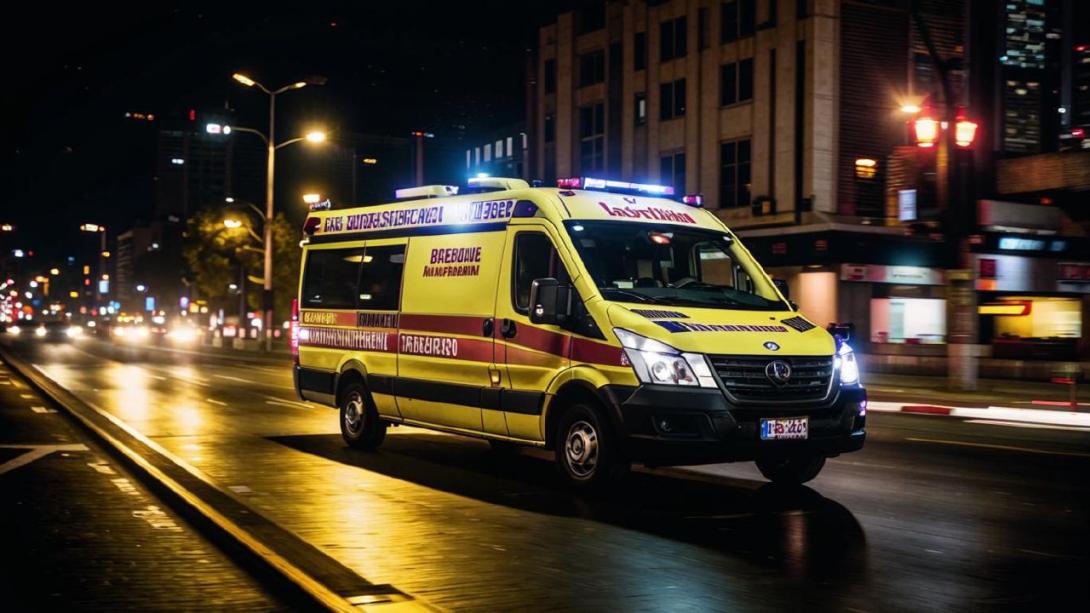
From 1 May, the procedure for mobile emergency medical teams in Kazakhstan is changing.
"In response to complaints about long waiting times for ambulances and with the aim of improving the efficiency of the emergency service, the Ministry of Health is introducing changes to the rules of operation for mobile teams based at polyclinics that handle fourth-category urgency calls", the ministry's press service reported.
It was noted that fourth-category urgency calls relate to conditions that are not life-threatening but require medical intervention.
What will change from 1 May:
- mobile teams based at polyclinics will operate during their opening hours — from 8:00 to 20:00;
- fourth-category urgency calls (for example, high blood pressure, fever, minor injuries) that are not life-threatening will be redirected to primary healthcare (PHC) mobile teams during polyclinic working hours;
- after 20:00 and on weekends, all calls, including fourth-category ones, will continue to be handled by ambulance teams as before.
It emerged that more than 50% of ambulance calls fall into the fourth category of urgency and are related to exacerbations of chronic diseases.
"It must be acknowledged that such calls divert resources away from patients with life-threatening conditions who require immediate help", the statement said.
The changes are expected to optimise workload, reduce waiting times, and improve the efficiency of the entire ambulance system.
"Now, primary healthcare mobile teams will respond to calls and carry out planned home visits to patients. This will enable timely monitoring of citizens' health status and prompt response to deteriorations in condition, especially among patients with chronic diseases", the Ministry of Health noted.
It also emerged that PHC mobile teams are formed at a rate of one team per 25,000 population. They operate at the patient's place of residence or actual location, regardless of which facility they are registered with.
"If necessary, mobile teams may be accompanied by specialist doctors. In particular, children will receive care with a paediatrician present, and adults with the involvement of specialists (cardiologists, neurologists and other doctors) depending on the nature and severity of the patient's condition. This approach will ensure more targeted, higher-quality medical care", the statement said.
The department noted that the mechanism for calling an ambulance remains the same — by dialling 103, citizens can request emergency medical assistance at any time of day. In cases where the patient's condition is life-threatening, an ambulance team will attend regardless of the day of the week or time of day.
"The arrival time for a PHC mobile team responding to a call is up to 60 minutes. For more urgent categories, standards have been set: 10 minutes for first-category calls, 15 for second-category, and 30 for third-category", the ministry concluded.
According to Ministry of Health data, in the first quarter of this year, ambulance services handled over 2.1 million calls. The highest number of calls were recorded in the fourth category of urgency — 763,463 calls, of which over 518,000 were handled by PHC mobile teams. The number of first-category calls was 104,443, second-category — 642,312, and third-category — 574,580 calls.