(23 February | Source: Orda.kz)
The Ministry of Ecology and Natural Resources has approved hunting quotas for the upcoming season. The figures proved so substantial that they sparked a wave of criticism from the conservation community: specialists from the Kazakhstan Association for the Conservation of Biodiversity (KACB) described part of the limits as "practically unlimited" and questioned the reliability of the data on which they are based.
ONE AND A HALF MILLION GEESE — A LIMIT OR NO LIMIT?
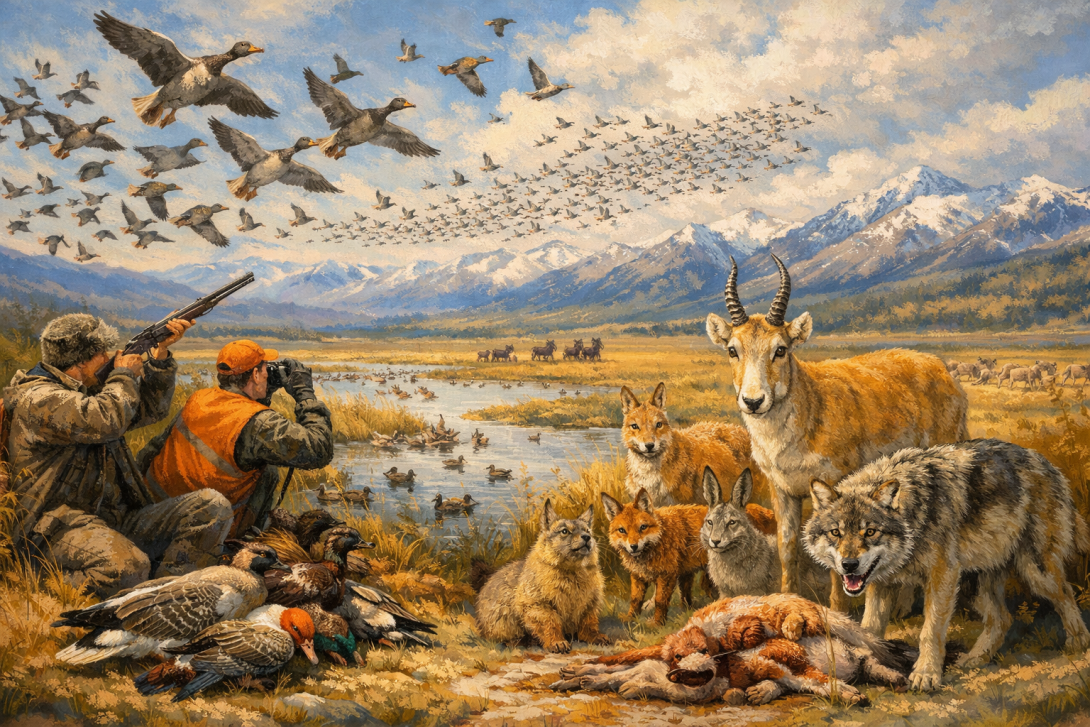
According to the published data, the following are permitted for culling this season (from 15 February 2026 to 15 February
2027 inclusive):
- 1,335,310 geese;
- 3,029,606 ducks;
- 426,048 hares;
- 265,013 marmots;
- 157,748 pigeons;
- 136,881 partridges;
- 82,989 pheasants;
- 83,807 muskrats;
- 56,198 foxes, etc.
Wolves are included in the list without a quantitative limit.
The KACB has primarily criticised the volumes for waterfowl: the approved quotas exceed by several times the standardly applied threshold of 15% of the population.
For comparison, in previous years, hunting users across the entire country managed with a limit of 250–300 thousand geese. This season, it has been approved at 5 times more. Specialists suggest that the inflated figures may be due to a methodological error: the same bird, migrating between observation points, could have been recorded multiple times.
"This leads to huge errors and, overall, a random distribution of the limit between regions. The figure proposed by the developers is practically unlimited," the KACB reported.
WHO PREPARED THE BIOLOGICAL JUSTIFICATION
The scientific justification for the quotas was prepared by EcoBioGen LLP, registered in January 2022 in Astana. According to data from the kompra.kz service, the director and founder of the company is Alexander Lyalchenko, who also owns QSLINE LLP, specialising in geodetic activities.
The main activity of "EcoBioGen" is stated as hunting and trapping, with a secondary activity being scientific research in the field of biotechnology. The company only received a licence to carry out work in the field of environmental protection in September 2024 from the Committee for Environmental Regulation and Control of the Ministry of Ecology and Natural Resources.
Currently, the company has a tax debt exceeding 700 thousand tenge.
THE SAIGA STORY
It is worth noting that the situation with hunting limits unfolds against the backdrop of the unresolved issue of "population regulation" of the saiga antelope.
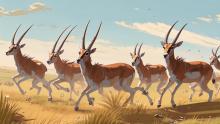
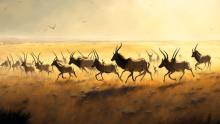
In 2022–2023, the rapid growth of the population, over 1.3 million individuals, provoked conflict with the agricultural sector.
In 2023, authorities lifted the ban on hunting, which had been in effect since 2005. The biological justification for the mass culling was prepared at the time by the West Kazakhstan Agrarian and Technical University, and its text was never seen by the public.
Soon the campaign got out of control: the media documented carcasses with organs cut out in the steppe, illegal slaughter at car washes, and illegal meat trade. Official data on the population size and the number of animals removed did not match on several occasions.
The culling was soon suspended, with some errors acknowledged, but in 2025 it was resumed. Today, the official estimate of the saiga population stands at 3.9–4.1 million individuals, and alongside it, contradictory figures, a new classified justification, and reports of illegal trade are once again present.
Both the saiga and the current hunting limits demonstrate the same logic: to remove a particular species without asking the question, what will happen to the others.
You don't need to be an expert to understand that a sharp decline in the population of one species inevitably affects the entire trophic chain: the numbers of prey, competitors, predators, and parasites change.
In the few years since the start of the saiga crisis, the Ministry of Ecology, apparently, has not changed its approach: the same opaque justifications, the same questions about the calculation methodology, the same scales that specialists qualify as a de facto unlimited situation.
Nature can restore balance — but not indefinitely and not without consequences. This lesson, it seems, has yet to be learned.