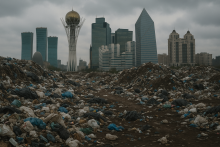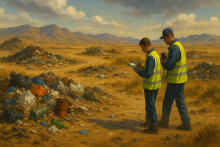
A landfill for temporary waste storage in the village of Ozerki, Zhanasemey district of the Abai region, built in 2023 for 8 million tenge, has fallen into a state of disrepair. According to local residents, part of the fencing has collapsed, and waste has spread far beyond the designated area.
According to ORDA, local activists claim that violations occurred both during the construction and operation of the facility. They have repeatedly appealed to higher authorities, but the situation has not changed.
An inspection by the Department of Internal State Audit at the akimat of the Ozerki rural district confirmed financial and procedural violations totalling more than 13 million tenge, including unjustified payments to a contractor.
A member of the regional public council, Rollan Mashpiev, visited the site. He noted that the landfill is overflowing and that waste is effectively not being removed, even though the facility is intended only for temporary storage.
"The state of the local temporary dump is surprising. I have in my hands an acceptance certificate for the completed work on installing the site for the temporary storage of solid household waste. It is unclear how such work is accepted. The Anti-Corruption Agency needs to look into this," the activist stated.
The akimat of the Zhanasemey district reported that the restoration of the fencing is planned for next week, and that the rectification of the identified violations is already underway.
At the same time, local residents note that the fencing was damaged back in the summer, and that authorities only announced repairs after publicity on social media. Officials also did not mention the previously conducted audit.
The story of the landfill in Ozerki is not an isolated case of waste problems in the region. In December 2024, FBRK investigated the waste disposal crisis in the village of Priirtyshskoye (commonly known as Utinka), where overflowing sewage systems forced residents to seek illegal alternatives.
Local authorities initially permitted the dumping of waste on vacant land, but after public outcry, disowned the decision. Residents were thus forced to pay monthly for expensive urban sewage disposal services.
Following the FBRK publication, the district akimat promised to provide the area with sewage networks. Both stories point to systemic problems with municipal infrastructure in the Kazakh provinces.