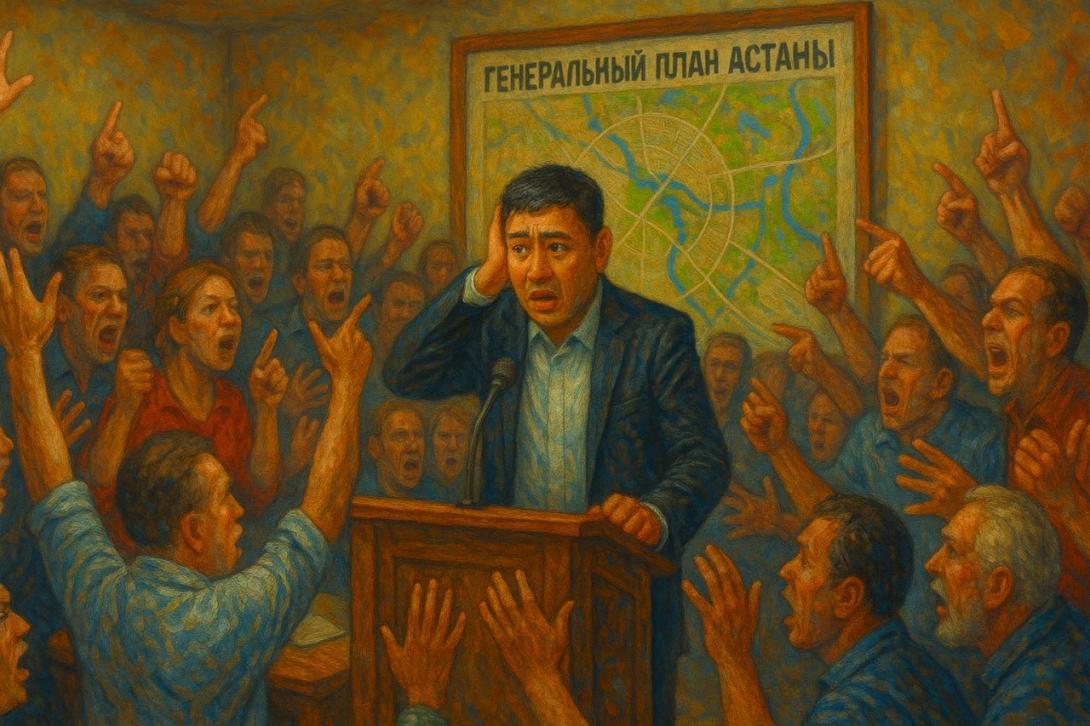
On 22 July, public hearings on the adjustment of the capital's master plan until 2035 were held in the building of Astana Genplan. A correspondent from FBK, who attended the event, notes that the discussion, intended to ensure citizen participation in city development planning, turned into a poorly organised ordeal involving stuffy conditions, a lack of parking, and responses of "not within our competence" to most residents' questions.
According to official data, 1,325 participants were registered following the hearings, with "the majority supporting the project", although many left the event without having their questions answered.
AN ENDURANCE TEST
As our correspondent reports, the first problems began even before entering the building. The organisers had not arranged parking for participants of a major city event. People had to find parking spaces in the surrounding area, which created additional inconvenience.
Participant registration took place in unsuitable conditions — people filled out documents standing up, hunched over small tables with no chairs. Elbowing each other, residents tried to fill in their voting ballots even before the presentation began and before they could review the materials.
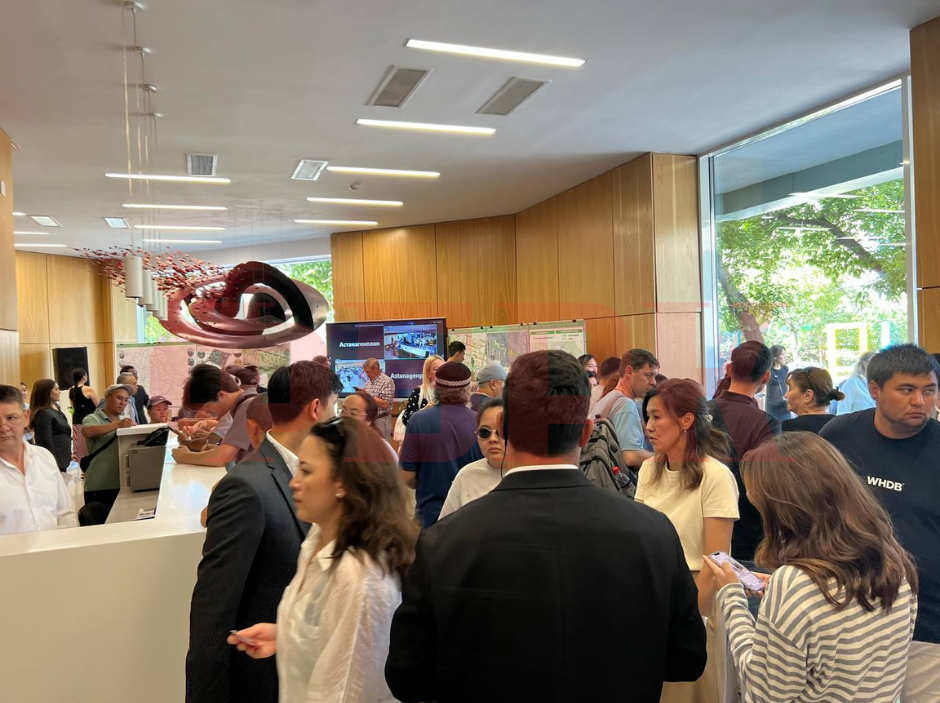
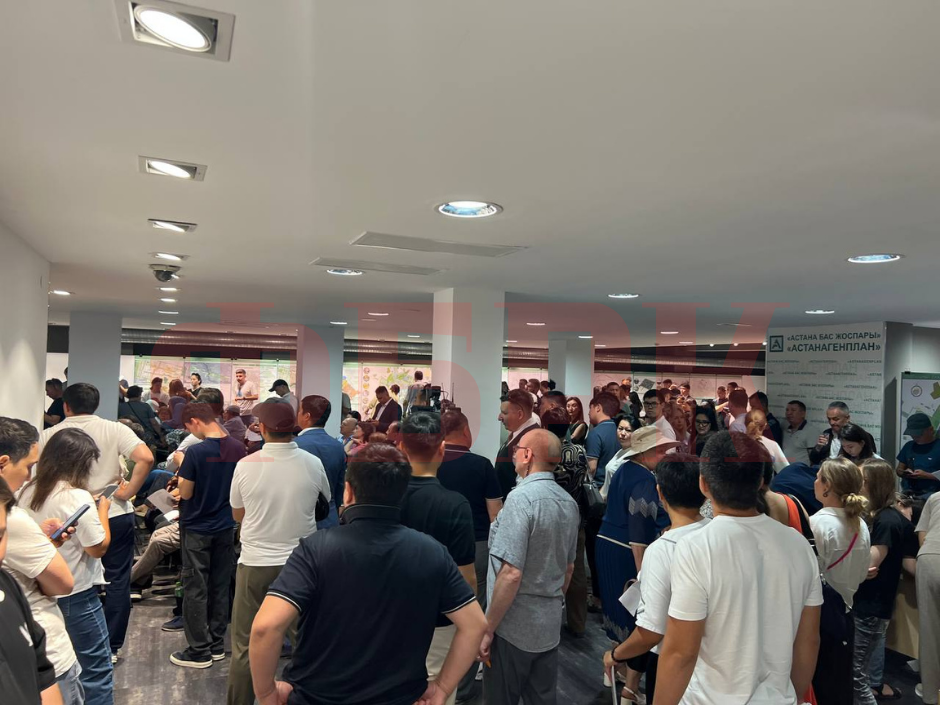
The ground floor of the building was stifling due to the large crowd, while people were not allowed upstairs, citing "overcrowding". An FBK correspondent managed to get upstairs and found that the adjacent hall on the first floor, where the broadcast was taking place, was practically empty and could have relieved the pressure on the main room.
SUSPICIOUS ACTIVITY
Media representatives noted the strange behaviour of some "participants": immediately after registration, they quickly filled out their voting forms and left the event, without listening to the speakers or reviewing the materials. This naturally led genuine participants to question whether these individuals were affiliated individuals. According to other media reports, one female resident later openly voiced these suspicions from the stage.
VAGUE PRESENTATIONS
According to the observations of the FBK editorial team, the speeches were formal in nature — "monotonous, dry, read from a script". The Deputy General Director of the Astana Genplan Research and Design Institute LLP, Azamat Khamitov, spoke about four factors influencing the changes to the master plan: increased investment attractiveness, new regulatory requirements, transport projects, and the need to increase recreational areas.
However, as colleagues from Besmedia note, "the report did not explain how the new master plan differs from the previous one — they only presented general plans for the next 10 years". From the comparative materials, only maps and generalised data were shown, which contained little understandable information for an ordinary resident beyond dry figures.
By 2035, Astana plans to build 138 new schools, 190 kindergartens, 115 medical facilities, and 104 sports facilities. The area of green space is intended to increase to 19 square metres per person.
DISCUSSION WITHOUT ANSWERS
As our correspondent describes, real chaos began after the official part. There was no queue system for speaking — microphones were handed out randomly, and no one was taking down the names of those who wanted to ask questions. Everything was happening spontaneously.
Most questions concerned green zones — parks, squares, and tree-lined avenues that are already being built on or are planned for development. Residents were outraged by the construction on the Mynzhildyk Alley, the disappearance of the Taldykol lake system from the master plan, and the continued development of plots that, according to documents, should be public gardens.
Our correspondent notes that speakers answered most specific questions with standard phrases: "That's not within our competence", "Contact the authorised body", "We are not responsible for that", "That's all down to GASK" (the city's state architectural and construction control department – editor's note from FBK).
Many participants felt the discussion was merely a formality: to comply with the law, to tick a box. Residents were frustrated by systemic problems with access to information.
The master plan images were not uploaded in advance to the architecture department's website, the information boards contradicted what the speakers showed on their slides, and access to information was artificially restricted, including for the press. The main complaint concerned the discrepancy between the master plan and reality — development in the city is proceeding entirely differently from the schemes proposed in the document.
According to the FBK representative, the question about the "green charter" was particularly telling. One resident demanded a clear answer: does an approved dendrological plan exist in Astana as of 25 July 2025? After attempts to resort to generalities, the speaker was forced to admit: "As far as I know — there is no approved dendrological plan."
VOTING BEFORE THE DISCUSSION ENDED
The absurdity of the situation reached its peak when the organisers began collecting and counting the ballots even before the discussion stage had finished. People were being asked to vote without having received full information about the project or answers to their questions.
An elderly participant, who had been standing for several hours, said into the microphone:
"These pointless discussions achieve nothing. We've asked so many questions — not one has been answered. That's because the city leadership should be here alongside you. Everything you draw so prettily gets changed afterwards — someone up top pulls strings, something gets built somewhere. It's all a sham."
Notably, at that moment in the background, a man in a suit was actively depositing ballots into the ballot box — a scene captured on FBK video.

ABSENCE OF THOSE RESPONSIBLE
As our correspondent emphasises, the main problem was that the discussion was held without representatives from the Akimat and GASK — the bodies directly involved in development, project approval, and changes to the master plan. They should have been present to answer residents' questions about why the master plan does not match reality and why construction continues in unauthorised locations.
According to official data, the hearings were deemed to have taken place, despite residents' requests that this not be the case. All comments were promised to be recorded in the minutes and "considered".
CONCLUSION
The public hearings on the Astana master plan demonstrated a systemic problem of simulating citizen participation in urban planning. Instead of a constructive dialogue, residents received a formal event held for the sake of appearances.
The lack of basic organisation, the evasion of answers to specific questions, and the start of voting before the discussion concluded show that the opinion of the city's residents is not a priority for the organisers. It is particularly alarming that such practices of simulating democracy are occurring in the capital of the country, which should serve as a model for other regions.
If the authorities are genuinely interested in citizen participation in planning Astana, then such events must become honest, open, and involve real feedback, rather than being reduced to collecting ballots before the discussion is over.