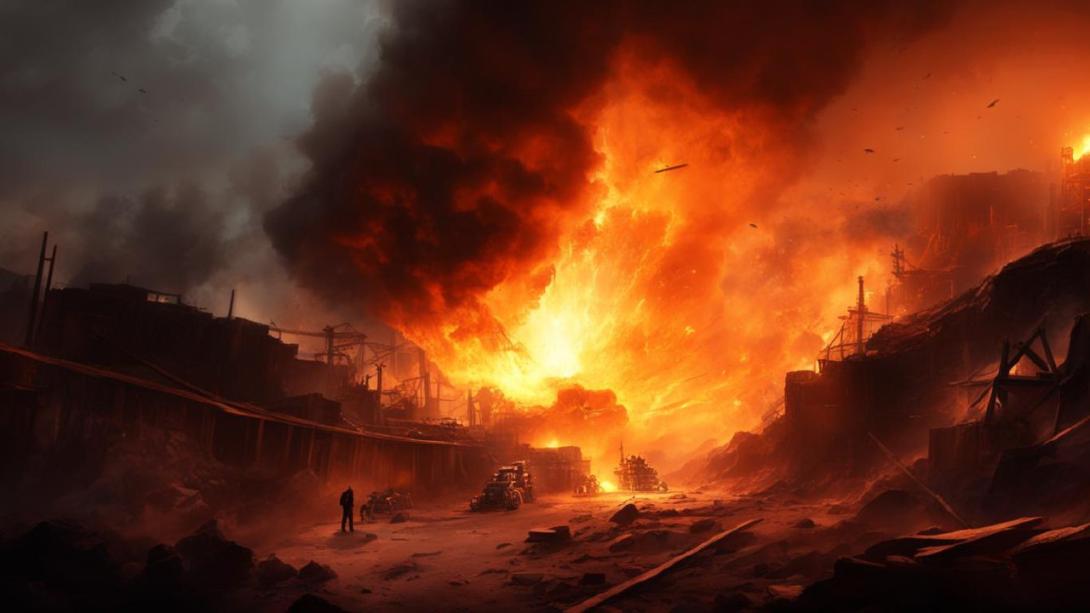
It recently became known that five people died as a result of an accident at the Kazakhstanskaya mine of the coal department of ArcelorMittal Temirtau JSC in the Karaganda region. As a reminder, on 17 August a conveyor belt fire occurred; at the time of the accident, 227 employees were in the mine; later, 222 people were evacuated. On 20 August, ArcelorMittal Temirtau JSC declared a day of mourning for the deceased.
Meanwhile, the editorial board of the FBRK has obtained a statement from the ArcelorMittal occupational health and safety trade union from 2021, in which the working group expressed its outrage at the employer's irresponsibility in protecting workers' health in the post-pandemic period, and generally stated that management was negligent regarding safety issues within the company.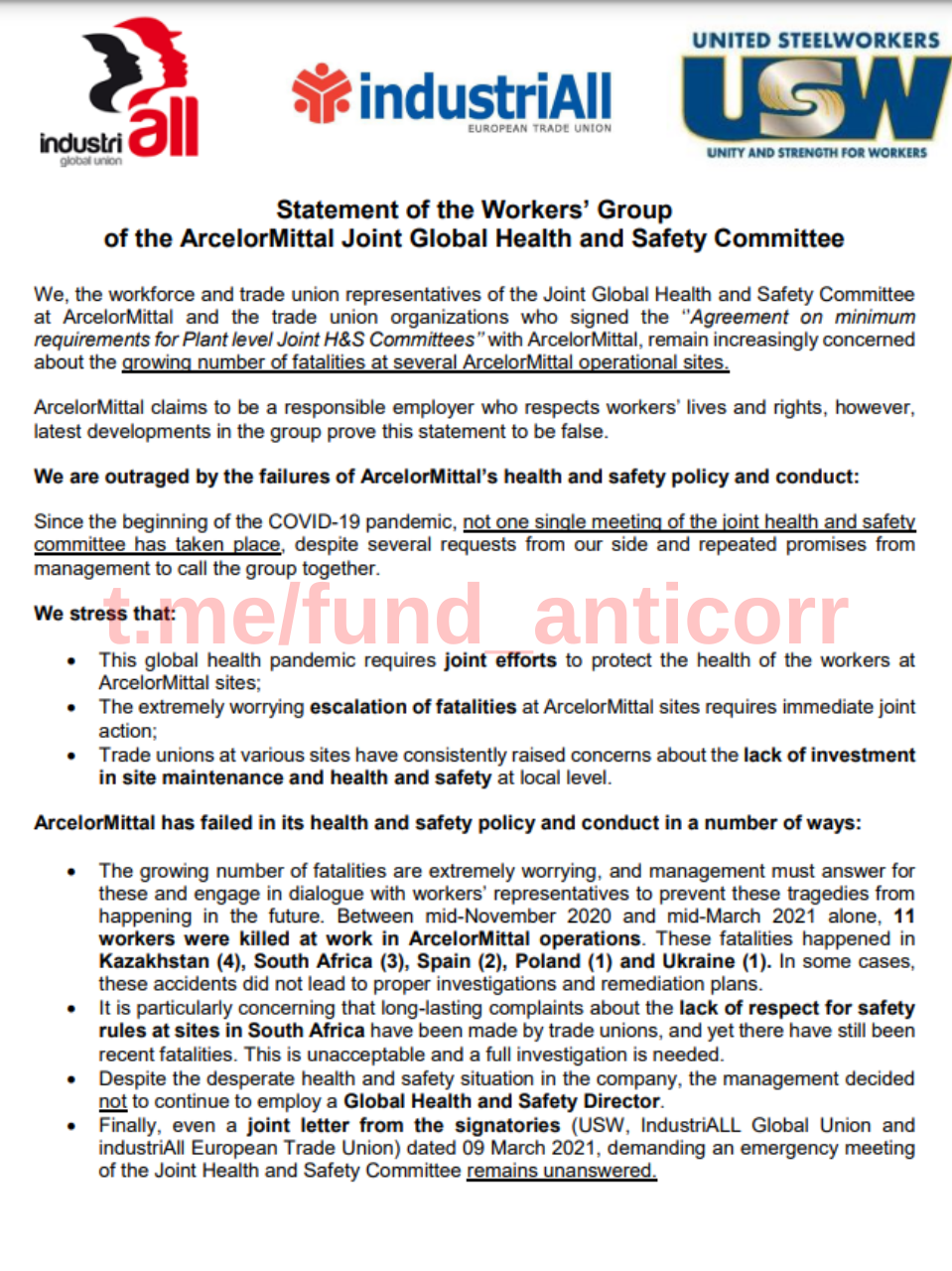
"ArcelorMittal claims to be a responsible employer that respects the lives and rights of workers, but recent events within the group prove this statement to be false. We are outraged by the failures of ArcelorMittal's policy and conduct in the field of occupational health and safety," the statement reads.
Representatives of the working group were extremely concerned about the rising number of deaths at ArcelorMittal production sites. It was emphasised that workers' health had been endangered not only during the pandemic, but also long before it. Trade unions at various sites regularly expressed concern about the lack of investment in the maintenance of facilities, as well as in occupational health and safety.
The enterprise's trade union asked management to enter into a dialogue with workers' representatives in order to prevent tragedies in the future. It was reported that between mid-November 2020 and mid-March 2021 alone, 11 workers died at ArcelorMittal enterprises. These fatalities occurred in Kazakhstan (4), South Africa (3), Spain (2), Poland (1) and Ukraine (1). In some cases, accidents did not lead to proper investigations and recovery plans.
It was noted that despite the dire health and safety situation in the company, management decided not to hire a global director of health and safety. A joint letter from the signatory parties (USW, the IndustriALL Global Union and the IndustriALL European Trade Union) dated 9 March 2021 demanding an emergency meeting of the Joint Occupational Health and Safety Committee went unanswered.
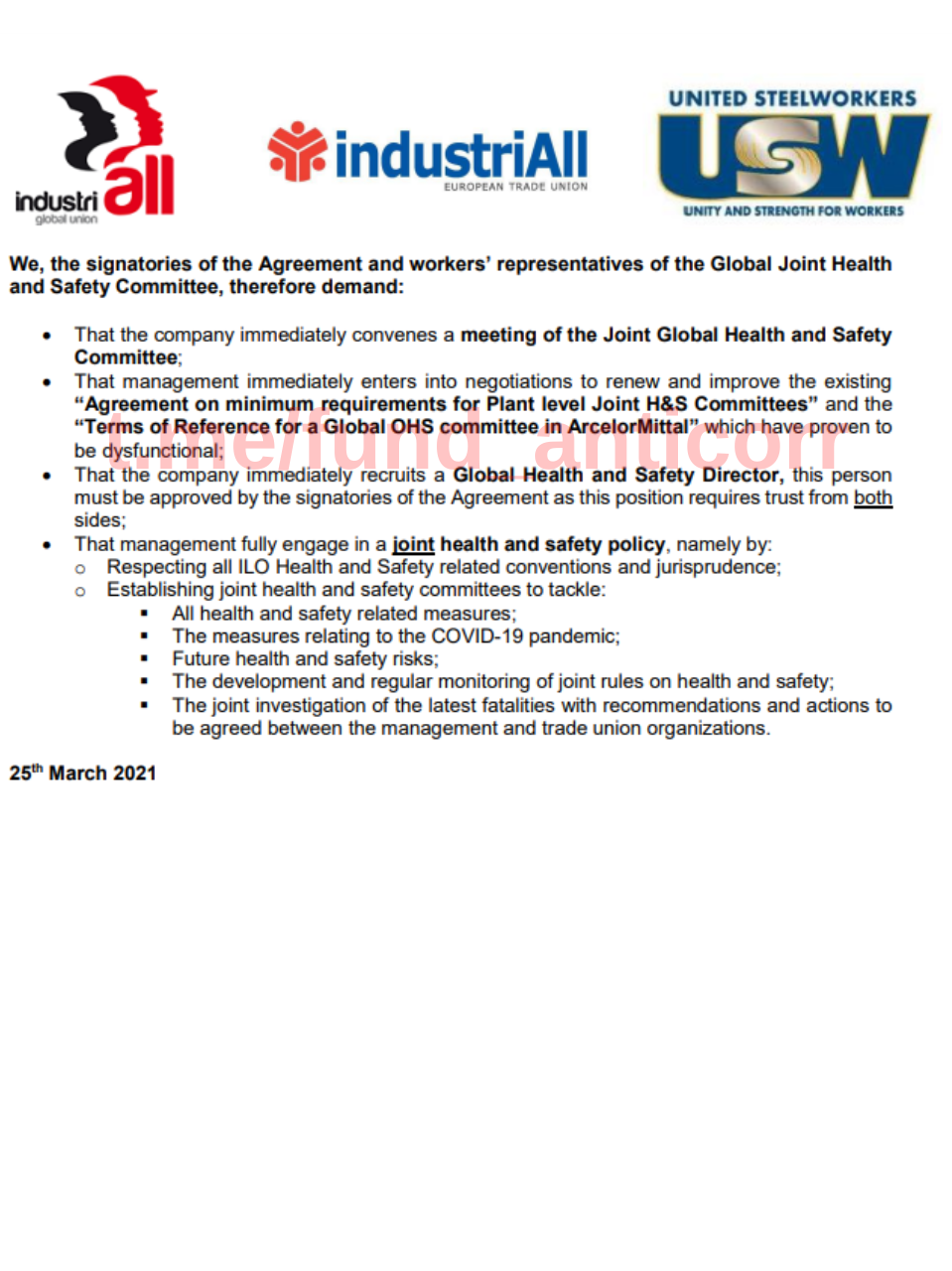
Consequently, the workers' representatives demanded that the company immediately convene a meeting of the Joint Global Occupational Health and Safety Committee, and that management work to improve the existing 'Agreement on Minimum Requirements for Joint Occupational Health and Safety Committees at Enterprise Level' and the 'Terms of Reference for the Global Occupational Health Committee at ArcelorMittal'.
The company's management was also required to hire a global director of occupational health and safety and to participate in a joint policy on occupational health and safety, particularly regarding the investigation of recent workplace fatalities.
WHERE IS THE ADVOCATE WHEN THEY ARE TRULY NEEDED?
It is now reported that in light of recent events, one of the country's main organisations for protecting workers' rights - the Federation of Trade Unions of the Republic of Kazakhstan (FPRK) - has lost the trust of workers. Since 2017, the FPRK has been plagued by a series of scandals. To date, the federation remains lacking in initiative and indifferent to the problems of those whose concerns should have been its primary mission.
Before the adoption of the new Constitution in 1995, the country's main trade union was indeed a powerful force in labour relations. It controlled sick pay, monitored safety conditions in the workplace and could even inspect enterprises without warning. Even more valuable was its right to represent workers' interests at the legislative level, submitting proposals to parliament to amend laws.
Over time, it began to appear that in subsequent years the FPRK turned into an authoritarian institution engaged in suppressing other trade union organisations. This became most noticeable between 2017 and 2018, when a series of strange incidents began. Many trade unions began to leave the federation, leading to its exclusion from the International Trade Union Confederation for 4 years and the loss of its voting rights at its congress.
Unfortunately, to date the Federation of Trade Unions of the Republic of Kazakhstan is not fulfilling its primary functions of resolving labour conflicts and creating favourable conditions for workers. In none of the labour conflicts that have flared up in the regions in recent years has the FPRK expressed active involvement. The Chairman of the Federation of Trade Unions, Satybaldy Dauletalin, also did not distinguish himself as a leader of the organisation.
Everything ended either with the government itself forcing employers to make concessions to workers, or with strikers losing and being punished for unsanctioned protest actions. For example, if the FPRK had stood up for the workers, looked into the situations, offered legal assistance and mediation, then the blockade of the KazMunayGas building by former employees of the oilfield services company BerAli Mangystau Company could probably have been avoided.
Undoubtedly, a significant share of responsibility also lies with the companies themselves, but the role of the federation in resolving the crisis would have been substantial. However, no contribution by the FPRK was mentioned in any news reports. Nor were there any significant comments from the federation's leadership. This is despite the fact that one of the deputies of the current chairman of the federation (albeit on a voluntary basis) is Sultan Kaliev, a trade union leader in the oil and gas sector.
Overall, in almost all labour conflicts, the federation either removes itself from the situation or acts extremely formally. In practice, it largely only issues statements, calls on the media to refrain from premature comments and signs meaningless memoranda. At the same time, the federation's involvement in legislative activities is also barely noticeable. Ultimately, many amendments that were previously made to the Labour Code and protected only the interests of employers were adopted precisely with the connivance of the FPRK.