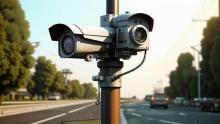
A drama is unfolding in the Kostanay Regional Court that could well draw a line under the history of public-private partnerships (PPPs) in Kazakhstan. The Department of Informatization of the Kostanay Region is seeking termination of the contract with Kӧrkem Telecom LLP — the developer of the Sergek video recording system — and this dispute has already gone far beyond an ordinary commercial conflict. For all the ambivalence of public attitudes towards video recording systems, the Kostanay case is less about the popularity of Sergek among motorists and more about the state's readiness to honour its own obligations.
The three-decade history of attempts to introduce PPPs in Kazakhstan is full of ups and downs, but few projects have sparked such contradictory assessments as Sergek. The system, which has spread across the country since 2017, has become a symbol of technological progress for some and a source of irritation for others.
But, whatever you think, the statistics speak for themselves: in Astana, the number of crimes during the first year of operation fell by a third, and road accident fatalities over seven years dropped from 60 to 37 cases per year. Other cities showed similar figures.
President Kassym-Jomart Tokayev has also repeatedly noted the system's effectiveness, highlighting a double benefit for the state: a technological solution to the problem of violations and a simultaneous reduction of corruption schemes in the traffic police. It seemed like an ideal example of a successful PPP — a private investor puts in the funds, the state gets a working system without upfront costs, and citizens get safer roads.
The Kostanay story also started out standardly. In 2023, the region's Department of Informatization, headed by Azamat Kashiyev, decided to introduce Sergek under a service model — where the state pays only for services and the equipment remains with the private partner. This approach allowed significant savings. If in Astana, where the authorities chose the classic model with equipment transferring to state ownership, the project cost 25 billion tenge, then in Kostanay it was planned to spend only 3.5 billion.
Kashiyev personally oversaw the project, issuing a positive sectoral opinion in which he detailed the feasibility of the partnership and listed the advantages of the proposed solution. Kӧrkem Telecom LLP began work, investing over 2 billion tenge in installing 60 hardware and software complexes (HSCs), thousands of video surveillance cameras, and modernising the police command centre.
The system worked like clockwork. In 2025 alone, the city managed to detect over 1 million violations amounting to nearly 19 billion tenge in fines, and solved over 400 crimes. The regional police department was receiving data from the cameras without issue and continues to use the system to this day. It seemed a textbook example of effective partnership.
However, at the beginning of 2025, something went wrong. The Department of Informatization suddenly stopped signing the monthly acceptance certificates, effectively freezing all payments. For two years of flawless work, Kӧrkem Telecom did not receive a single tenge of the promised 3.5 billion. Soon after, a lawsuit was filed to terminate the contract.
The formal pretext was the conclusion of the regional state audit department. Curiously, the auditors found no financial violations — all funds were spent appropriately, with no amounts subject to additional charge or recovery. Nevertheless, they did not find written approval for some technical decisions.
Specifically, the auditors did not find documentation for the replacement of equipment at the Police Operational Control Centre. Representatives of Sergek tried to explain that repairs and installation of new equipment were carried out following verbal agreement with law enforcement and at the company's expense.
The Department of Informatization also claimed that the installed equipment did not correspond to the Sergek 2.1 system required under the contract. The cameras were compared visually, without being switched on, and indeed external differences were found compared to the reference samples. Company representatives argued that in terms of functionality, the installed version even surpassed the one specified, the system is fully certified, and it is successfully used by the police.
The head of the local Sergek branch, Olzhas Shugayev, expressed bewilderment: the company was not directly inspected, all complaints were directed at the state partner, and all the auditors' remarks were promptly addressed by the company, which provided the necessary documentation. Nevertheless, the court of first instance deemed the identified violations material and upheld the department's claim. However, the company was not placed on the register of unscrupulous suppliers, as the plaintiff had demanded. The company filed an appeal.
During the appeal, Kashiyev raised new complaints — about the very same project he had personally approved two years earlier. He was dissatisfied that, at the end of the four-year term, the equipment would remain with the private partner — even though this was the exact type of contract concluded by his own department. He also took issue with the Chinese-made Dahua cameras — despite the fact that similar equipment is not produced in Kazakhstan. Questions were also raised about the software methods of speed measurement — though their effectiveness had been proven by many years of practice.
Furthermore, Kashiyev stated that some modules of the HSC did not have separate certificates. Company representatives explained that the hardware and software complex is certified as a single unit, and the relevant documents had been presented back at the contract signing stage. It is strange that the same decisions that Kashiyev approved when concluding the contract suddenly became unacceptable to him.
Incidentally, Kostanay is not the only place where Sergek has run into trouble. Over the past year, the company left Astana and Oskemen, albeit for different reasons. In the capital, the contract ended as planned, and the system continues to function according to the terms of the agreement. In Oskemen, the situation was more dramatic: after the contract ended, the akimat, together with a new supplier, dismantled all the equipment. The result was immediate. In the first six months of 2025, the number of road accidents in the city increased by 2.5 times.
In other regions where Sergek operates, it is still working stably and even expanding its field of activity. But the Kostanay precedent could change the whole picture. Will the company stay in the regional centre? Highly unlikely. More important is this: how civilised will the end of this partnership be, and what conclusions will potential investors draw.
The outcome of the court proceedings will show whether market participants can count on predictable behaviour from state partners in PPPs. In this case, it is not so much about protecting the interests of a specific IT company, but about the principles of doing business by the state.
Can an official who personally approved a project declare two years later that the same project is unsatisfactory to him? Does the state have the right to unilaterally change the approach to projects already being implemented? And crucially — will the institution of PPP survive if every successful project can suddenly become problematic?
Given the nature of the claims made and the position of the court of first instance, the chances of Kӧrkem Telecom recovering its investment or continuing work in the region are minimal. The company will most likely have to write off 2 billion tenge in investments and focus on other regions where local authorities show greater consistency in their partnerships.
But the main losses will not be borne by Sergek, but by the very institution of PPP in Kazakhstan. The Kostanay precedent could significantly cool the interest of private investors in long-term projects, especially in the field of high technology, where initial investment is critically important for success. And then the state will have to solve the tasks of technological modernisation exclusively from the budget, which, given limited resources, does not look like the most promising strategy.