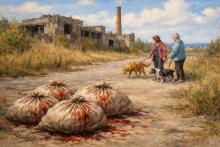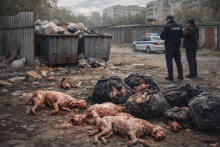
After changes to the legislation in Kazakhstan, the question of the fate of dogs that the state had previously sterilised, vaccinated and released back onto the street under the CNVR - catch, neuter, vaccinate and release programme remained unresolved. The new procedure changed the rules for dealing with stray dogs, but did not establish a separate transitional mechanism for animals already released.
Zhanna Issingarina, representing the Civil Alliance of the Republic of Kazakhstan on issues of humanisation, ethics and ideology, drew attention to this gap. On 28 August 2026, she sent an appeal to the Akim of Almaty, Darkhan Satybaldy, the city prosecutor's office, the Department of Entrepreneurship and Investment and the Almaty Veterinary Service. She asks for a separate procedure to be defined for previously released dogs and, until then, for identifiable animals not to be put to death without independent lawful grounds.
HOW CNVR WORKED PREVIOUSLY
Under the previous model, a dog was caught, examined, its condition assessed, sterilised, vaccinated, identified and, in the absence of grounds for further keeping, could be returned to its former place of habitation.
According to Kazinform, 1,428 dogs and 64 cats were released in Almaty under CNVR. It was also reported there that the animals were overseen by animal volunteers and animal activists. At the same time, the concept of a "curator" was not enshrined in law as a separate legal status.
According to Issingarina, such people effectively looked after the animals, fed them, helped with treatment and rehoming, but did not automatically become the dogs' owners.
WHAT CHANGED IN 2026
On 19 May 2026, Law of the Republic of Kazakhstan No. 292-VIII was adopted. It was published on 20 May 2026.
The very principle of working with stray dogs changed. During discussion of the amendments, Yedil Zhanbyrshin and the drafters spoke of abandoning return-based catching. According to Tengrinews, a transition to non-return catching, transfer of animals to temporary holding points and an expansion of the cases in which euthanasia is applied was envisaged.
The law also permitted the killing of stray animals, with the exception of cats, in order to regulate their numbers. The specific procedure and timeframes are to be determined at local level.
This is precisely where the main question arose: what to do with a dog that the state had already caught, sterilised, vaccinated, identified and itself returned to the yard.
OLD DOGS IN THE NEW SYSTEM
No separate transitional provision appeared for such animals. The documents in force contain no special algorithm that would directly oblige the service, upon catching a dog with a green tag again, to check its CNVR history, find the curator, notify them and provide an opportunity to take the animal away.
The green tag shows that the dog has already undergone the relevant procedures, but in itself it does not make the dog owned and does not protect it from being caught again.
The current Rules for catching animals in Almaty were approved by a decision of the maslikhat on 17 January 2023 No. 208. They provide for the catching of animals located in public places without an owner accompanying them, and the schedule is drawn up, among other things, on the basis of citizens' requests.
That is, a dog with a green tag may formally be caught again.
However, catching and killing are not the same thing. A resident's complaint in itself does not mean that the dog has been deemed aggressive or must be euthanised.
The rules provide that when catching an animal that has attacked a person or poses a threat, a report is drawn up with the participation of at least two witnesses, and in their absence video recording is permitted.
Hence another open question: how exactly is aggression in a previously released dog established today and who takes the final decision on its fate.
CITY RULES HAVE SO FAR REMAINED OLD
Almaty Rules No. 208 were adopted back in 2023. As of the beginning of September 2026, the document's history in the "Adilet" database does not show a new version after 17 January 2023.
Moreover, they still contain a provision that regulating the numbers of stray animals by killing is not permitted.
Thus, the national law already permits the new mechanism, while the published city rules still reflect the previous approach.
This does not mean that the new law is not in force. But the question remains which specific local act currently determines the procedure and timeframes for the killing of stray dogs in Almaty.
WHAT ABOUT CURATORS
A separate legal status for the curator of a CNVR dog did not exist before, so it is incorrect to assert that curators were "deprived of rights" after the amendments.
But the system of curatorship itself existed in practice. This was also confirmed by Kazinform. The problem is that the city used the participation of volunteers, but the mechanism for their mandatory notification when an animal is caught again is not enshrined in law.
Curators and public inspectors should not be confused. A public inspector is a participant in public control provided for by law, while a curator is a person who effectively looks after a specific animal.
WHAT ISSINGARINA PROPOSES
Issingarina proposes a temporary algorithm for previously released CNVR dogs: if there is a tag or chip, check the animal's history, confirm that it underwent the programme, identify the curator or other persons ready to take the dog, and provide an opportunity for it to be handed over or rehomed.
Until such a mechanism appears, she proposes a moratorium on the killing of identifiable dogs previously released under CNVR, except in cases of severe incurable disease or proven danger to people.
This is a proposal from the animal protection side, not a provision of law currently in force.
CATCHING, VACCINATION AND THE EFFECTIVENESS OF CNVR
The materials presented cite figures for 2024: 267,547 stray dogs caught and 33,479 vaccinated. If these figures are compared, vaccination accounts for around 12.5% of the number caught.
However, this does not mean that the remaining animals were destroyed. Such a conclusion would require a breakdown: how many dogs were returned to owners, transferred to shelters or other persons, released after CNVR, how many died and how many were killed.
Issingarina believes that regulating numbers should include not only catching, but also identification of owned animals, vaccination, sterilisation, combating free-roaming, liability for abandoning animals and control of reproduction.
Supporters of the amendments, by contrast, linked the reform to the fact that return-based catching had not produced the expected result. Zhanbyrshin spoke of a rise in the number of attacks and the need to change the system.
At the same time, to conclude that CNVR specifically is ineffective, data is needed not only on catching and attacks, but also on sterilisation coverage, registration of owned animals, free-roaming and the appearance of new dogs on the streets.
WHY ATTACK DATA DIVERGE
State and public materials for 2024 cite different figures.
In the reply of Prime Minister Olzhas Bektenov, which was quoted by the media, 37,949 attacks were indicated, of which 16,905 were by owned dogs and 21,044 by stray dogs.
During discussion of the amendments, Yedil Zhanbyrshin cited 38,848 attacks, of which 24,410 were by stray dogs.
The difference is 899 cases in the total number of attacks and 3,366 for stray dogs.
Therefore these data cannot be mixed or attributed to a single source. Until primary statistics are obtained, it remains unknown whether the difference is due to data adjustment, a different counting methodology or different sources.
BUDGET AND POSSIBLE CORRUPTION
Issingarina also proposes checking expenditure on catching, sterilisation, vaccination, temporary keeping and killing, as well as whether the volumes paid for correspond to the work actually performed.
The animal protection side's materials mention violations amounting to more than 300 million tenge, allegedly identified by prosecutor's office bodies. However, without the primary prosecutor's document, this sum cannot be presented as an established fact.
The same applies to claims about possible violations in the disposal of animals, the absence of video recordings, fictitious work and the alleged use of dog meat. This information requires separate official confirmation.
PUBLIC CONTROL AND CHILDREN
Another question is the transparency of temporary holding points: who records the arrival of an animal, whether identification is carried out, whether video recording is kept and whether public inspectors have access to such materials. The law provides for the institution of public inspectors, but the effectiveness of the mechanism depends on what real powers and access they have.
The materials also contain a comprehensive conclusion on the possible impact of cruelty to animals on children. Around 700 people took part in the authors' online survey, 91% of whom believe that such scenes can affect a child's psyche. However, the questionnaire was distributed through social networks and messengers, so these data cannot be considered representative of the entire population of Kazakhstan.
At the same time, the current Almaty rules prohibit catching in the presence of children, except in cases of eliminating a real threat.
POSSIBLE CONSEQUENCES
The main risk concerns dogs already released: they may be caught again under the new model, although there is no separate transitional procedure for them. The green tag retains its identification significance, but does not guarantee the animal's return.
The position of curators also remains uncertain. A person may look after a dog for years, but has no guaranteed right to learn that it has been caught.
Because the specific procedures are established at local level, differences between regions are possible. The question of rabies prevention arises separately: under the previous CNVR model, vaccination was part of the work with an animal being released.
The structure of budget expenditure is also changing - funds may be redistributed from sterilisation, vaccination and release to catching, keeping in temporary holding points and killing. Without detailed expenditure statistics, it is impossible to compare the effectiveness of these models.
EDITORIAL OPINION
The problem does not boil down to a dispute over whether euthanasia of stray dogs is permissible. Such a mechanism is already provided for by the new legislation.
The key question concerns animals that the state itself previously caught, sterilised, vaccinated, identified and returned to the urban environment. After the reform, their transitional status is not separately defined.
The editorial team believes that when such a dog is caught again, its history should at the very least be checked before a final decision is taken. The discrepancy between the new national model and the published Almaty rules of 2023 also requires separate explanation.
One main question remains open: which current algorithm is applied today in Almaty to a previously released CNVR dog after it is caught again and which specific normative act determines the possibility of its being killed.
It is precisely the answer to this that will show whether a transitional mechanism for already released animals has been created after the reform, or whether they have effectively ended up between the old and the new system.