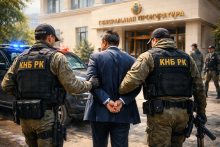
Department of Economic Investigations (DEI) for Shymkent has refused the editors of FBK to provide information on the progress of the investigation into JSC «SPK «Shymkent».
At the same time, the National Security Committee (NSC) confirmed that the investigation materials were transferred to the DEI back in 2020, but the department refuses to report on further actions in the case, citing the impossibility of studying archive materials and requirements for non-disclosure of investigation data.
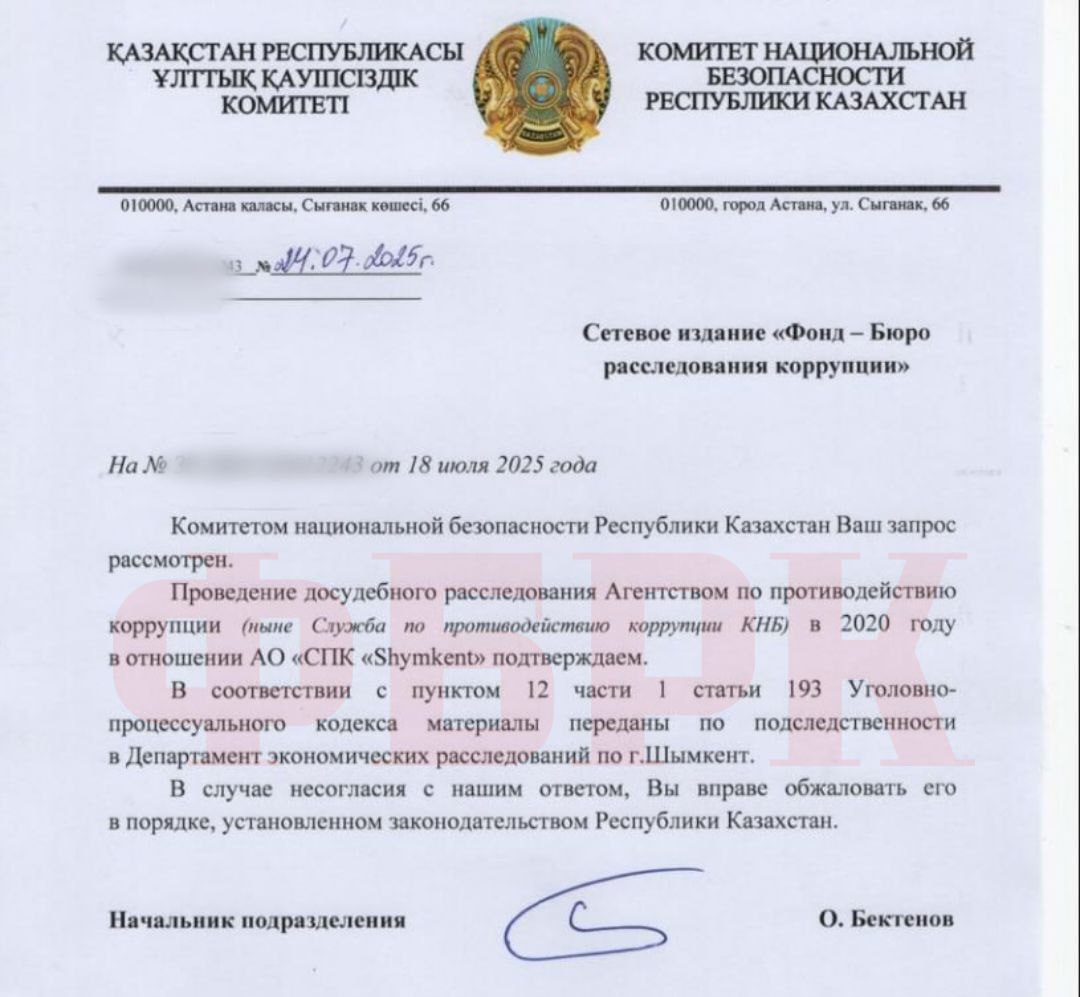
In July 2025, the NSC, in response to a request from the editorial board of FBK, reported that the Anti-Corruption Agency (now the NSC Anti-Corruption Service) in 2020 conducted a pre-trial investigation into JSC «Social-Entrepreneurial Corporation (SPC) «Shymkent». The materials were transferred according to investigative jurisdiction to the regional department of economic investigations.
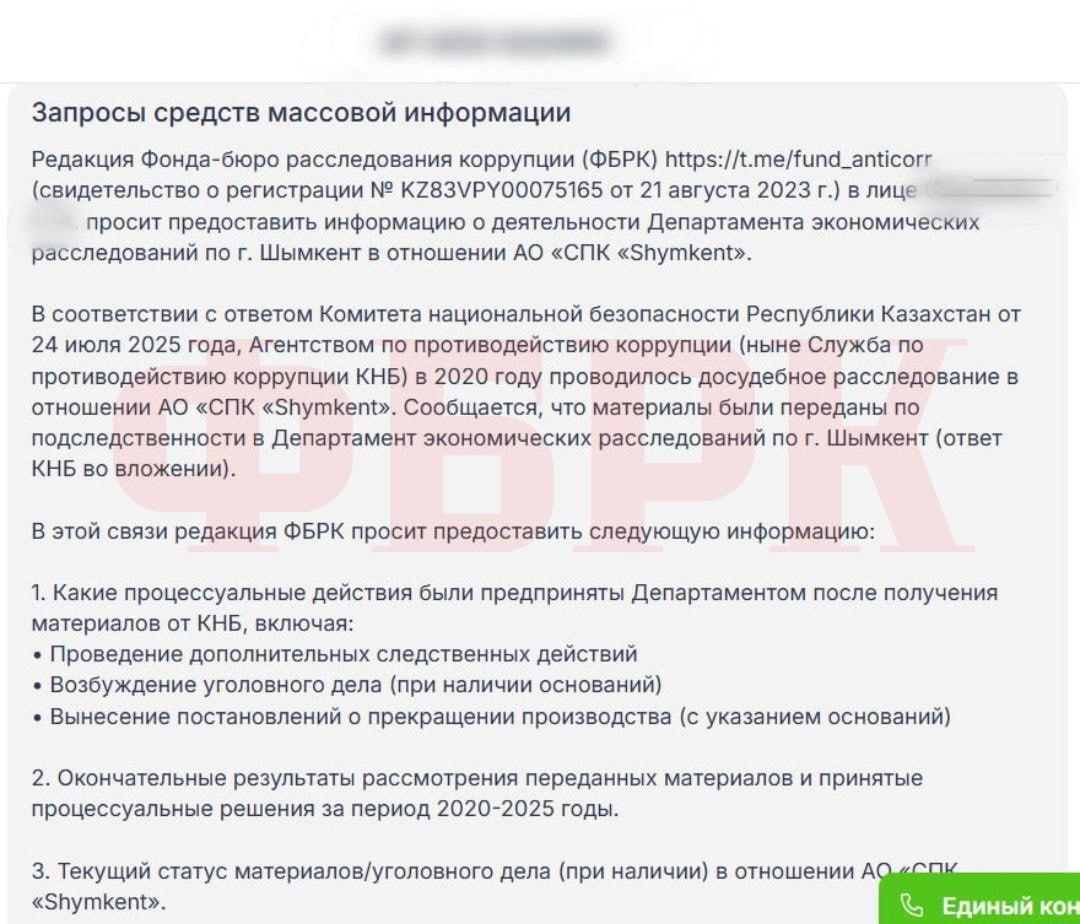
On this basis, we directly approached the DEI with a request about what procedural actions were taken after receiving the materials from the NSC, what the final results of the review were, and the current status of the case.
In its response, the department refused to provide the information, citing several reasons. Firstly, the agency pointed out that the request lacked the criminal case number and the article under which it was initiated. Secondly, it stated that ‘studying the archive materials is currently not possible’.
The DEI justified its decision by referencing Article 201 of the Criminal Procedure Code of the Republic of Kazakhstan (‘Inadmissibility of disclosing pre-trial investigation data’), which contains a direct ban on disclosing materials from a pre-trial investigation.
Additionally, the agency referred to Part 2 of Article 36 of the Law ‘On Mass Media’ (‘Requests for information not included in official communications’), which grants the right to refuse to provide information with restricted access.
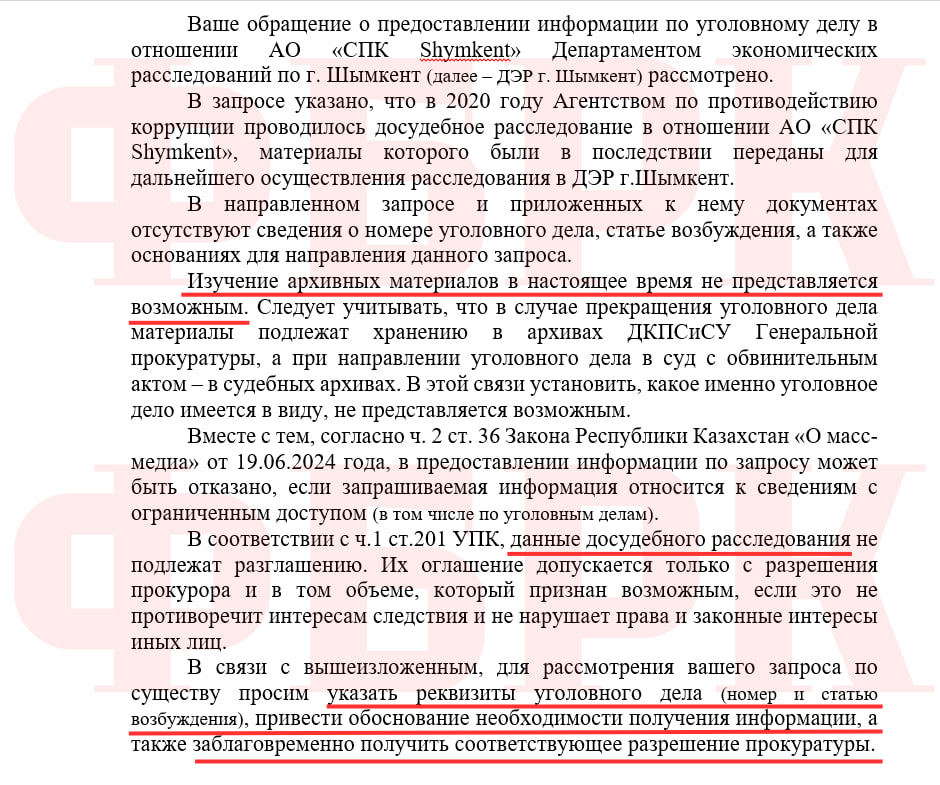
At the same time, the response notes that to consider the request on its merits, it is necessary to specify the details of the criminal case, provide justification for the need to obtain the information, and obtain permission from the prosecutor's office, although the request only concerned general procedural information about the status of the case.
According to Article 36 of the Law ‘On Mass Media’, state bodies are obliged to provide information to the media, except in cases of restrictions established by law. Article 201 of the Criminal Procedure Code prohibits the disclosure of pre-trial investigation materials but does not extend to general information about the procedural status of the case.
The editorial board of FBK has filed a corresponding complaint against the DEI's response and has appealed to the Financial Monitoring Agency (FMA) for a legal assessment of the department's refusal. The question remains open: what is happening with the SPC ‘Shymkent’ case five years after the materials were transferred? And why are state bodies creating artificial barriers to obtaining basic information about the progress of the investigation?