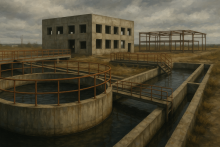
At the beginning of June Kazakhstan, Kyrgyzstan and Uzbekistan concluded an agreement on cooperation in the construction of the Kambarata Hydroelectric Power Plant (HPP). The new HPP is to be built on the Naryn River in Kyrgyzstan.
Construction of the HPP began back in the 1980s. Since then, the project has been frozen and attempts have been made to revive it several times. In 2022, with the support of Kazakhstan and Uzbekistan, Kyrgyzstan began building the HPP again.
As reported by ORDA, the Berlin publication «BNE IntelliNews» in its article on the Kambarata HPP gave a high assessment to this project. German journalists noted that for Central Asia, water is becoming the "new oil". They believe that the construction of the HPP could help transform Kyrgyzstan into a new energy hub and have a significant impact on the economies of neighbouring countries.
«The HPP dam will allow for better control of the water that flows for irrigation needs into Uzbekistan and Kazakhstan, as well as supplying these countries with electricity», the BNE publication states.
In turn, energy specialist and former head of KEGOC Asset Nauryzbayev believes that the construction of the Kambarata HPP is beneficial for Kazakhstan, as it could help solve the problem of water supply for fields in the southern regions of the country.
«On the Naryn cascade of hydroelectric power plants, the largest reservoir is currently the Toktogul Reservoir. This is a so-called multi-year regulation reservoir; it can compensate for long-term fluctuations in the river's flow. It has a very large water reserve, so in low-water years it should also supply water to countries lying downstream. But in recent years, Kyrgyzstan has managed its energy sector poorly — lowering tariffs, not developing the energy system, and extracting money from it. The reservoir stopped fulfilling its role as a multi-year regulator; the water was at rock bottom, so to speak», explains Asset Nauryzbayev.
At the same time, the coordinator of the Central Asian platform on water resources management and climate change, Bulat Yessekin, considers the decision to build the HPP untimely and unnecessary.
«Such decisions need to be considered from the perspective of the main challenges and problems in Kazakhstan and Central Asia. The most important of these challenges is that we have a growing water deficit. This is the most crucial problem for the countries of Central Asia. It is primarily linked to global climate change, which is expressed in the disruption of water cycles. The processes related to moisture transfer, glacier regeneration and melting have changed. Many forecasts indicate that these changes are accelerating very rapidly», says Bulat Yessekin.
The expert argues that large HPPs are not as environmentally friendly as previously assumed. According to him, they damage biological diversity.
«Today in Central Asia there are more than 300 large dams and embankments, and about 200 new dams and reservoirs are planned for construction. Central Asia is one of the regions most dependent on the climate. And at the same time, we are increasing risks, increasing the destruction of the natural processes that can only support water supply in the long term. There are studies by energy specialists, including in Kazakhstan, which say that we can quite manage without increasing capacity. Our economy is very energy-intensive. At the same time, there is great potential for energy saving», believes Bulat Yessekin.
The ecologist noted that billions of dollars are spent on constructing the HPP, and the project will only be able to pay for itself after many years.
In his opinion, to recoup the costs of implementing the project, exports would need to be directed outside of Central Asia. Therefore, Bulat Yessekin believes that the construction of the HPP is being carried out exclusively in the interests of business.
«This is simply a large business project, a large diversion of budget funds, which moreover increases climate and environmental risks. I believe this is a mistaken decision. Large HPPs are not green projects, are not a climate solution, and pose a very significant risk of worsening the water supply situation in Central Asia», is the conviction of Bulat Yessekin.
In turn, water resources specialist and hydro-engineer Zhanai Sagin is confident that, of the three countries, Uzbekistan will gain the greatest benefit from the construction of the Kambarata HPP.
«In recent years, it is Uzbekistan that has been actively developing water resources, solving its own problems related to the construction of the Qosh-Tepa Canal in Afghanistan. When this canal is completed, Afghanistan will take about a third of the water volume from the Amu Darya. As a result, Uzbekistan will be forced to take the necessary water from the Syr Darya basin», the report states.
The expert explains that to compensate for the water shortage that Afghanistan will take from the Amu Darya, Uzbekistan will take the same volume from the Syr Darya.
«After the construction of the HPP, there will be even less water in the Syr Darya. The water that Kazakhstan got from building the dam will disappear, the northern part of the Aral Sea will simply dry up, and all the water will actually go to Uzbekistan. I don’t know who participated in the negotiations from Kazakhstan, but the water experts in Uzbekistan are stronger. In effect, Kazakhstan and Kyrgyzstan are now doing what will only benefit Uzbekistan», forecasts Professor Sagin.
At the same time, the hydro-engineer disagreed with the assertion by Asset Nauryzbayev that the construction of the Kambarata HPP would make it possible to establish irrigation in southern Kazakhstan.
«After the construction of the HPP, all of it will go to Uzbekistan; Kazakhstan won’t get any water. There are big cities there, Tashkent. They will take the water. Due to the fact that there is little water on the Amu Darya, Uzbekistan will be forced to take water from here. That is, it will not solve the irrigation problem in the southern regions», concludes Zhanai Sagin.
Recall, the document on cooperation in the construction of the Kambarata HPP was signed at the International Investment Energy Forum in Vienna. Following the negotiations, the parties established a coordination donor committee for the Kambarata HPP-1 project. This committee includes the World Bank, the OPEC Fund, the Asian Development Bank and other financial organisations. Under the terms of the agreement, Kazakhstan is to receive a 33% stake in the HPP under construction.