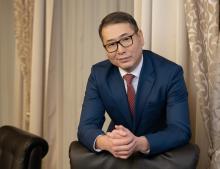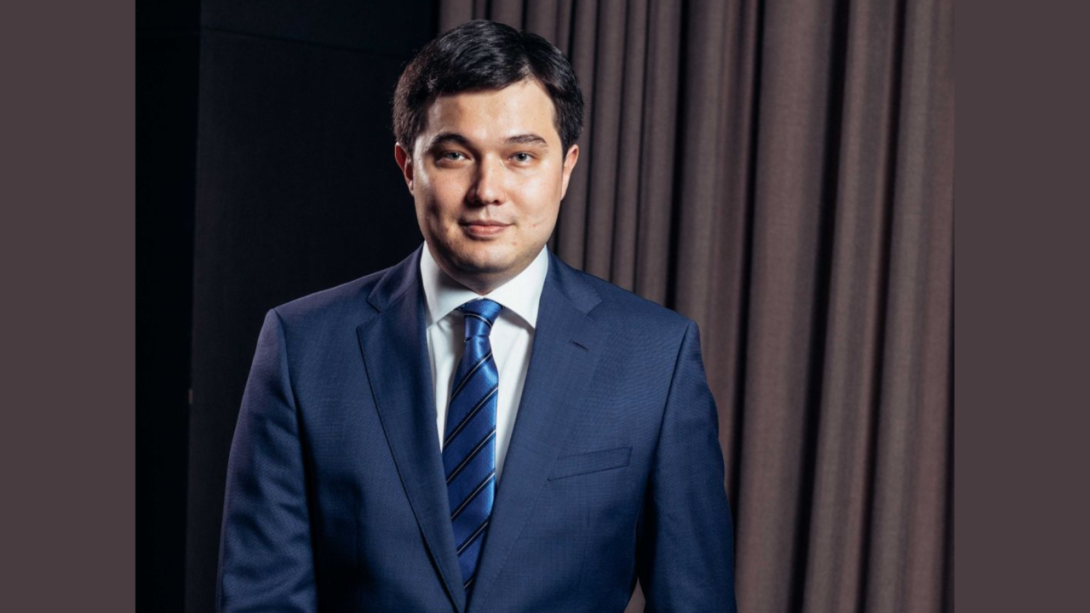
Journalists spoke with the Prime Minister's economic advisor Alisher Kozhasbayev about the state of the industry. According to the official, Kazakhstan is entering a period of difficult decisions: the profitability of traditional oil production is declining, tariffs and VAT are rising, and inflationary pressure is increasing. He claims the country is going through a painful but necessary stage of economic transformation — from cheap resources to processing and industrial production.
According to Tengrinews.kz, Kozhasbayev believes that the era when oil revenues covered all state expenses is coming to an end. The old model — cheap fuel, subsidies, non-market price reductions — no longer works.
“The era of easy money is over: now the country must live without an oil cushion, grow its processing industry, restore balance to the tax system, and learn to pay taxes honestly. And for people — to understand that stability can no longer be bought at the expense of the National Fund,” he said.
The advisor highlights the issue of fuels and lubricants. The difference in fuel prices with neighbouring countries remains high, which provokes cross-border flows, and controlling them is practically impossible.
As noted, the producing subsidiary companies of JSC “KazMunayGas” (KMG) supply oil to refineries at $12–$30 per barrel, compared to the global price of $60–$100. This keeps domestic petrol prices low, but makes production less profitable.
At the same time, KMG's profit is mainly formed from dividends from stakes in three large projects: “Tengizchevroil”, “Kashagan” and “Karachaganak”.
“So, cheap petrol supports the economy, but weakens the flagship projects that actually feed the country. After all, roads and schools are built from the common state ‘pot’. And the largest contribution to this pot is made by the oil and gas sector,” explains Kozhasbayev.
He notes that the problem should have been addressed 10 years ago. Now the accumulated challenges are piling up all at once.
Kozhasbayev claims that the state must look ahead 15–20 years. Difficult measures are being taken today to reduce the burden in a few years' time.
“This is a painful transition, but a necessary one. I’ll be honest: it has fallen to the lot of our generation. And I don’t think everything is bad. Yes, it’s difficult, but it’s not a catastrophe,” the advisor noted.
He stressed that this is not about the physical depletion of oil, but an economic one: many fields are becoming unprofitable.
According to open data, over 10 years, total oil production in Kazakhstan grew by 10%. However, if the three giant projects – Tengizchevroil, Kashagan and Karachaganak – are excluded, production by Kazakhstani companies fell by 35%.
At the same time, Kozhasbayev speaks about two key indicators where Kazakhstan significantly lags behind its competitors – labour productivity and GDP density per square kilometre.
“It is in these two factors that our main economic challenges lie. Kazakhstan is the ninth largest country in the world by territory, but approximately 180th in terms of population density. There are few people, but a huge space. Furthermore, we are still reaping the consequences of Soviet urban planning policy. The logic then was simple: ‘Large territory – we need to fill it with cities’,” the Prime Minister's advisor stated.
He added that only about 1,500 companies out of 2.4 million business entities generate the bulk of budget revenues. Major regional projects are financed mainly from the republican budget, where a significant share comes from oil revenues.
According to the advisor, labour productivity in the economy is about $15 per hour, and in the oil industry – $382. If the oil sector is excluded, the figure drops to $6–$8.
The Prime Minister's economic advisor Alisher Kozhasbayev noted that the market for finished products is tightly controlled by China, Russia and European countries. Therefore, it is important for Kazakhstan to develop processing products — from plastics to semi-finished goods for global manufacturers.
The volume of the manufacturing industry in the country has grown almost by 50% over 10 years. The government is focusing on southern markets — Uzbekistan, Kyrgyzstan, Afghanistan, Iran, Pakistan, and also India, where there is still high demand for mass-market products.
The main goal is to produce semi-finished products and components from which other countries will assemble finished goods. This reduces economic volatility and dependence on oil prices.
Kozhasbayev claims that the tariff increases and tax reform are the smoothest possible measures. If the process were stretched out further, the system would not cope.
“It would undermine CHP plants, petrol would run out, and there would be nothing to build roads from. Even the bitumen used for roads is unprofitable to produce in the country — also from oil, by the way. So tariffs have to be raised now,” the report states.
At the same time, Kozhasbayev reminded that the automotive industry remains one of the main sources of currency outflow. Therefore, its development is a strategic choice.
He noted that today Kazakhstan produces not only large-unit assembly but also small-unit assembly, including complex components.
“Our Kostanay plant produces frames for KAMAZ trucks today — a new plant, built from scratch, literally raised in the steppe. And now SSGPO, that same giant that used to dictate terms, cannot find workers — because people are leaving to work at new enterprises. They are forced to compete for staff, raise wages, and change working conditions. There it is, the living economy we’re talking about,” the advisor said.
He stressed that there is no direct replacement for oil. But alternatives are the processing of mineral raw materials — copper, gold, rare earth elements, the construction of a new copper smelter, and large-scale geological exploration.
As noted, the processing of rare earth elements is one of the most complex technological processes. Replacing oil with revenues from rare earths is practically impossible without a technological breakthrough.
According to the Prime Minister's advisor, Kazakhstan is going through an inevitable stage of transformation: oil is ceasing to be the basis of the economy, the state is forced to make unpopular decisions, and industry is growing slowly but steadily.
In conclusion, he stressed that the success of the reforms depends not only on the government but also on entrepreneurs and society as a whole.