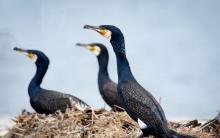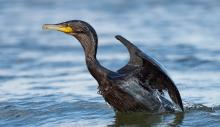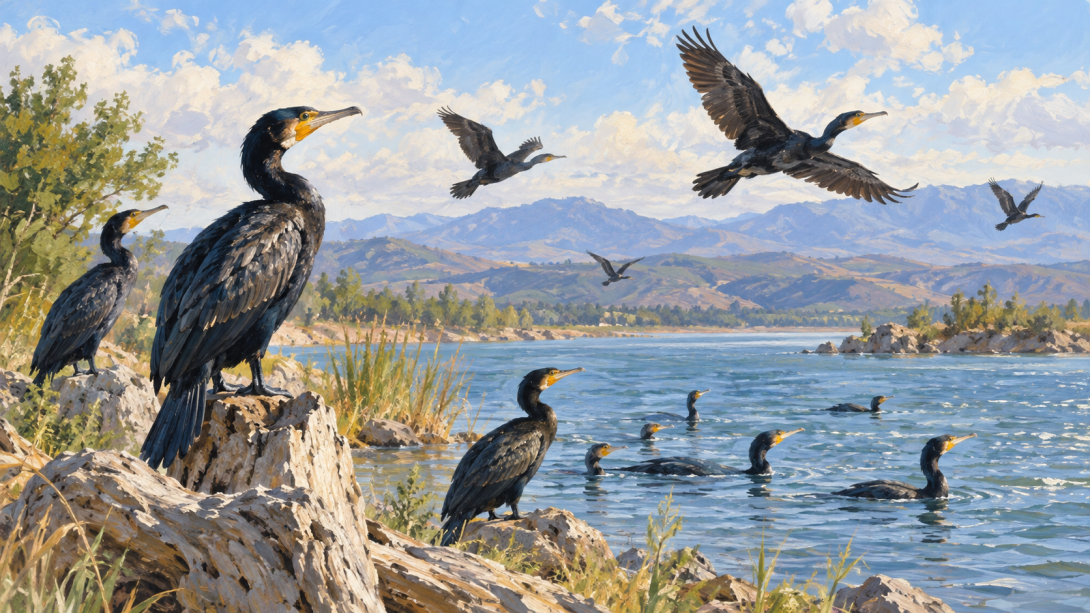
The regional department of natural resources has announced a tender for services to regulate the population of the great cormorant. For the physical elimination of 14,876 birds on the region's water bodies, the budget is prepared to allocate 44 million tenge.
PROCUREMENT TERMS
According to Hronika.kz, the contract is valid until 15 November 2026, and the contractor must complete the shooting and disposal of biological material by 30 October. Thus, the cost of removing one bird is approximately 2,957 tenge.
The work covers the Irtysh River, the Shulbinsk Reservoir, and Lakes Alakol and Sasykkol. The tender had not yet been completed at the time of publication.
HOW THE WORK MUST BE CONFIRMED
The technical specification provides not only for shooting the birds but also for documentary confirmation of the work performed. The contractor is obliged to provide the client with acts, photo and video materials, including aerial recording.
Some of the carcasses must be handed over to biologists for studying the birds' diet. The documentation states that specialists must examine the composition of stomach contents, the frequency of occurrence of components, and the intestinal filling index.
WHAT WILL HAPPEN TO THE REMAINING CARCASSES
The remaining biological materials must be disposed of by the contractor in accordance with the rules of the Ministry of Agriculture. Disposal must be confirmed by the relevant acts.
In addition, the winner of the procurement must, within 15 calendar days after signing the contract, independently obtain official permission for the removal of animals in accordance with the order of the Ministry of Ecology.
CONTEXT
The story of regulating the cormorant population in the Abai region has been ongoing since at least 2024. At that time, the tender documentation concerned the determination of the bird population and the preparation of a biological justification. The established removal volume was 2,979 individuals, or 20% of the total population. The cost of the procurement amounted to more than 18 million tenge.
In July 2025, a limit on population regulation of 3,010 individuals was already established for the great cormorant in the Abai region. At the same time, both the earlier and the current procurement cover the same water bodies — the Irtysh, Alakol and Sasykkol.
At the same time, the cormorant has turned out to be far from the only species whose population has been proposed for regulation through removal in recent years. In January 2024, the FBRA wrote about a draft of limits on the "scientific removal" of animals. The list featured 5,510 saiga antelopes, 1,994 raccoon dogs, 176 brown bears, 157 lynxes, 1,255 marals, 1,643 sables and 76,517 chukar partridges — among other species.
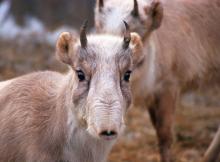
The most large-scale example was the regulation of the saiga antelope population. In 2023–2025, its population regulation was accompanied by large-scale removal of animals.
In 2025, in the West Kazakhstan Region (WKR), with a declared population of 2.3 million saiga antelopes, there were plans to remove 460,000, that is, 20% of the population.
Questions arose not only about the scale of removal but also about population counting. In 2026, the Ministry of Ecology again stated the saiga population at 5 million individuals — the same figure that Vice-Minister of Ecology Nurken Sharbiev cited back in May 2025. At the same time, it was reported that around 26,000 saiga antelopes had died across the country. The ministry called these deaths seasonal and natural.