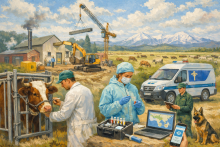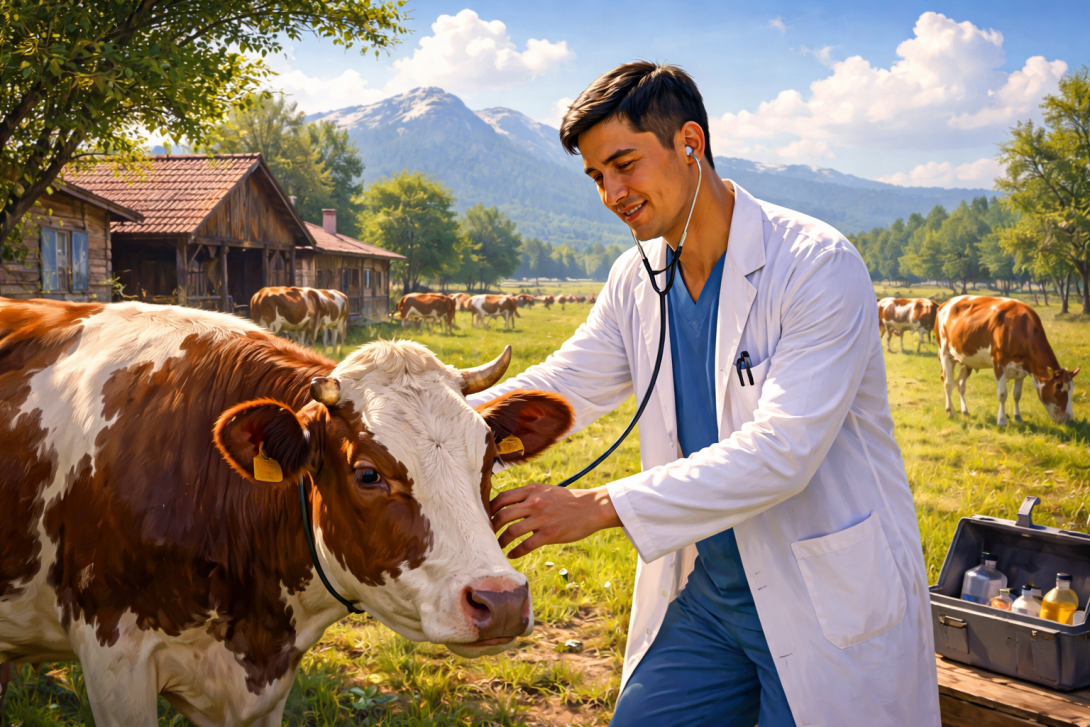
One veterinarian in Kazakhstan today serves almost two thousand head of cattle instead of the required 750. This workload makes quality work nearly impossible and affects the sustainability of the entire livestock system.
WHAT ARE THE REASONS FOR THE STAFF SHORTAGE
According to the Atameken Business TV channel, the problem of staff shortages and the state of rural veterinary services in the country remains one of the key issues for the agricultural sector.
Experts link the situation to the low attractiveness of the profession. As noted by Doctor of Veterinary Sciences Gaisa Absatirov, the key factor remains the level of remuneration.
“What affects the motivation of graduates is increasing the salaries of veterinary specialists. There are some plans: in 2027 they want to raise it to 400 thousand tenge. But during this time, inflation will not stand still either,” he said.It is also noted that difficult working conditions and lack of infrastructure reduce young people’s interest in the profession.
WHAT MEASURES ARE EXPERTS PROPOSING
Proposals include creating a competitive environment, introducing independent oversight, and digital tracking of veterinarians’ work, including the use of GPS.
Livestock expert Arsen Islamov believes that developing the sector requires localising the production of preparations:
“If Kazakhstan wants to become a veterinary hub for Central Asian countries, it is worth considering creating investment-attractive conditions for international companies to localise the production of vaccines and preparations,” he noted.In addition, it is proposed to create an independent licensing body and professional platforms for exchanging experience.
WHAT STEPS IS THE STATE TAKING
The development of the Comprehensive Plan for the Development of Veterinary Medicine has been assigned to the Ministry of Agriculture of the Republic of Kazakhstan by 15 April on the instruction of Prime Minister Olzhas Bektenov.
The department reported the creation of a working group with the participation of interested parties. Proposals are currently being collected and analysed, after which the draft document will be sent for approval.
HOW DOES THIS AFFECT THE SECTOR
According to Olzhas Bektenov, livestock growth in Kazakhstan is only 2-3% per year. At this rate, the country will not be able to fully meet domestic demand and develop exports.
The materials emphasise that without solving systemic problems in veterinary medicine, investments in agriculture do not yield the expected results.