
Jassy Damu JSC has put a batch of saiga horns with a total volume of 1 tonne up for electronic auction. The starting price for the lot is 1 billion 227 million 148 thousand tenge.
WHAT ARE THE AUCTION CONDITIONS
According to the electronic portal E-qazyna, the lot has the status “Accepting applications”. The auction is scheduled to begin on 21 August 2026 at 10:00.
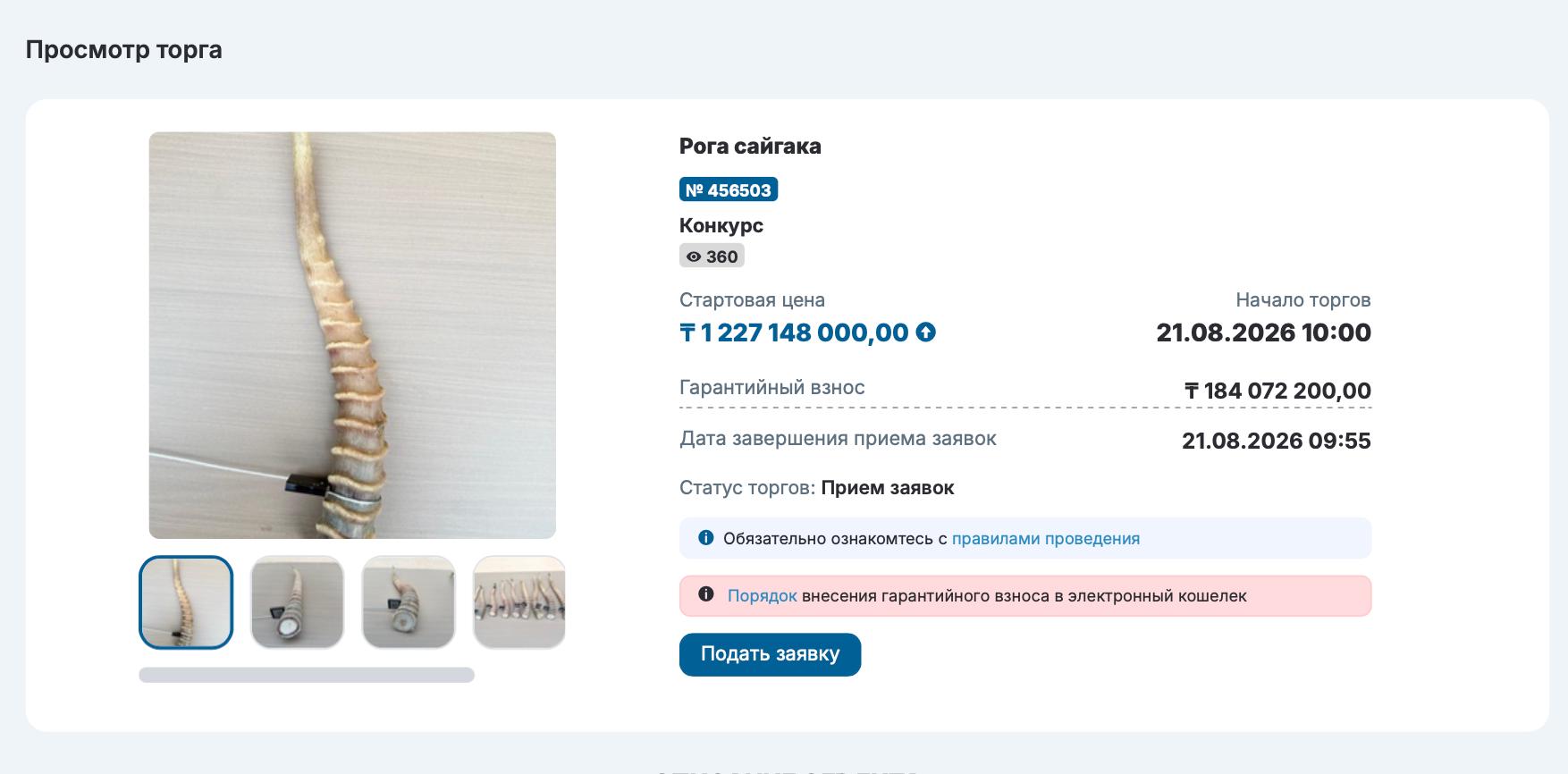
The guarantee deposit has been set at 184 million 72 thousand 200 tenge.
The seller is listed as Jassy Damu JSC, and the balance holder is Republican State Enterprise “Production Association ‘Okhotzooprom’ of the Forestry and Wildlife Committee.”
WHAT DOES THE LOT INCLUDE
According to the description of the item, these are saiga horns with an average length of around 25 cm.
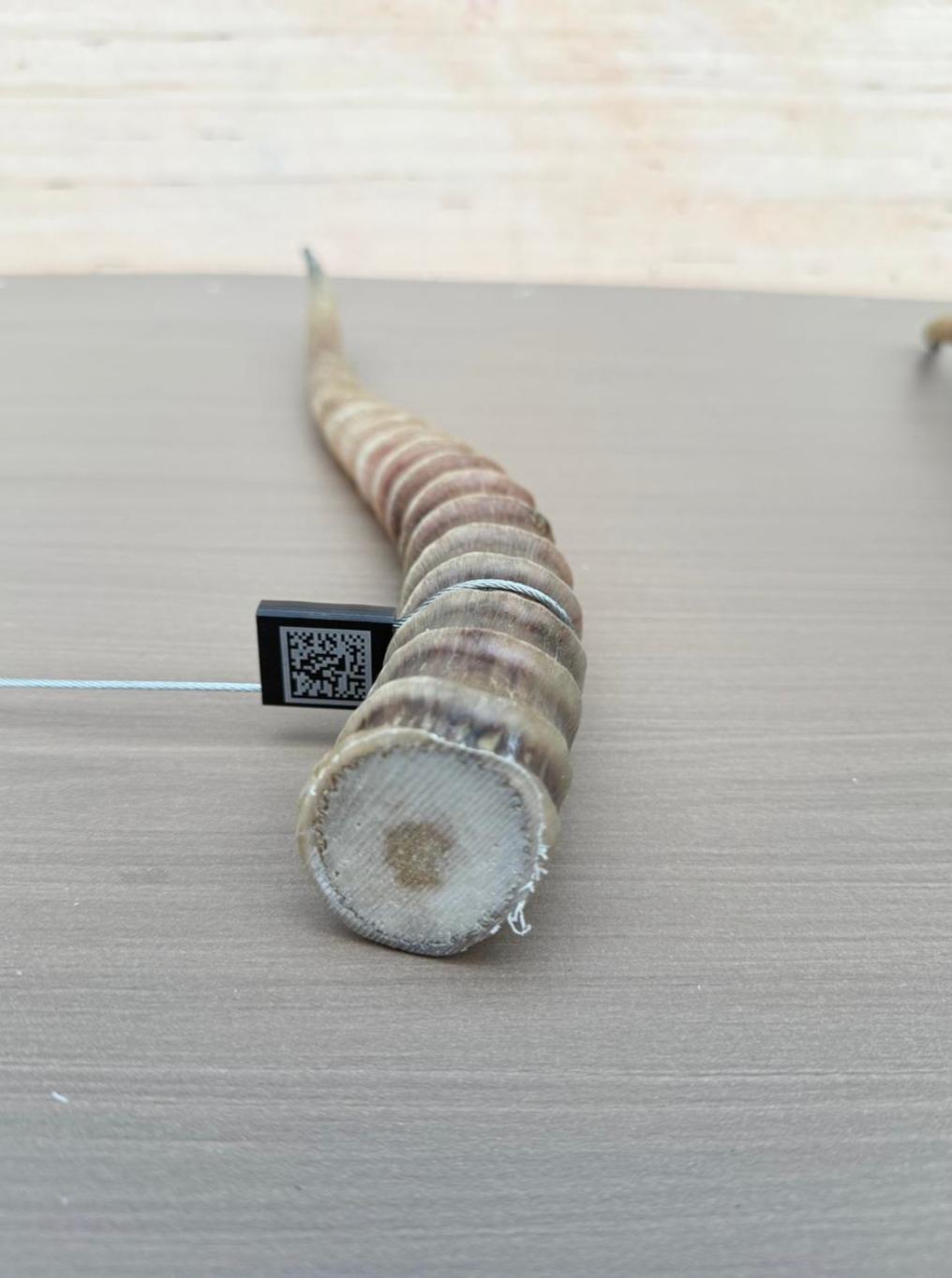
The price per kilogram has been set at a level equivalent to $2.6 thousand. The total estimated value of the batch is 1 billion 227 million 148 thousand tenge.
ON WHAT BASIS ARE THE HORNS BEING SOLD
The sale of saiga derivatives was ordered by the Ministry of Ecology and Natural Resources. In an order dated 30 July 2026, it is stated that Jassy Damu JSC must sell saiga derivatives in the volume of 1 tonne.
The document references clauses 3 and 6 of the Rules for the Sale of Saiga Derivatives, approved by order of the Minister of Ecology.
It is noted that the funds received from the sale will be directed towards animal protection and the preservation of biodiversity.
WHO NEEDS THE ACCUMULATED SAIGA HORNS
The primary historical demand for saiga horns is linked to traditional Asian medicine. According to TRAFFIC, male saiga horns were in high demand primarily in China and certain countries in Southeast Asia. In traditional Chinese medicine, the material is known as Lingyangjiao and is used in various forms of medicinal products.
At the same time, modern demand cannot automatically be assumed to be the same as it was several decades ago. A study of the Chinese market, published in 2024, notes that the use of saiga horn in Chinese medicine is limited by existing stocks, and due to a shortage of raw material, horns from other species are used as substitutes.
A CITES document from July 2026 specifically discusses the need to study and reduce demand for illegally obtained saiga horns on the traditional medicine market.
Meanwhile, it remains unclear who in Kazakhstan would need a batch of horns and who is prepared to purchase the accumulated material at auction. The application period is still open, so the pool of potential buyers will only become clear once the auction concludes.
CONTEXT
The Ministry of Ecology reported on the sale of accumulated saiga horns back in March 2026. At that time, Minister Yerlan Nysynbayev spoke about preparations for the sale of 20 tonnes of horns stored in state warehouses.
Under the Bonn Convention on the Conservation of Migratory Species of Wild Animals, Kazakhstan is entitled to sell no more than 10 tonnes of horns per year. It was noted that with a stockpile of 20 tonnes — that means at least two years of trading.