Financial Times has published a review of the memoir by the former President of Kazakhstan Nursultan Nazarbayev "From Dependency to Freedom: The Birth of Modern Kazakhstan". The author of the publication notes that the memoir details the formation of an independent Kazakhstan, but, in their opinion, does not contain comprehensive answers to a number of questions previously raised concerning the former head of state.
WHAT THE BOOK IS ABOUT
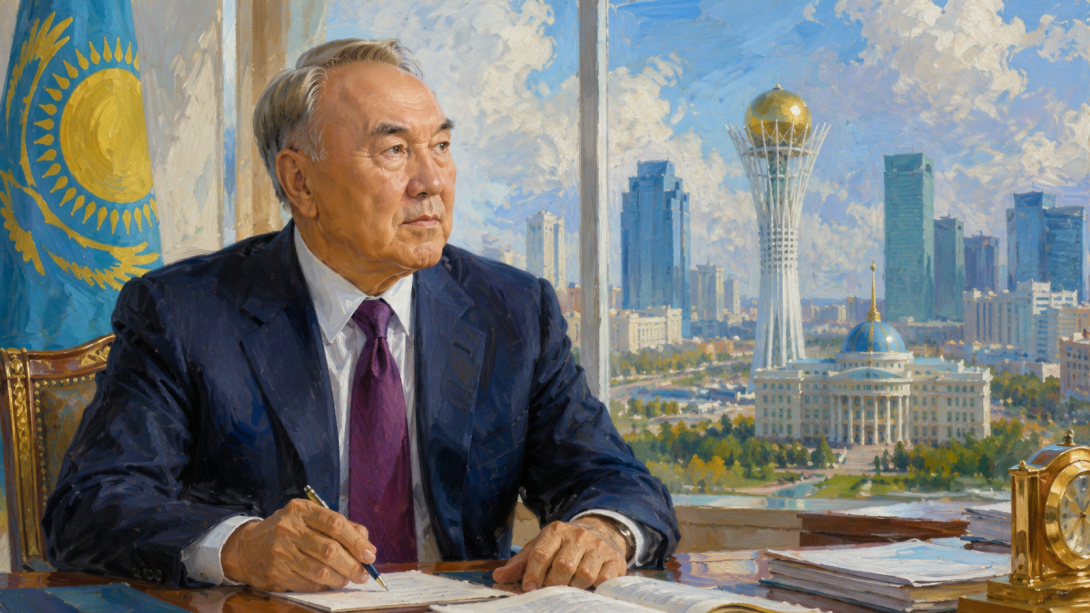
According to the review published by the Financial Times, Nursultan Nazarbayev describes his journey from a steelworker to the leader of Kazakhstan and discusses the formation of an independent state. The book pays significant attention to the country's economic development, Kazakhstan's transformation into an exporter of energy resources, the creation of state institutions, the national currency, and the construction of the capital Astana, which the author calls the main project of his life.
The memoir also provides assessments of several political leaders. In particular, the author is critical of Mikhail Gorbachev and Boris Yeltsin, while positively evaluating the leadership of China and the founder of Singapore, Lee Kuan Yew. The author cites the formula ‘economics before politics’ as one of the main principles of state policy.
WHICH QUESTIONS REMAIN UNANSWERED
As noted in the review, the book lacks a detailed response to criticism related to allegations of an authoritarian management style, alleged corruption, suppression of political opposition, and nepotism. The reviewer points out that these topics are either not addressed or touched upon only minimally.
Specifically, the publication states that the book barely covers issues related to the political role of Dariga Nazarbayeva, and also lacks comments regarding her former husband, Rakhat Aliyev.
WHAT RECENT EVENTS ARE DESCRIBED
According to the review, the author views his resignation in 2019 as a pre-planned decision. He links the events of 2022 in Kazakhstan to the actions of ‘criminal groups’, and describes his own loss of political authority without providing details.
The reviewer, in turn, notes that the book hardly analyses the 2011 protests in Zhanaozen, nor the events of 2022, after which Nazarbayev ceased to head the Security Council and lost the status of Elbasy, and the capital was renamed back to Astana.
WHY THE BOOK HAS ATTRACTED ATTENTION
The review separately notes the author's personal admission that, in addition to his official marriage to Sara Nazarbayeva, he was in a relationship with Asel Kurmanbayeva for around two decades. According to the reviewer, this admission became one of the most discussed fragments of the Kazakh edition of the book.
He concludes that the memoir contains a large number of the author's assessments and recollections about Kazakhstan's development, yet does not provide detailed answers to some of the most debated questions related to Nursultan Nazarbayev's presidency.