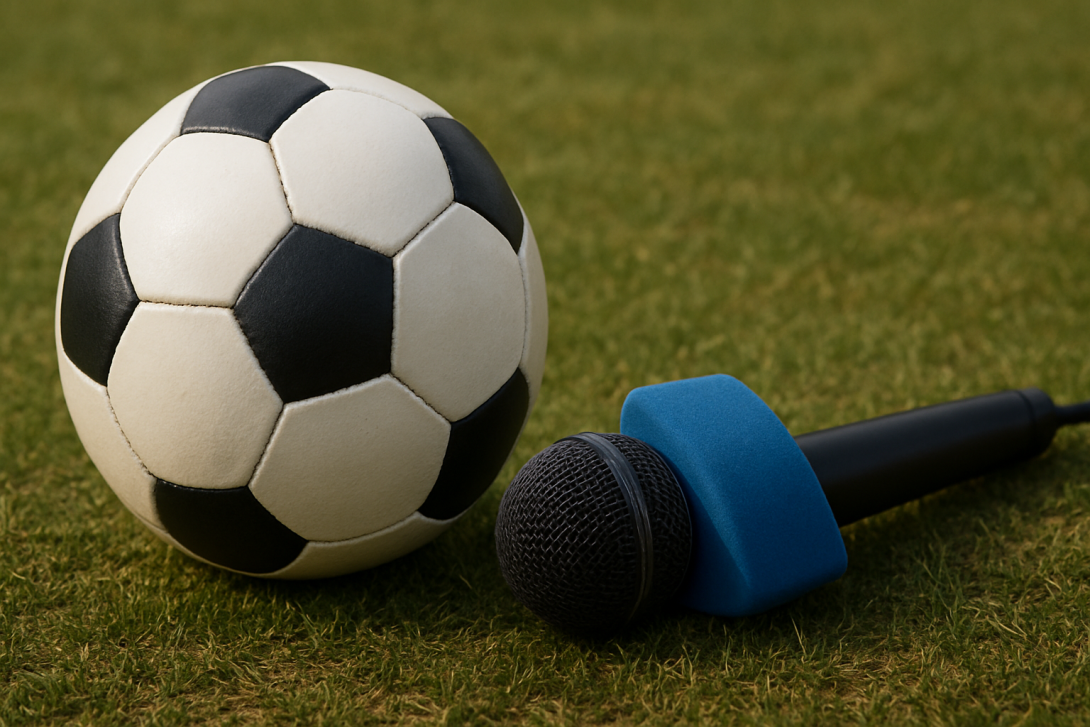
Deputy of the Mazhilis Abzal Kuspan revealed in an interview with the editorial board of the FBRK the mechanism of using sports federations for corruption schemes involving ministers and heads of law enforcement agencies.
According to him, the leadership of sports organisations includes almost all members of the government, which creates a system of mutual responsibility and makes control impossible.
THE STORY WITH THE "QAZAQ KÜRESİ" FEDERATION
The deputy cited a specific example from his legal practice in 2019. During the investigation of a case against the former chairman of the water resources committee Islam Abishev and his accomplice Serik Tukiev, a telling episode occurred.
"The then head of the Anti-Corruption Service, Alik Shpekbayev, personally spoke with them. He persuaded them both to resign from the leadership of the 'Qazaq Küresi' federation in exchange for leniency," said Kuspan.
After writing their resignation letters, Shpekbayev himself soon became the new president of the federation. The registration with the justice authorities was carried out with violations, as according to the charter, this is an elective, not an appointed position. Members of the federation who had just flown in from Greece expressed outrage at the illegal change of leadership.
THE SYSTEM OF MUTUAL RESPONSIBILITY
Analysing the structure of sports management, the Mazhilis member identified a systemic problem. The 'Qazaq Küresi' federation was part of the Association of National Sports, which, according to the deputy, was headed by Karim Massimov — the then chairman of the KNB. It is worth noting that information on who led the association during that period is absent from open sources.
"Take any minister, any federation — the leadership includes ministers and members of the government. It becomes a system of mutual responsibility. Even heads of law enforcement agencies lead sports associations. There is no one to check them — they won't check themselves," the deputy explains.
SPORT AS A CORRUPTION LOOPHOLE
According to Abzal Kuspan, sport has become a convenient mechanism for corruption amidst the intensification of the fight against it in other areas.
"Nowadays, no one openly takes bribes or engages in embezzlement — after all, quite a few people have been imprisoned. But here is a good loophole," he notes.
Striking examples of match-fixing confirm the deputy's words. In 2019, Kostanay's 'Tobol' under the leadership of Vladimir Gazzayev was leading the Kazakhstan Premier League, but in the summer, the club's management initiated the unexpected dismissal of the coach, leading to the team's collapse. 'Tobol' finished fourth, and 'Astana' became champions. The players themselves later confirmed in a video on the YouTube channel 'Vporyadke' that the club threw the championship title on the orders of the management.
Football Club 'Atyrau' lost to 'Kairat' in the final round last year. According to unofficial data, referees and officials of the Kazakhstan Football Federation (KFF) were bribed. The finale was characterised by the necessary defeats of competitors, refereeing errors in favour of 'Kairat', and the silence of the KFF.
Such collusion is made possible by uncontrolled financing. A hypothetical scenario looks like this: if someone from a high office asks the head of JSC 'Samruk-Kazyna' to transfer billions to their association, no one can refuse such a person.
"'Samruk-Kazyna' mainly allocates a lot of money, no less than the government. There are beneficiaries behind the sponsorship money. We see well how it comes in, but how it is spent — there is no control. If tenders from state bodies can still be tracked, the expenses of clubs and associations are uncontrolled," explains Abzal Kuspan.
The deputy proposed specific ways to solve the problem of corruption in sports — from strengthening the control of audit services to the intervention of the president. The Mazhilis member also spoke about the possibilities for criminal prosecution of the organisers of match-fixing.
PROPOSALS FOR SOLVING THE PROBLEM
The deputy sees two directions for solving the problem. The first — strengthening accountability through the Supreme Audit Chamber for local teams financed from regional budgets.
As a positive example, he cited the West Kazakhstan Region, where in 2024 the maslikhat conducted an audit of the efficiency of spending on football club 'Akzhayik' and ceased its financing.
The second direction — intervention from President Tokayev.
"It is necessary for the head of state to pay attention to this. Everything is set up so that only if the head of state raises the issues will anything start to be done. A system that suits everyone has been built over the years," the deputy is convinced.
LEGAL MECHANISMS FOR COMBAT
As the deputy noted, the criminal code has two applicable articles. Firstly — fraud, as it involves the mass deception of spectators and people placing bets. Secondly — illegal spending of budgetary funds through local executive bodies.
"Given specific facts, as a deputy, I can initiate an inspection by the Supreme Audit Chamber. It has become accountable to the parliament and reports quarterly to deputies, who ask awkward questions. This is broadcast through the media. Based on the inspection results, if financial fraud is uncovered, a criminal case can be opened under Article 189 of the Criminal Code of the Republic of Kazakhstan 'Misappropriation or embezzlement of entrusted another's property'," Kuspan concluded.
According to the deputy, match-fixing demonstrates a new level of corruption - instead of primitive bribes, sports results are now being bought. This harms not only the fans but also the athletes themselves, who are deprived of fair competition and the motivation to develop.
The interview with the deputy demonstrates the evolution of corruption schemes in Kazakhstan. While small bribes are still passed in cash and large kickbacks are processed through official services with invoices, match-fixing represents a fundamentally new level. Here, billions of tenge are 'laundered' elegantly: a lost match, a winning bet — and the deal is done without vans full of cash or suspicious invoices.
Bookmakers most likely see suspicious outcomes through broken coefficient mathematics, but it is not in their interest to participate in the schemes — it destroys their economic model. On the other side of the scales are the broken lives of athletes, a lack of motivation and team spirit.
The paradox is that, amidst all the talk of fighting corruption, sport remains a sanctuary for high-ranking officials. Kazakhstan has a chance to turn the situation around, but it requires acknowledging the scale of the problem. Now everything is in the hands of the president — only the political will of the head of state can break the system built over the years.
To be continued...