The FBRK editorial team continues its series of articles dedicated to the analysis of the largest public procurement contracts of 2024 in the regions of Kazakhstan.
This time, the focus is on the Almaty Region, where the most significant contracts were in the areas of veterinary services, fuel supply, and energy. It is worth noting that the majority of procurement was carried out without competitive procedures, from sole suppliers.
REGIONAL VETERINARY SAFETY: 5.2 BILLION TENGE
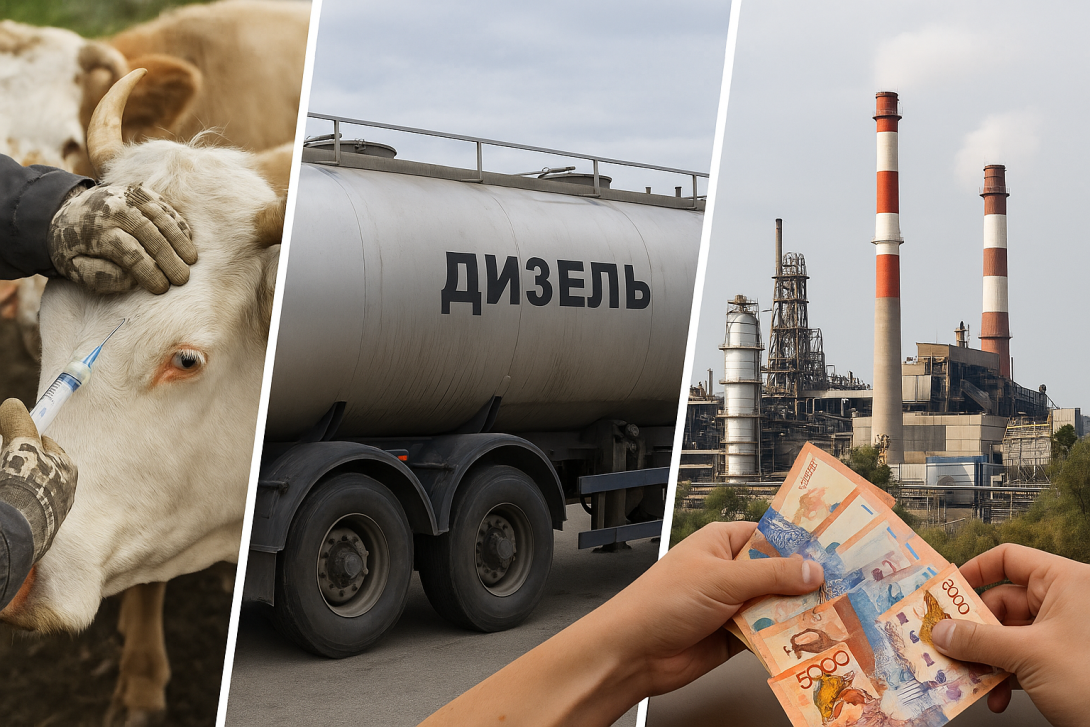
The most expensive sector in the Almaty Region was veterinary activity. The Department of Veterinary Medicine concluded a series of contracts with the subordinate state enterprise "Veterinary Station of the Almaty Region" totalling over 5.2 billion tenge.
The lion's share of these funds — almost 5 billion tenge — comprised a contract for anti-epizootic measures, providing for the vaccination of 17.7 million heads of livestock. The programme's funding was planned to come 78% from the local budget and 22% from the republican budget.
Additionally, contracts were concluded for the identification of 1.3 million animals (149 million tenge), the prevention of enzootic diseases (15.7 million tenge), as well as a set of measures to control the population of stray animals: catching dogs and cats (60 million tenge), their vaccination and sterilisation (6.6 million tenge), and temporary housing (11.8 million tenge).
Notably, all procurement was conducted through a "single source" without competitive procedures. This is explained by the fact that the veterinary station is the sole subordinate executor in the region. In essence, this refers to the internal redistribution of budget funds between structures within one department to implement state veterinary safety programmes.
FUEL SUPPLY FOR EDUCATION: 3.1 BILLION TENGE
The second largest contract was between the Department of Education of the Almaty Region and LLP "Kontrakt" for the supply of winter diesel fuel worth over 3.1 billion tenge. The agreement stipulated the delivery of more than 10 million litres of diesel for educational institutions in the region.
Simultaneously, the Psychological and Pedagogical Correction Centre No. 15 of the Talgar District concluded a contract with the same supplier for AI-92 petrol for 485,000 tenge. The small volume of 2,370 litres was intended for service vehicles providing outreach work with children.
The large purchase of diesel fuel was planned for the entire heating season: 70% of the volume was to be delivered by September, the remaining 30% by the end of November. The price was almost 300 tenge per litre. The supplier provided a one-year quality guarantee and undertook to comply with environmental standards. Both transactions were financed from the local budget.
INDUSTRIAL ZONES: 892 MILLION TENGE
The third largest contract was the agreement between the Department of Energy and Housing and Communal Services of the Almaty Region and LLP "Management Company of Industrial Zones" for services to ensure the functioning of industrial zones, amounting to 892 million tenge.
Interestingly, the initial contract value was over 1 billion tenge, but was reduced by 120 million tenge — approximately 12% of the original amount. The reduction occurred due to the need to repay accounts payable for 2023 by redistributing funds within the budget programme.
The services covered four key industrial zones in the region: "Bereke", "Kairat", "Kazbek bek" and "Shelek". The management company was to provide comprehensive maintenance — from technical support to attracting investors and administrative and economic activities.
CONCLUSIONS
Analysis of the largest public procurement contracts in the Almaty Region for 2024 reveals several characteristic features. Firstly, the dominance of procurement from a sole supplier, which can limit competition and reduce the efficiency of budget spending. Secondly, a significant proportion of contracts fall under intra-departmental transactions between state structures.
A positive aspect is the targeted allocation of expenditures towards important social functions of the state: ensuring veterinary safety, heating educational institutions, and developing the region's industrial infrastructure. At the same time, the widespread use of single-source procurement procedures indicates potential for increasing competition and transparency in this area.
We remind you that we previously wrote about the largest public procurement contracts of the Abay Region. You can read about the capital's most expensive contracts in detail via the link.
The FBRK editorial team will continue its analysis of public procurement in other regions of Kazakhstan as part of this series of articles.
To be continued...