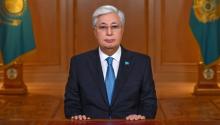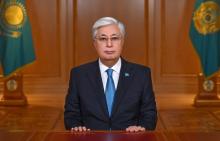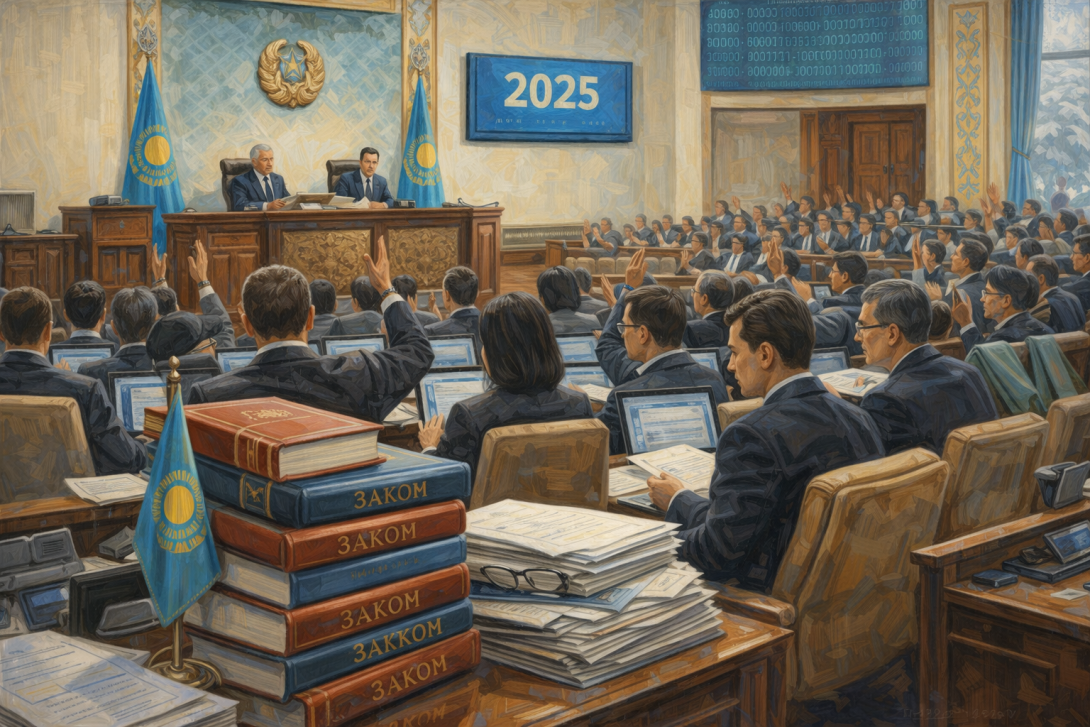
In 2025, the Parliament of the Republic of Kazakhstan adopted more than 100 laws, a significant portion of which were direct implementation of instructions from President Kassym-Jomart Tokayev, given at an expanded government meeting and in the annual Address to the Nation. The legislative changes affected the social sphere, the economy, digitalisation, construction, healthcare, and citizen safety.
According to the Kazinform International News Agency, at the expanded government meeting at the beginning of the year, the Head of State instructed the continuation of reforms to the compulsory social health insurance (CSHI) system. The President noted the need for urgent revision of the relevant draft law, ensuring the accessibility of medical care.
Within six months, the Parliament adopted a law on improving the CSHI system, and in July the document was signed by the President. It is reported that in 2026, the system is planned to cover an additional one million people.
At the same time, the government was tasked with thoroughly preparing and promptly adopting new Budget and Tax Codes.
At the opening of the new Parliamentary session, the President instructed that a law on banks, taking into account the needs of the economy and technological changes, be adopted by the end of the year. On 25 December, the Senate proposed a number of amendments to the document and returned it to the Mazhilis. On 29 December, the deputies of the Mazhilis agreed with the senators' proposals and approved the law.
The President also instructed to speed up the adoption of the Digital Code. The Parliament finalised the document and managed to adopt it before the end of the year. It is expected to define key areas of digitalisation, including artificial intelligence, the platform economy, the use of big data, and other aspects.
Special attention was paid to reforms in the field of geological exploration and subsoil use. The President instructed to complete the relevant changes, both in legislation and in practice, by the end of the year.
Furthermore, the Head of State set the task of adopting a new Construction Code, which should form a solid legal framework for the sustainable and safe development of the industry. At the end of December, the Parliament adopted the relevant law.
In November, the President signed the Law on Artificial Intelligence. The document defines AI as a tool used by humans to perform specific tasks. The law outlines the principles of responsibility, control, and ethical application of the technology.
Chairman of the Senate, Maulen Ashimbayev, summing up the year, reported that the Chamber had reviewed 102 laws. According to him, senators initiated the development of 15 draft laws, held 5 government question hours, more than 50 on-site meetings, and around 100 roundtables. Over the year, the Senate also organised approximately 140 international events, including the VIII Congress of Leaders of World and Traditional Religions.
On 29 December, the Mazhilis held its final plenary session of 2025. Chairman of the Chamber, Yerlan Koshanov, noted that the year had been eventful both politically and legislatively.
According to him, the Mazhilis adopted 100 laws this year, of which deputies initiated 24. Work was completed on key codes — Water, Budget, Tax, Construction, and Digital.
Within the framework of the ‘Law and Order’ principle, norms to combat gambling addiction were adopted. Advertising for bookmakers and totalisators is now banned both offline and on the internet. Measures against telephone fraud were also strengthened.
In addition, deputies took measures to reduce the population's debt burden, including deferments on loans and microloans for socially vulnerable citizens, as well as a ‘cooling-off’ period for taking out online loans.
In the social sphere, the ‘Keleshek’ system was introduced, providing educational capital from the state. Winners of international Olympiads received the right to grants without competition, including under the ‘Bolashak’ programme.