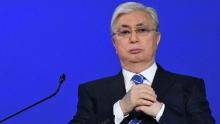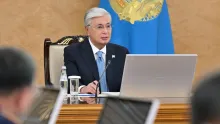
President Kassym-Jomart Tokayev is consistently strengthening the course towards turning Kazakhstan into a key transit hub of Eurasia. In his address to the nation, the Head of State identified transport infrastructure development as one of the priority tasks, and at the recent XII Summit of the Organisation of Turkic States (OTS), he presented concrete results and plans for implementing this strategy.
Over the past year, the volume of freight transported across the country exceeded 1 billion tonnes; however, global competition for transit is intensifying, and to maintain a leading position, it is necessary to act proactively.
A key achievement of the current year is the completion of construction of the second railway line, "Dostyk – Moyynty", spanning 836 km. The project, implemented independently and in record time, is of strategic importance.
As Tokayev noted at the OTS summit, the new route is expected to increase freight traffic volume fivefold and give dynamic development to the Trans-Kazakhstan Corridor. In his address, the President instructed the government to ensure the timely implementation of the "Bakhty – Ayagoz" and "Kyzylzhar – Moyynty" projects, which will complete the framework of the railway infrastructure.
Simultaneously, across the country, 13,000 km of roads are being built and repaired, with priority given to transit corridors. The President specifically highlighted the "Saksaul – Beyneu" road, which will reduce the transit time for goods from China to Europe by almost a third.
Kassym-Jomart Tokayev emphasised the importance of the Trans-Caspian International Transport Route. At the OTS summit, the Head of State reported that over five years, freight traffic volumes along the Middle Corridor had increased sixfold. The "North – South" Corridor opens access to the markets of the Persian Gulf countries and South Asia, while the "East – West" Corridor strengthens Kazakhstan's role as the main land bridge of Eurasia.
The President called on Turkic states to participate in modernising the infrastructure of aviation hubs, railway stations and seaports along the Middle Corridor.
A separate area of focus is digitalisation. In his address, the President stated that without digital solutions and artificial intelligence, efficiency cannot be achieved. The Head of State instructed to accelerate the implementation of the Smart Cargo platform, the launch of which is scheduled for the end of October. The platform is intended to provide unified access to customs and logistics services. At the OTS summit, Tokayev proposed creating a special Digital Monitoring Centre with the participation of experts from Turkic states.
The President noted complaints from freight carriers about drawn-out processes: services are processed through different systems, and some border posts lack quality internet access. The government and local administrations have been instructed to urgently improve the quality of services for road carriers at the border.
Tokayev focused attention on container transport. Its share in Kazakhstan is around 7%, whereas globally it accounts for more than 16% of dry cargo. The government has been instructed to adopt a programme to stimulate container transport and develop multimodal routes.
The President also addressed the problem of wagon deterioration. An important step was the opening of a wagon-building plant in Astana with participation from a foreign investor. The production of modern passenger carriages meeting international standards is expected to improve the comfort and safety of transport.
The existing tariff system is fragmented and insufficiently flexible. By the end of the year, the government is to develop a competitive tariff policy covering all modes of transport and build a management model for the transport system that ensures it recoups state investments.
The Head of State stressed that all transport routes must operate as a single system, generating income, investment and quality jobs for the country. The implementation of the outlined initiatives should take Kazakhstan to a new level and strengthen its role as the main transit hub of Eurasia.