The FBRK editorial team continues its series of articles analysing the largest government procurement contracts of 2024 in the regions of Kazakhstan.
Our attention has turned to Mangystau Region, where the most expensive contracts were signed in the sectors of nuclear energy, sport and utility services. Two major deals were concluded without tenders using the 'single source' method, and one contained a technical error amounting to over 2 billion tenge.
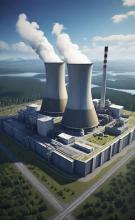
NUCLEAR ENERGY: 3.86 BILLION TENGE
The Department of Energy and Housing and Communal Services of Mangystau Region in 2024 entered into a contract with Mangystau Nuclear Power Plant LLP (MAEK) for ensuring the radiation safety of the BN-350 reactor facility for the sum of 1.67 billion tenge. The contract was valid for the entire year and provided for the comprehensive maintenance of the unique nuclear facility in Aktau.
_______________
For reference: BN-350 is the world's only fast neutron reactor that simultaneously generated electricity and desalinated water. The power unit, shut down in 1998, requires constant monitoring during decommissioning.
The services include radiation monitoring, technical maintenance of safety systems, radioactive waste management, and maintaining the sodium coolant in a safe state.
Simultaneously, MAEK signed two contracts with Kazakhstan Electricity Grid Operating Company JSC (KEGOC) totalling 2.19 billion tenge. The first was for technical dispatch services amounting to 1.86 billion tenge, however, actual payments were only 504 million tenge, nearly four times less than planned. The second contract concerned the organisation of balancing electricity production and consumption for 333 million tenge.
All contracts were concluded directly without a tender, as MAEK remains the only qualified provider of such work in the country. The significant difference between the planned and actual amounts requires further explanation — possible reasons could include a reduction in output volumes or tariff adjustments, but the precise reasons for this discrepancy remain unclear.
FOOTBALL AMBITIONS: 2.35 BILLION TENGE
The Department of Physical Culture and Sport of Mangystau Region in 2024 signed three major contracts with the subordinate State Public Enterprise 'Football Club Kaspiy' totalling 2.35 billion tenge.
The largest deal concerned the team's preparation and participation in the Kazakhstan Championship. The initial contract amount was 1.2 billion tenge, but in February it was increased to 1.69 billion tenge — an increase of 488 million. This 40% rise in expenditure raises serious questions about the quality of budget planning.
Additionally, the region allocated 76.6 million tenge for the development of futsal and another 586 million tenge for preparation for the Premier League. The latter contract is particularly concerning — the funds are being directed towards paying off the club's accounts payable for 2023. This means the regional budget is covering last year's debts of an organisation that was unable to independently sustain its operations.
All contracts were concluded using the 'single source' method without a competition. Formally, this is legal — the antitrust authority confirmed the absence of other providers of similar services. However, this scheme excludes genuine competition and oversight of spending efficiency.
In all fairness, it is worth noting that FC Kaspiy finished the 2024 season in third place in the Kazakhstan First League, which was the club's main achievement of the year. The bronze medals confirmed the team's ability to stabilise its performance and establish itself among the division's leaders.
This result opens up prospects for further development and a possible push for a return to the Premier League. However, the question remains: do sporting achievements justify such large-scale budgetary injections, especially when part of the funds goes towards covering past debts?
GAS 'TYPING ERROR': FROM 2.1 BILLION TO 2.1 MILLION TENGE
On 26 January 2024, the service for ensuring mobilisation preparation, territorial defence and civil protection of Mangystau Region entered into a contract with QazaqGaz Aimaq JSC for the supply of 61,200 cubic metres of natural gas. In the government procurement system, the transaction amount was recorded as 2.1 billion tenge, although the actual cost should have been around 2.1 million tenge. This discrepancy appears to be due to specifying the unit cost per cubic metre instead of per thousand cubic metres in the calculations.
On 5 February, the parties signed an additional agreement to terminate the erroneous contract, effectively acknowledging that performance under those conditions was impossible. A few days later, on 8 February, the customer and supplier formalised a new contract with the correct amount of 2.1 million tenge.
Formally, the situation was resolved. However, the key question remains: is this truly a simple technical oversight, or could such 'typos' be used as a tool for temporarily inflating amounts and subsequent manipulation? After all, a record of a billion-tenge contract remains in the registry, even if it has been terminated.
CONCLUSIONS
An analysis of the largest government procurement contracts in Mangystau Region has revealed a number of contentious points in the management of budgetary funds. In the nuclear energy sector, technical specificities may justify procurement without tenders; however, significant discrepancies between planned and actual payments raise questions about the quality of planning.
In sport, the region, judging by appearances, is forced to plug the club's financial holes at the expense of taxpayers rather than making genuine investments in development. The 'gas typo' worth billions of tenge may indicate shortcomings in quality control within the government procurement system.
Such episodes can undermine trust in the transparency of public procurement and point to the need for strengthened control at all stages — from planning to contract execution.
As a reminder, we previously wrote about the largest government procurement contracts of Pavlodar Region. You can read more about the capital's most expensive contracts via this link.