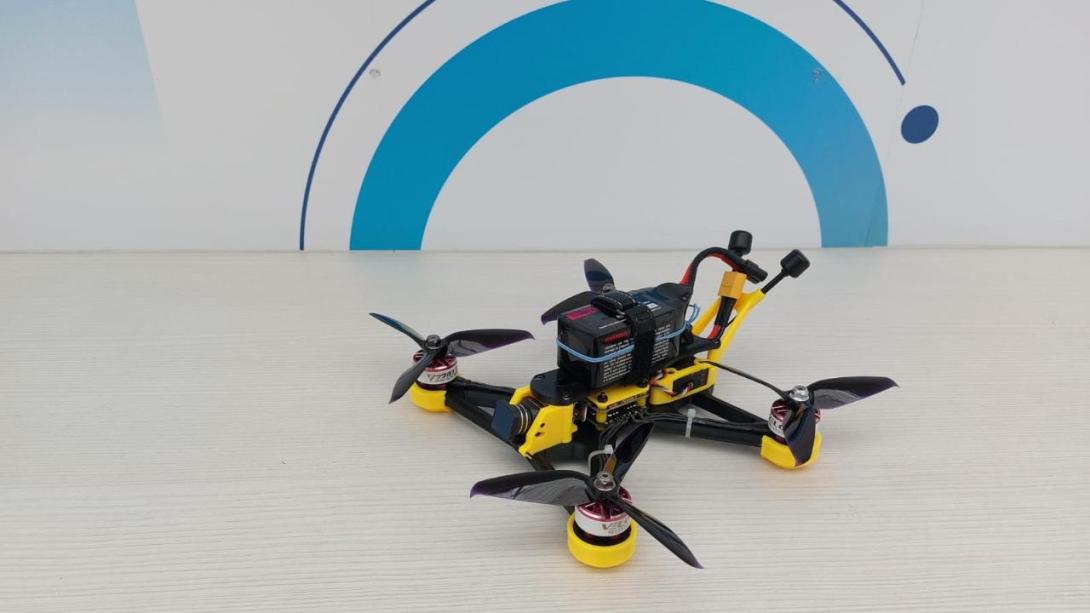
In the Karaganda region, development has been completed on three prototypes of unmanned aerial vehicles that could fundamentally change approaches to security and territorial control.
Created as part of a directive from President Kassym-Jomart Tokayev regarding the development of production with a high degree of localisation, the new drones are capable of recording traffic violations, searching for missing people, detecting fire outbreaks, and performing many other tasks at significantly lower costs compared to imported counterparts.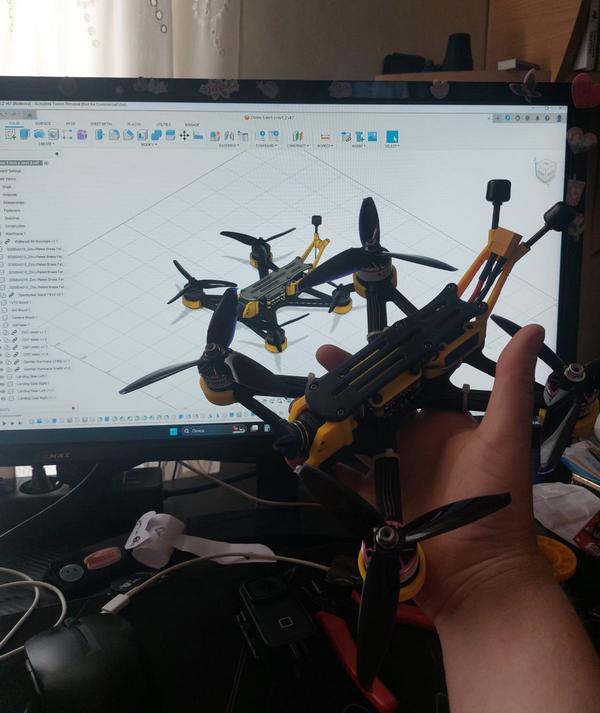
Each of the developed prototypes has its own specialisation. The Vista-7 is a long-range drone, designed for locating people and vehicles, as well as monitoring vast territories.
The compact Chimera-5 is designed for short-range work — inside buildings and hard-to-reach places. This device can be used to find people in rubble and in operational police work where risks to officers need to be minimised.
The third prototype — a versatile, multi-purpose drone, the Apex-7 — is suitable for street patrols, escorting mass events, and fire safety monitoring.
According to Maxim Kim, project leader at the Scientific and Production Association (SPA) 'Perspektiva', the main advantage of the Kazakhstani developments lies in the optimal combination of foreign electronics and locally manufactured frames.
"We produce frames for drones, onto which any electronics can be installed to perform required tasks. The main advantage of our frames is their relatively low production cost," the developer explains.
Significant savings are provided by the technology of 3D-printed frames. If imported drones costing around 12 million tenge are unrepairable when their moulded frame breaks, the Kazakhstani counterparts can be quickly restored.
"Even if the drone falls from a great height or shatters upon impact, a new frame can be printed in 20 minutes, the electronics reinstalled, and use can continue," notes Maxim Kim.
The use of locally produced drones demonstrates high economic efficiency in various fields. On extended highways, installing fixed cameras is significantly more expensive than patrolling the area with several unmanned aerial vehicles, which can respond promptly to violations, including speeding.
A similar situation arises with oil pipeline monitoring: regular drone flights at set intervals help prevent illegal taps and fuel theft with minimal maintenance costs.
Currently, the enterprise is working through issues related to transitioning to mass production of the unmanned aerial vehicles. This will be a logical continuation of the successful implementation of other SPA 'Perspektiva' projects, including the automated software package 'Argus-Pedestrian'.
This system, installed at busy intersections in Karaganda, uses special cameras to record vehicles that fail to yield to pedestrians at zebra crossings. Since the smart devices have been in use, not a single pedestrian hit-and-run incident has occurred at the monitored intersections. The positive results have led to the decision to install 'Argus-Pedestrian' systems in other cities in Kazakhstan.