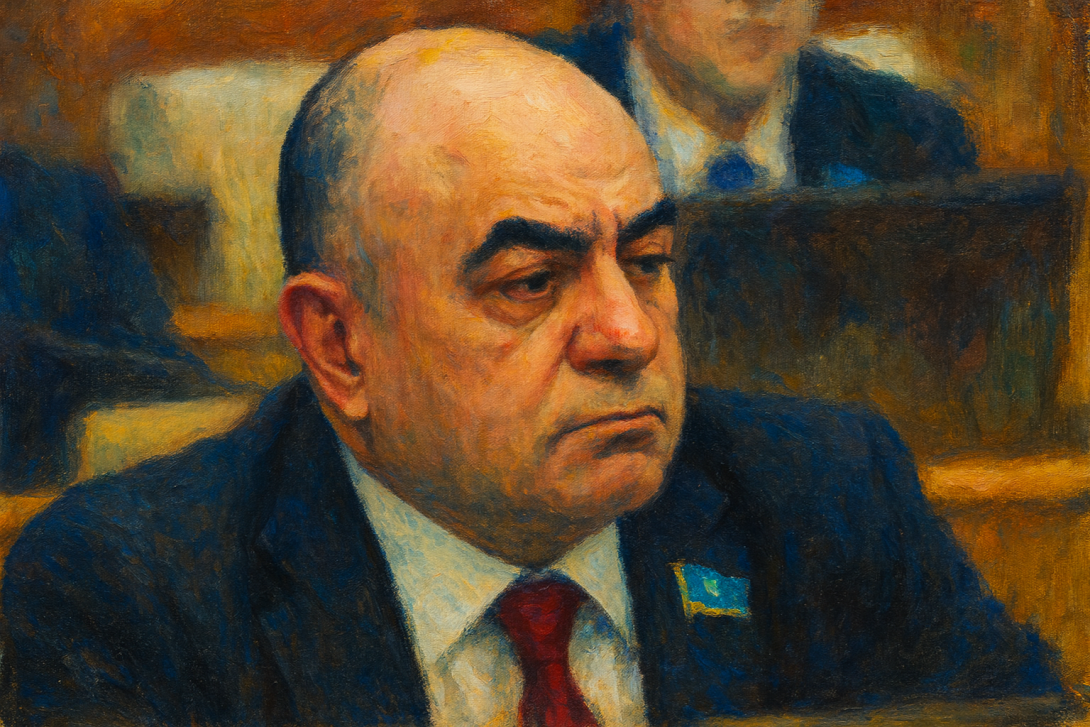
At the plenary session of the Mazhilis, the head of the faction of the People's Party of Kazakhstan (PPK) Magerram Magerramov submitted a deputy’s inquiry to the Minister of Culture and Information Aida Balayeva, demanding full transparency of foreign funding for public organisations and the media.
According to data from the State Revenue Committee (SRC), in the first half of 2025, 186 individuals and legal entities received foreign funds, yet the specific amounts, donors, and purposes of the funding remain hidden from the public.
The inquiry is based on data from the so-called 'register of foreign agents' — a list of individuals receiving money or other property from foreign states and international organisations. Among the recipients are civic activists, human rights organisations, media outlets, and subsidiary offices of foreign non-governmental organisations (NGOs). According to estimates from several media outlets, the total volume of such receipts could reach around $60 million per year.
Magerramov noted that the United States Agency for International Development (USAID) alone has transferred more than $150 million in grants to Kazakhstan over the past ten years. These figures highlight the scale of foreign financial presence in the country’s public and media spheres.
The current register records only the fact of receiving funds, without disclosing key information: who exactly the donor is, how much each entity receives, what specific purposes the money is allocated for, how its expenditure is monitored, and what tax reporting exists.
The inquiry pays particular attention to the issue of so-called secondary grants. The mechanism works as follows: funds arrive at branches of foreign organisations, are then redistributed within the country, and at the level of final recipients completely disappear from state and public oversight. The deputy called this a legislative failure, creating an extensive grey area.
The inquiry outlines the potential risks of such funding: promoting ideological stances alien to Kazakhstani society, artificially stoking social tension, provoking discord among citizens, and undermining social unity under the guise of human rights activities. In the context of a complex international situation, these threats require a systematic response from the state.
The People's Party of Kazakhstan faction made demands for the adoption of specific legislative measures. The deputies insist on the urgent development of amendments that would compel the disclosure of information about each donor, the total amount of funding for each recipient and grant, detailed project purposes, and completed work reports.
It also requires the introduction of mandatory annual public reporting with independent auditing and the publication of data on tax contributions. It proposes significantly tightening liability for concealing or distorting information about the receipt of foreign funding.
The deputy’s inquiry raises a question that is becoming particularly relevant amid international scandals involving major grant-giving bodies. As the PPK faction noted, the public has the right to know the real scale and purposes of external financial influence on internal processes. Full transparency, strict control, and personal responsibility should become tools for protecting the country’s information sovereignty.