(9 January 2026 | Source: BBC)
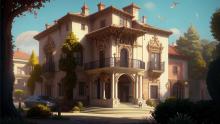
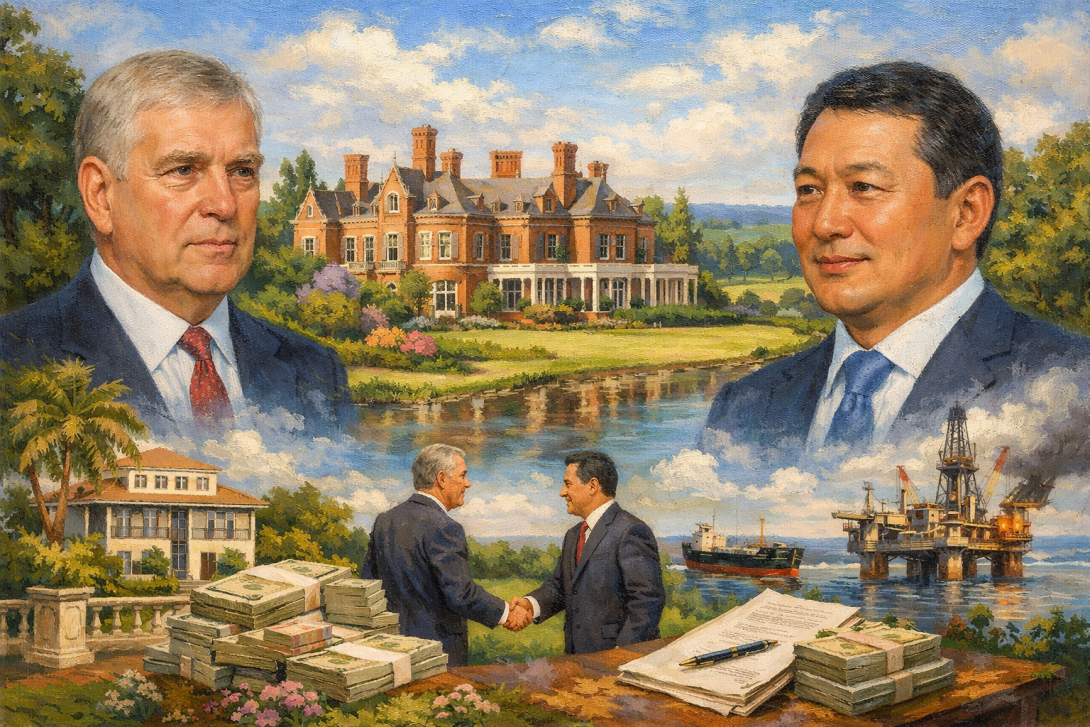
The sale of Sunninghill Park — the former home of Prince Andrew in Berkshire, purchased by Kazakh businessman Timur Kulibayev — has come under renewed scrutiny following the publication of a BBC investigation.
Journalists discovered that some of the funds for the purchase may have come from a company implicated in bribery cases in Italy. This has raised questions about whether proper due diligence was conducted on the sources of financing in a transaction involving a member of the British royal family.
HOW THE DEAL WAS STRUCTURED
In 2007, Kazakh businessman Timur Kulibayev purchased Sunninghill Park for £15 million, which, according to the investigation, was approximately £3 million above the asking price and £7 million above the market value of the property. An offshore company, Unity Assets Corporation, was used for the purchase, and part of the funds were provided as a loan by the company Enviro Pacific Investments.
Kulibayev's lawyers confirmed to the BBC that the loan was indeed obtained in 2007 on commercial terms and was subsequently repaid with interest. They insist that all funds were of legal origin.
WHAT ITALIAN PROSECUTORS FOUND
According to court documents reviewed by the BBC, the Italian prosecutor's office in cases from 2016–2017 concluded that the company Enviro Pacific Investments may have received money as a result of a bribery scheme linked to oil contracts. These funds, according to the prosecution, were partly used to finance the purchase of Sunninghill Park.
However, the investigations in Italy did not lead to charges being brought against Timur Kulibayev. His lawyers emphasise that he neither owned nor controlled Enviro Pacific, nor was he a subject of the Italian criminal cases.
WHY THE TRANSACTION CAME UNDER SCRUTINY
Interest in the sale of Sunninghill Park was sparked not by a single factor, but by a combination of circumstances that are internationally regarded as elevated risk. This concerns a transaction involving a public figure, concluded with a buyer linked to the state sector of a country and the family of the then-president Nursultan Nazarbayev, at a time when widespread corruption issues were officially documented there.
Additional attention, according to the investigation materials, was drawn by the structure of the purchase financing, which included a loan through a third-party company, as well as a lack of public transparency regarding the buyer's identity. According to experts, it is precisely such combinations that require enhanced checks on the sources of funds, regardless of the status of the parties involved in the transaction.
REACTIONS FROM THE PARTIES
Timur Kulibayev, through his representatives, stated that he has never been involved in bribery and that the property purchase was entirely legal. Buckingham Palace, as well as representatives of Prince Andrew, declined to comment. The law firm Farrer & Co, which represented the seller, also cited client confidentiality.
SIGNIFICANCE OF THE INVESTIGATION
The Sunninghill Park transaction has become an example of how opaque sources of financing can create risks even in formally legal property transactions. Since 2004, British lawyers have been required to conduct enhanced checks on the origin of funds to rule out the involvement of proceeds from criminal activity.
In the absence of evidence that Prince Andrew knew about the possible origin of part of the funds, the BBC investigation once again raises the question of whether such checks are sufficient in transactions involving public figures.