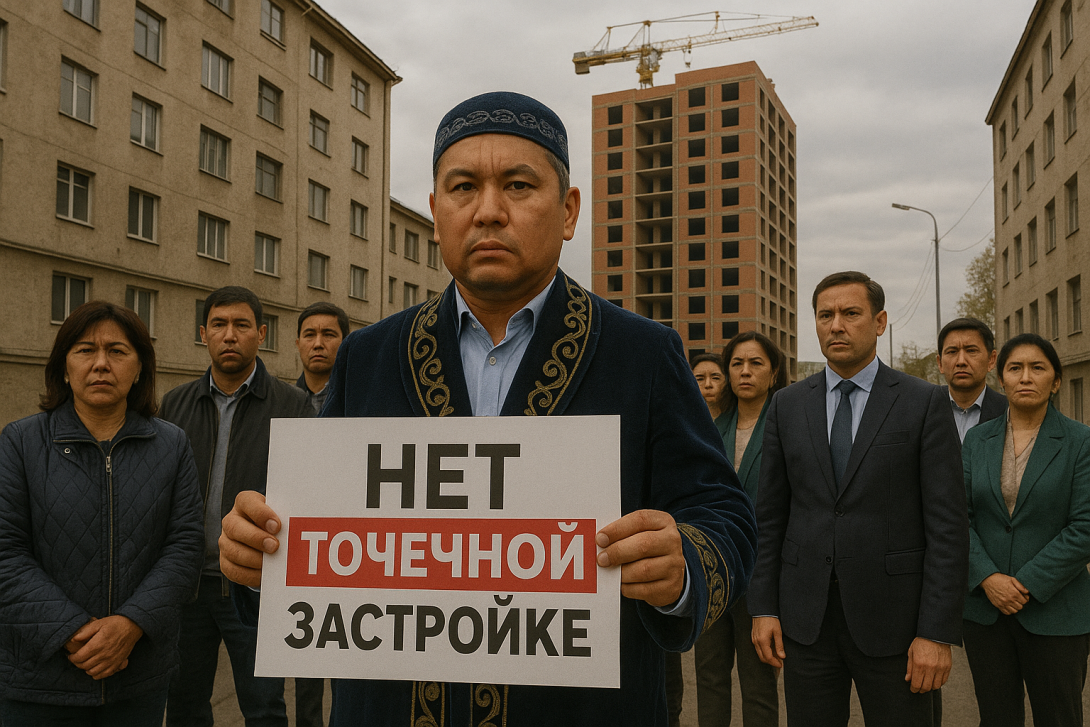
A conflict is escalating in Karaganda between residents of the Orbita-1 microdistrict and the construction company RGB Group, which plans to build a 15-storey residential building in the narrow space between an existing building and the road. This case is just one of many in a series of construction disputes that have gripped the city in recent months, and it reflects a wider trend of bringing order to the construction industry across Kazakhstan.
The construction boom of recent years in Karaganda has left behind not only new residential complexes but also a multitude of unresolved problems. Infill development, dubious building permits, and violations of urban planning norms are all coming under close scrutiny from both the authorities and the public. It seems the city is at a turning point, where chaotic development is giving way to a more orderly and regulated process.
THE PUBLIC AGAINST INFILL DEVELOPMENT
The residents of the Orbita-1 microdistrict are not the first to speak out against aggressive infill development. More and more information is appearing on social media about protests by Karaganda residents concerned about construction companies' plans to erect high-rise buildings in the historic part of the city, near parks, museums, and other significant sites.
According to local activists, the main concerns relate to the potential shading of existing apartments, increased strain on utilities and transport infrastructure. Residents are also worried about parking spaces for future occupants and the safety of children in already established courtyard areas.
Information about the protests is spreading actively on Instagram and TikTok. Local blogger Murat Kudzhanov and the page msu.city regularly publish materials reflecting the residents' concerns and their demands to halt questionable projects.
A NATIONWIDE TREND
The situation in Karaganda appears to be part of a nationwide process of bringing order to the construction industry. Across the country, inspections of construction sites are being stepped up, illegal buildings are being identified, and issues with defrauded equity holders are being addressed. The authorities are striving to legalise land plots and bring documentation into line with legal requirements.
This process is undoubtedly painful. It exposes problems that have accumulated over years, causes social tension, and creates conflicts between different interest groups. However, in the long term, it should lead to a healthier situation where construction is carried out in strict accordance with the law, taking into account the interests of all parties.
WHAT FUTURE AWAITS THE CONSTRUCTION INDUSTRY?
The protests by residents of the Orbita-1 microdistrict against the plans of RGB Group are just the beginning. It is quite likely that we will see other protest actions related to dubious construction projects. Who will be the next target of public criticism is not yet known, but it is clear that the era of uncontrolled development is becoming a thing of the past.
Local authorities find themselves in a difficult position. On the one hand, they must ensure the city's development, attract investment, and build new housing. On the other hand, they must protect the interests of residents, preserve the architectural character of Karaganda, and prevent chaotic development and the destruction of the urban environment.
Construction companies will have to adapt to the new realities. The days when it was possible to operate in a 'grey area', bypassing legal requirements, are ending. Now projects must be transparent, comply with all norms and rules, and take into account the opinions of residents of adjacent areas.
LIGHT AT THE END OF THE TUNNEL
Despite all the difficulties, the process of bringing order to the construction sector seems necessary and may, ultimately, benefit all market participants. There is hope that residents will gain more guarantees that new construction will not worsen their living conditions. Reputable developers will likely be able to operate in more transparent competitive conditions, which could help raise the overall quality bar in the industry, and local authorities will gain tools for more effective urban planning and maintaining a balance of interests between different parties.
Perhaps now the construction industry in Karaganda and across Kazakhstan will have to 'go through an illness', navigate conflicts and disputes, and uncover and resolve accumulated problems. But in the end, we will have a more transparent, civilised market where all participants operate within the legal framework, where the rights of equity holders are protected, and where new homes are built with the interests of all residents in mind.
The situation with the protests by residents of the Orbita-1 microdistrict against the plans of RGB Group is not just a local conflict. It is a symptom of the large-scale changes taking place in the construction industry. And the future depends on how constructively this and similar conflicts are resolved – not only of specific construction projects, but of the entire approach to urban development in Karaganda and other cities across the country.